Thaai Kizhavi: She Gave Them the Gold. Not the Game
In ‘Thaai Kizhavi’, a dying moneylender becomes the center of a village’s greed. But beneath the scramble for gold lies a quieter story about how women inherit wealth without ever being taught how it works
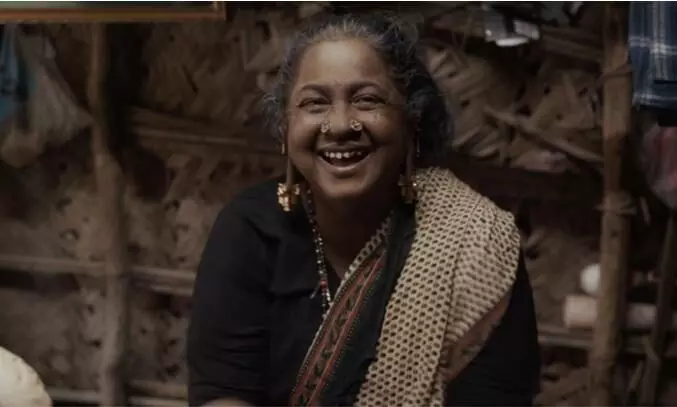
Pavunithaayi smiles, fully aware of the game everyone else is still trying to learn


Film: Thaai Kizhavi
Language: Tamil
Year: 2026
Director: Sivakumar Murugesan
Cast: Radikaa Sarathkumar (Pavunuthaayi / Pavunithaayi), Singampuli, Aruldoss, Munishkanth, Bala Saravanan, Ilavarasu, George Maryan, Muthukumar, Raichal Rabecca
Genre: Comedy Drama/Rural Drama
Runtime: 142 minutes
Release: Theatrical (February 27, 2026)
The entire village waits for an old woman to die. Her sons are already dividing the gold. Their wives have sold their own ornaments to fund the search. A man in white shows up claiming to know exactly how much she has hidden. A doctor is flown in from the city, not to treat her, but to decode her unconscious hand gestures like they're a treasure map.
And Pavunithaayi, the aged moneylender at the heart of ‘Thaai Kizhavi’, just lies there. Saying nothing. Then she wakes up. And she gives them an answer so small, so ordinary, that you almost miss what just happened. Watch her face when she says it. Because the film then quietly shows you what she actually knew and for how long. She was never the object of this story. She was running it.
The detail that got me most wasn’t gold. It was the ‘pallanguzhi’. She mentions, almost in passing, that she learned the game after marriage, handed to her like a household chore. But she looked at this little game of distributing seeds across pits, of knowing when to hold and when to collect and she taught herself how money works. Nobody showed her. She figured it out from what little she was given.
That’s who she is. Someone who builds a philosophy inside the constraints of her own life and tells no one. There’s a glass cold drink bottle on a hill near the village. Hers. She’d been going there alone, probably for years, to a place that looked oddly like a deity, maybe because it was. The bottle is a city thing, out of place in a rural landscape, which means she was carrying both worlds up that hill quietly, by herself. Nobody knew she had gone or even thought about asking. The bottle is the only evidence.
When she finally distributes her gold to the women of the village, it feels like a victory. She says she was free at 60, she hopes her daughter will be free sooner and she dreams of women born free. It’s a beautiful speech. But then the women wear the gold to a wedding and something in you sinks a little. She gave them the capital. Not the game.
The film knows this. It ends with Pavunithaayi smiling at the top of the frame, a monkey eating the god’s food above her, the same gentle chaos carrying on as always. Nothing is resolved or ruined. She gave what she could, knowing it wasn’t enough and smiled anyway.
Darshim Saxena writes on cinema and culture