Beyond Models, Toward Reality
Integrating climate science with economics is essential, as underestimating risks and ignoring extreme scenarios threatens both planetary stability and long-term global prosperity
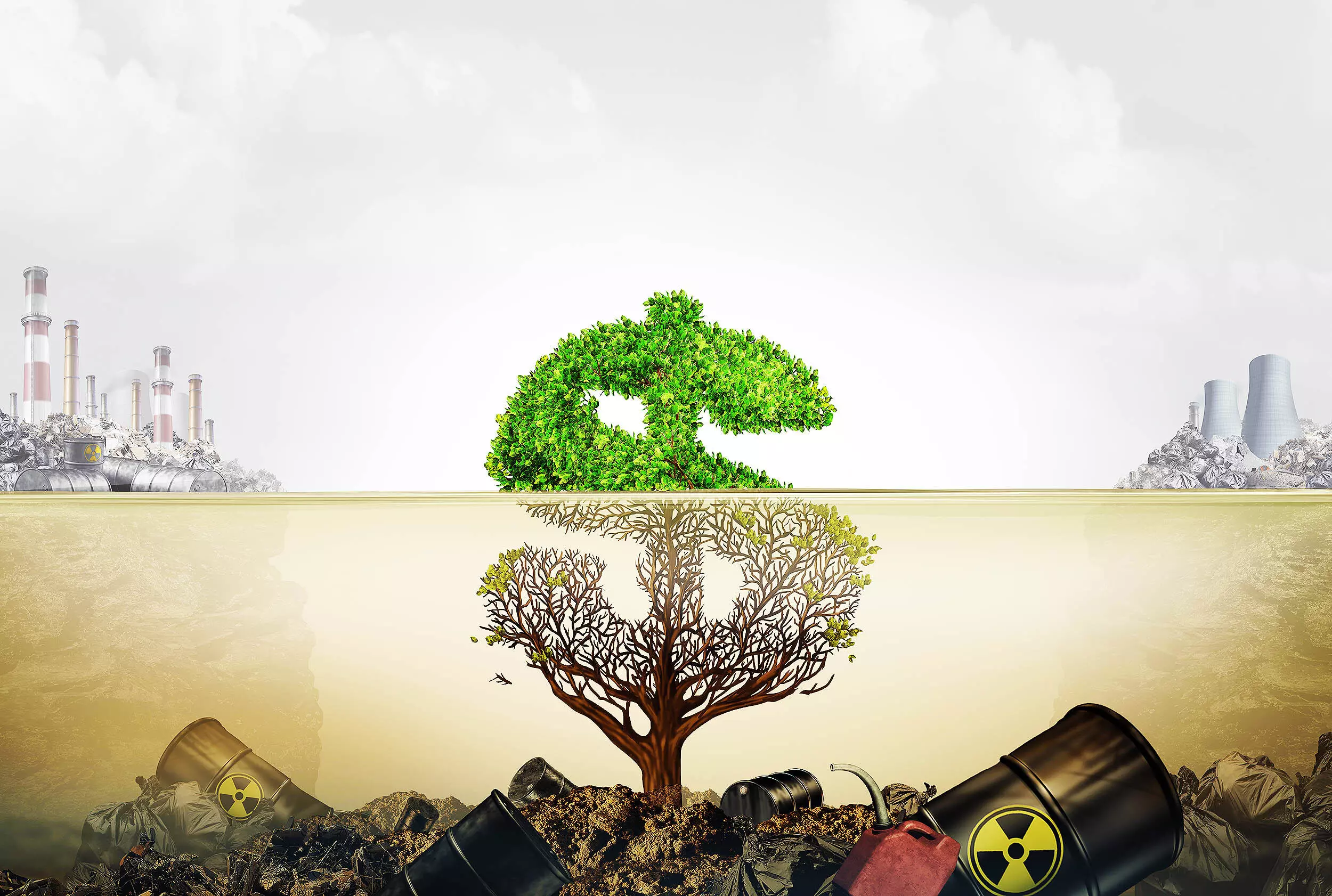


In the article The Science of Climate Change, published on January 4, 2026, I discussed the contributions of the pioneers in this field: Fourier, Tyndall, Arrhenius, and Keeling. I followed this with a three-part article on the Economics of Climate Change. We will continue the discussion in this two-part article and take it further to see how the science of climate change interacts with its economics and why they need to talk to each other.
The science of climate change has evolved rapidly since the 1960s, when early general circulation models (GCMs) used well-established laws of physics and mathematics to model energy and heat exchange between the Earth’s surface, atmosphere, and oceans. These GCMs developed into Earth system models that are used by climate scientists at the Intergovernmental Panel on Climate Change (IPCC) to present their findings periodically. Climate models are largely driven by science (physics, oceanography, chemistry, etc.), and correlating these to the economics of climate change is still a work in progress.
Climate Change: The Basic Science
Climate change is basically the outcome of an interplay between the Earth’s surface, atmosphere, oceans, and ice sheets. Since each of these systems is itself complex in its own right, scientists work with simple variables such as the global mean surface temperature or the concentration of greenhouse gases in parts per million (ppm) of the Earth’s atmosphere.
The global mean surface temperature is an important variable, and all climate projections by the IPCC use this to tell us how serious the situation is. The global mean surface temperature is basically the physics of Earth’s energy balance that explains global warming. This is summarised in the points below:
Ordinarily, greenhouse gases play a positive role by trapping some of the radiation emitted by the Earth’s surface and keeping the Earth warm so as to support life. Without greenhouse gases, the Earth’s temperature would be −20°C. Only when the levels of such gases cross a tipping point does the Earth become excessively hot.
Greenhouse gas emissions distort the energy balance of the Earth because they let in visible and ultraviolet radiation from the sun fully, but block a part of the outgoing infrared radiation (30 per cent is reflected back and 70 per cent is absorbed by the Earth’s surface). When a greenhouse gas molecule traps this infrared radiation, the absorbed energy is re-emitted in all directions and sent back to the Earth’s surface. This warms up the surface and the atmosphere of the Earth, with equilibrium being established only when the outgoing infrared radiation is sufficient to offset the heat trapped by greenhouse gases.
Greenhouse gases change the climate by altering the radiative properties of the atmosphere and are measured in units of radiative forcing (this is basically the amount by which man-made emissions distort the net radiation flow into the atmosphere).
The Strain between Science and Economics of Climate Change
As we saw, the basic science of climate change is the application of the laws of physics, such as the conservation of energy and mass, as well as laws related to gases, as discussed above. While IPCC simulations and climate models are based on fundamental laws of physics, how these findings can be applied to socio-economic issues needs more work.
This is important because there is an underlying strain between economic development and climate that needs to be resolved. Economic development will, per force, require energy and resources, which will have an adverse impact on climate change, which, in turn, will slow down development. But there are challenges in doing so. On the one hand, IPCC reports have been giving us dire warnings of a rise in greenhouse gases and their impact on global warming; such warnings have only been getting more urgent over the years. On the other hand, various IAMs have tended to underestimate the economic loss due to climate change. For example, the 2008 Dynamic Integrated Climate Economy (DICE) model of Nordhaus concluded that only 2 per cent of world output would be lost with a 2.5°C rise in temperature. Accordingly, Nordhaus suggested a gradual response to climate change. The IAM proposed by Nicholas Stern was more realistic and suggested an immediate and urgent response to climate change; this was because of the lower discount rate used by him.
Climate scientists have a problem with IAM-type models because they feel that climate change has characteristics such as non-linearity, adherence to fundamental laws of physics, sensitivity to initial conditions (the butterfly effect), and different timescales for atmosphere, land, and ocean warming, which are not suited for analysis with averages in IAMs. In other words, climate science cannot rule out outlier events such as a rise in temperatures of 5°C, even though they may have a low probability. In statistical terms, climate science cannot rule out “black swan” events, as described by Nassim Nicholas Taleb in his celebrated book. Martin Weitzman, in his 2007 article, alluded to the same thing when he said that the probability distributions used in IAM models underestimate the “fat tails” of the distribution, meaning that outlier events may have a higher probability of occurring than the normal distribution would imply.