Gulf on the Edge
The assassination of Ali Khamenei in a joint US-Israeli military operation has pushed the Middle East into one of its most volatile crises in decades, triggering missile attacks, energy disruptions and fears of a wider regional war
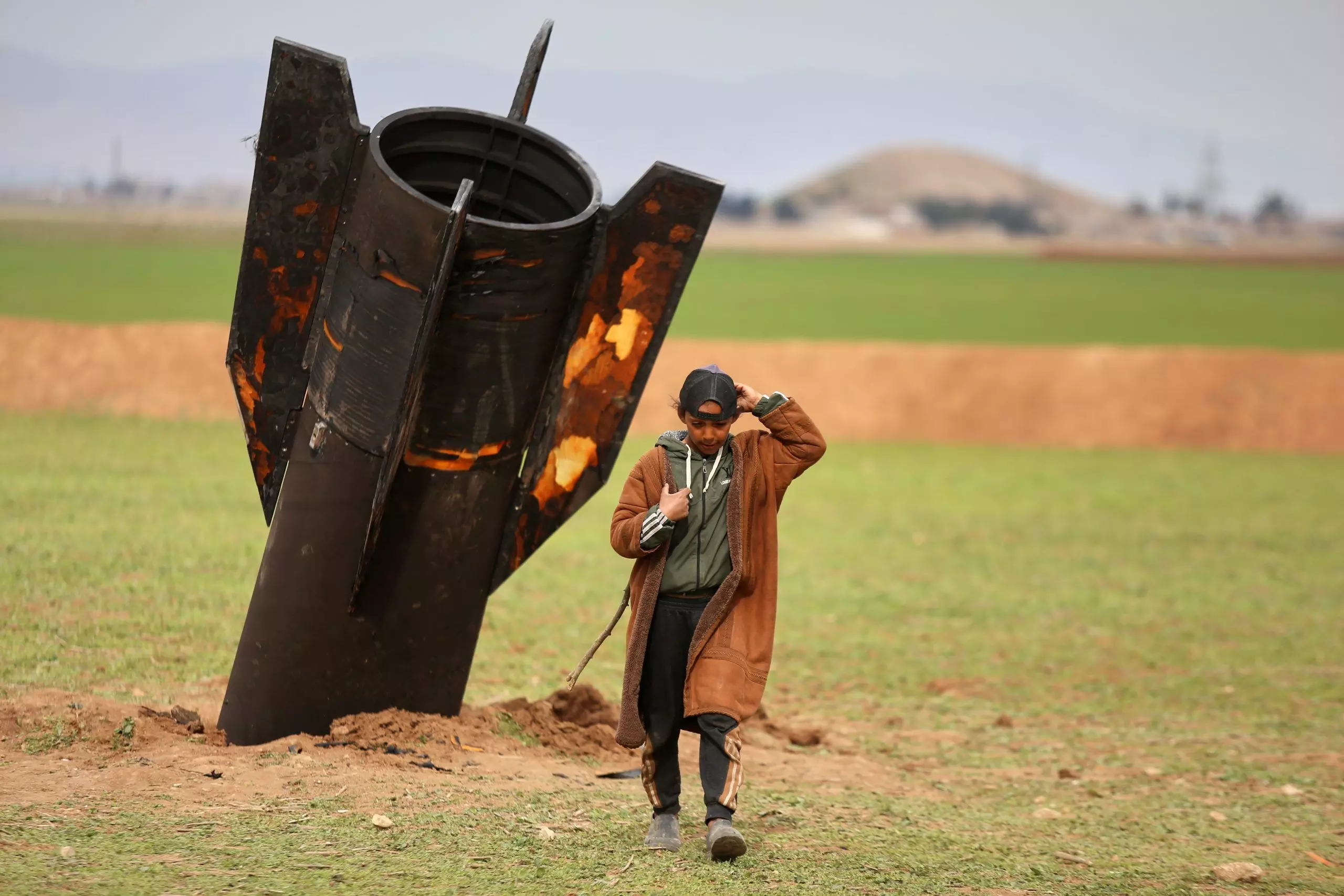


Israel launched an attack against Iran early Saturday (February 28) under the name ‘Lion’s Roar,’ declaring a “special and immediate” state of emergency across the country. Israel and the US have begun a joint operation against Iran to eliminate, what Israeli Prime Minister Benjamin Netanyahu described as, an “existential threat” posed by the Iranian regime. In a video message, Netanyahu said the “murderous terror regime” in Tehran must not be armed with nuclear weapons capable of threatening “all of humanity”. Netanyahu also called on Iranian people, including Persians, Kurds, Azeris, Baloch and Ahwazi, to throw off “the yoke of tyranny” and establish a “free and peace-loving Iran.” The US President Donald Trump said that the US had also launched “major combat operations” against the “Iranian regime. “ The attacks come as talks between Washington and Tehran over Iran’s nuclear program had been in progress under Oman’s mediation. A new round of talks in Geneva ended on Thursday (February 26). Last June, the US struck three Iranian nuclear sites during the 12-day Israel-Iran war. The joint US-Israeli strikes on Iran were conducted during an "operational opportunity" that arose "only after Prime Minister Narendra Modi left" Tel Aviv on February 26, after completion of his two-day state visit, Israeli envoy Reuven Azar told.
On Sunday (March 1), the Iranian State Television announced that Iranian Supreme Leader Ali Khamenei “was martyred in his office while carrying out his duties during the early hours of Saturday,” and his daughter, son-in-law and grandson were also killed in the attacks. Ali Hosseini Khamenei (19 April 1939 – 28 February 2026) was an Iranian politician and Shia cleric who served as the second supreme leader of Iran from 1989 until his assassination. After the death and state funeral of Ruhollah Khomeini in 1989, Khamenei was elected supreme leader by the Assembly of Experts. The Iranian government declared 40 days of national mourning and ordered the suspension of official institutions for seven days. The Islamic Revolutionary Guard Corps (IRGC) vowed a “overwhelming and decisive revenge” against those responsible for Khamenei’s killing, and announced that it would launch retaliatory attacks against Israel and US bases in the region. The IRGC urged all segments of society to participate in national defence gatherings to demonstrate unity, saying that Khamenei’s path “will not stop after his martyrdom, but will continue with strength and grandeur.” Since then, Iran retaliated by firing hundreds of ballistic missiles at Israel and US bases in Bahrain, the United Arab Emirates, Kuwait, Qatar and Jordan.
Iran, since the Islamic Revolution
It may be recalled that in 1953, the US toppled Iran’s democratically elected prime minister, Mohammad Mosaddegh, in a coup. Mosaddegh nationalised the Abadan Oil Refinery to take control of the Anglo-Iranian Oil Company (AIOC). The dethroned Shah of Iran, Mohammad Reza Pahlavi, was restored to power in 1953 by the USA. In 1979, Ayatollah Ruhollah Khomeini returned to Iran after 14 years of exile in Iraq and France. Following a referendum, Iran was declared an Islamic republic. The 1979 Islamic revolution overthrew the monarch, Mohammad Reza Pahlavi. The US first imposed sanctions on Iran in November 1979, halted oil imports from Iran, and froze USD 12 billion in Iranian assets. Iranian products were banned from import into the US.
Despite nearly 47 years of US sanctions since 1979, the Islamic Republic of Iran has progressed in key development parameters. The US sanctions became severe after 2005 when the USA designated Iranian individuals, companies, and organisations for involvement in nuclear proliferation, ballistic missile development, support for terrorist groups and human rights abuses. From Jimmy Carter to Donald Trump, all the U.S. presidents have imposed a plethora of sanctions using presidential executive orders and pieces of legislation. A comparative study of select development indicators, as tabulated below, reveals that the Islamic Republic of Iran, which had to fight a decade-long war with Iraq during the 1980s, progressed steadily during 1990-2023. Data from the UNDP’s Human Development Report (2025) reveal:
· In 2023, Iran achieved an HDI rank of 75 out of 193 countries and territories. Between 1990 and 2023, Iran's HDI value changed from 0.626 to 0.799, a change of 27.6 per cent. Compared to Iran, Saudi Arabia’s rank was 37, and India ranked 130.
· In the case of the gender development index, Iran also fared better than India, though Saudi Arabia scored higher than Iran. Iran's and Saudi Arabia’s life expectancy at birth in 2023 were much higher than India's in 2023.
· Very significantly, among the three countries, Iran’s achievement in female education was better. Mean years of school for females in Iran in 2023 was 10.9 years compared to India’s 5.8 years and Saudi Arabia’s 8.4 years. Moreover, compared to males, the mean years of schooling of females was higher in Iran than in India and Saudi Arabia. The figure for India, a democratic country, looks pathetic.
· In the case of the gender inequality index, India scores marginally better than Iran, but Saudi Arabia has the best score among the three countries. Lower GII is considered better, which indicates reduced gender inequality. In the case of the maternal mortality ratio (deaths per 100000 live births) in 2023, India registered 102.7 deaths compared to 22 and 16.2 in Iran and Saudi Arabia, respectively.
Gulf States on the front line of war
Initially, Iran targeted the US military and strategic assets in the USA’s client states of the Gulf Cooperation Council (GCC). The member States of the GCC are Bahrain, Kuwait, Oman, Qatar, Saudi Arabia, and the United Arab Emirates. Iran has already struck at oil installations in Qatar, Bahrain, and Saudi Arabia. On March 4, Qatar Energy declared force majeure on LNG deliveries following Iranian drone strikes that forced a shutdown of its 77-million-metric-ton-per-year Ras Laffan export terminal. Three Amazon data centres in the Gulf have been hit in drone strikes, showing how such facilities are at risk of becoming wartime targets.
The CIA considers drinking water a "strategic commodity" in the Middle East, where countries rely on desalination plants for water supply. Iran has attacked a power station in the UAE that keeps a desalination plant running, and targeting these plants could put Persian Gulf countries in an impossible situation, making water a potential geopolitical commodity in the conflict.
Iran is targeting the Gulf's image as a safe, prosperous hub for travel, tourism and finance, and disrupting the oil and gas industry at its core. Iran said the Strait of Hormuz is closed exclusively to vessels from the United States, Israel, Europe and their Western allies. Demand for Russian oil in Europe is on the rise. India is also contemplating importing sanctioned Russian crude.
The European Union leaders have expressed support for Arab countries in the Gulf as Iran continues to launch missile and drone strikes on targets across the region in response to attacks by the United States and Israel. France and the United Kingdom on Wednesday announced plans to send warships and air defence assets to Cyprus. However, the UK also said the drone targeting the British base in Cyprus did not originate from Iran. Israel has expanded its military campaign to Lebanon, while the US on Wednesday sank an Iranian frigate in the Indian Ocean, killing dozens of unarmed people on board. The frigate was returning from India after participating in a naval show organised by India. In October 2025, the Indian PM boasted, saying, ‘the Indian Navy stands as the guardian of the Indian Ocean'. India's MAHASAGAR policy, control on the Indian Ocean Rim, and Quad cooperation for a free and open Indo-Pacific failed to coordinate with the US over its bombing of an Iranian ship returning home from an event hosted by India.
China’s dilemma
Despite the existence of the Iran–China 25-year Cooperation Program, signed in March 2021, China has not offered Iran any concrete assistance other than diplomatic support so far. On Monday, Chinese Foreign Minister Wang Yi spoke with counterparts from Iran, Russia, France, and Oman. Wang told Oman’s foreign minister that China supported Gulf nations in “safeguarding their sovereignty and national interests”, Wang said China was ready to play a “constructive role” in stopping the war. Wang said China was ready to play a “constructive role” in stopping the war. “This conflict has again revealed China’s lack of willingness and interest in exposing itself to the region, which is a fair position, but it is one that could carry political consequences with Gulf countries once this war ends, " observe political analysts.
In 2023, Riyadh and Tehran ended years of hostility and established diplomatic ties in an agreement brokered by Beijing, but their ties face the most severe test so far after Iran’s retaliation operation targeted the US embassy and a civil airport in Saudi Arabia.
China’s strong reliance on crude oil supplies from the Persian Gulf region continues, with GCC countries accounting for 36 per cent of China’s total crude oil imports in 2023. It has also been the GCC’s biggest trading partner for years, with the trading value reaching USD 288 billion in 2024. Countries such as Saudi Arabia and the UAE are important buyers of Chinese semiconductors, and China’s 5G infrastructure has been steadily built in the region.
MENA region in a deep crisis
Israel-USA invasion of Iran has put the Islamic countries of the MENA (Middle East and North Africa) region - Algeria, Bahrain, Egypt, Iran, Iraq, Jordan, Kuwait, Lebanon, Libya, Morocco, Oman, Palestine, Qatar, Saudi Arabia, Syria, Tunisia, Turkey, United Arab Emirates, and Yemen- in doldrums. The crisis is spreading fast across the globe. UAE billionaire Khalaf Al Habtoor on Thursday wrote an open letter to US President Donald Trump questioning his authority to drag the Gulf and the Middle East into the ongoing military conflict with Iran. He pointed out that the US decision to go to war with Iran not only threatens the people of this region but also the American people. In another message shared on X, Khalaf Al Habtoor questioned who would be held accountable for the damages inflicted on the Gulf and Middle East.
With the fall of the Ottoman Empire after World War 1, the British and French carved up Ottoman lands for themselves. They drew borders in the Middle East that supported their own goals—such as access to trade routes—with little regard for those living in the region. King Abdul Aziz Ibn Saud conquered the Arabian Peninsula and established the Kingdom of Saudi Arabia in 1932. Saudi Arabia’s discovery of oil in 1938 boosted the young country’s power. Oil brought the Kingdom immediately into contact with the United States. President Franklin D. Roosevelt began to pursue closer relations with Ibn Saud. The two leaders met in February 1945, marking an important start to a bilateral relationship that continues to this day. Since then, the USA has determined the politics and economy of the MENA region. After the formation of the State of Israel in 1947, the Zionist state became the USA’s collaborator.
Over the past several decades, the United States has conducted significant military interventions, including bombing campaigns and drone strikes, in cities across the MENA region considered as a primary "cradle of civilization,": Mesopotamia (Sumerians, Babylonians), Ancient Egypt, and the Phoenicians (Levant), which later merged into major empires like the Persian, Ottoman] including Baghdad (Iraq), Beirut (Lebanon), and Damascus (Syria). While these actions were generally framed within the context of the "War on Terror," regional stability, or opposing Iranian influence, they have often been analysed through the lens of Samuel Huntington’s (1993) "Clash of Civilisations" theory, which posits that post-Cold War conflicts are primarily cultural and religious rather than ideological.
Israel-USA invasion of the Islamic Republic of Iran is also justified, claiming that Trump was “anointed by Jesus to light the signal fire in Iran to cause Armageddon and mark his return to Earth.” The Crusades — the religious wars waged by Western Christians to seize the Holy Land, traditionally synonymous with what is known as the Land of Israel (Zion), from Muslim control between the 11th and 13th centuries, are being reintroduced again in the 21st century to retain Western hegemony. India’s alignment with the Israel-USA axis may be analysed from this perspective.