Craft, Community and Change
Beyond craft, Kadam’s journey shows how dignity, sustainability, and enterprise can reshape rural economies and empower thousands of artisans
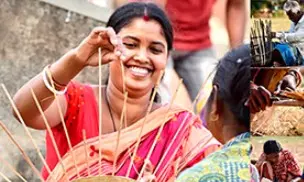


In a world racing toward automation and convenience, the quiet strength of handmade craftsmanship often fades into the background. Yet in the villages of India — from the bamboo clusters of Odisha to the sabai grass weavers of West Bengal — hands continue to shape stories of resilience, beauty, and hope.
Kadam and its social enterprise arm Kadam Haat stand at the heart of this movement — weaving together livelihoods, sustainability, and modern design to create a model of inclusive growth that honours both people and the planet. Kadam was the proud recipient of Nexus of Good Annual Award, 2025, for this effort.
The Beginning: A Step Toward Change
Founded with a simple but powerful vision — to unleash the power of communities and earth’s materials to build an equitable, sustainable, and happy world — Kadam began its journey over two decades ago.
Starting in the rural clusters of Eastern India, the organisation recognised that India’s vast artisan base held immense potential — not only for cultural preservation but also for economic empowerment. The problem was not a lack of skill or creativity. It was the lack of access — to design inputs, technology, and markets that valued their work.
Kadam stepped in as a catalyst, helping rural and tribal artisans transform their traditional skills into sustainable livelihoods. Today, Kadam works with over 10,000 artisans across West Bengal, Odisha, Bihar, Uttar Pradesh, Jammu & Kashmir, Rajasthan and Tamil Nadu, helping them find dignity and opportunity in their crafts.
From Craft to Enterprise: The Birth of Kadam Haat
As the movement grew, it became clear that artisans needed more than just training — they needed a direct connection to the market. That bridge became Kadam Haat, a digital-first social enterprise that connects India’s natural-fibre craftsmanship to the global consumer.
Through www.kadamhaat.com, Kadam Haat brings elegant, natural fibre–based home décor, dining, and lifestyle products to conscious consumers. Each product — whether a bamboo basket, sabai grass bag, or madhurkathi grass table runner — carries the imprint of sustainability, craftsmanship, and cultural heritage.
With a 20-year network of over 10,000 artisans, Kadam Haat aims to reach 10 million homes with beautifully designed, eco-friendly products while empowering 1 million artisans with contemporary design knowledge and international-quality production skills.
By merging traditional wisdom with modern product innovation, Kadam Haat ensures that sustainability is not a buzzword — it’s a way of life.
Empowering Through Design and Skill
The transformation of rural livelihoods begins with design and skill development. Kadam’s design and training programs build artisans’ capacities to meet contemporary consumer preferences without diluting the authenticity of their craft.
The process involves co-creation — designers and artisans working together to reinterpret local materials like bamboo, sabai grass, sikki, wicker, sitalpati, madhurkthi, and moonj into products that appeal to modern sensibilities while retaining their ecological and cultural essence.
These programs are not only about skill — they are about confidence, pride, and entrepreneurship. Women artisans, in particular, have become leaders of change in their communities, often turning their homes into micro-workshops and training others in their villages.
Sustainability at the Core
For Kadam and Kadam Haat, sustainability is not limited to materials — it extends to people and ecosystems.
* Environmental sustainability is achieved through the use of renewable, regenerative natural fibres that require minimal processing and leave a negligible carbon footprint.
* Economic sustainability comes from ensuring artisans are fairly compensated and have access to consistent, dignified work.
* Social sustainability lies in creating communities where skill, equality, and resilience replace migration, debt, and dependence.
Each product represents a small step — a kadam — toward conscious consumption and a circular economy.
A Digital-First Movement
While deeply rooted in the rural heartlands, Kadam Haat is digital-first in its approach. By using e-commerce and digital storytelling, it has opened global markets for handmade Indian crafts.
The platform showcases products that are both traditional and modern — minimal, functional, and sustainable — catering to an audience that values design and responsibility.
Beyond selling, Kadam Haat tells stories — stories of women who gained financial independence, of young artisans who returned to their villages to start craft enterprises, and of communities that found new purpose in their age-old skills.
Impact Beyond Numbers
The impact of Kadam and Kadam Haat goes far beyond numbers — though the numbers themselves are impressive.
* 10,000+ artisans trained and employed
* 5 states with active clusters and production hubs
* 80% women’s participation, leading to increased household income and decision-making power
* 20+ years of craft-based livelihood experience
* Export and domestic linkages with conscious brands and corporate gifting partners
But the real impact is seen in the changed narratives — of women who now educate their children through their craft income, of communities that have revived traditional weaving, and of young artisans who see a future in what was once considered “old work.”
Innovation Meets Tradition
Kadam’s approach to innovation is grounded in simplicity — making small, meaningful improvements to enhance quality, utility, and global competitiveness.
This includes developing modular product designs, using eco-friendly finishes, integrating waste reduction techniques, and building climate-resilient supply chains.
Kadam Haat’s collaboration with design institutes and product experts ensures that every collection aligns with international aesthetics while staying rooted in local identity.
The Road Ahead
Looking ahead, Kadam and Kadam Haat envision scaling their ecosystem to 1 million artisans and 10 million homes, powered by design innovation, digital integration, and sustainable production.
The goal is to build self-reliant artisan enterprises that can thrive independently — creating not just products, but communities of change.
Kadam’s model demonstrates how sustainability and profitability can coexist — how business can be a force for good. It’s an invitation for consumers to be part of a larger story — one where every purchase becomes an act of preservation, empowerment, and responsibility.
A Movement Called Kadam
At its essence, Kadam is not just an organisation — it is a movement.
A movement that believes every artisan deserves dignity, every craft deserves recognition, and every consumer choice can shape a better world.
From the smallest basket woven in a village to a global home décor collection, Kadam and Kadam Haat together embody India’s timeless wisdom: that the hands that work with the earth can heal it too.
Each product, each artisan, and each home they touch becomes part of a powerful story — a story of resilience, regeneration, and the beauty of doing good.
Views expressed are personal. The writer is an author and a former civil servant