
Chhattisgarh’s Timeless Treasure
Gondwana Marine Fossil Park isn’t just a tourist marvel — it’s a model of conservation, education, community livelihood and responsible development


In today’s fast-paced world, as cities expand and technology permeates every aspect of life, places that remain untouched by time have become increasingly rare. Yet, nestled in the heart of Manendragarh Forest in Chhattisgarh lies a remarkable site that tells the story of life from nearly 290 million years ago. This marvel is now officially recognised with the opening of the Gondwana Marine Fossil Park on April 26, 2025—the largest marine fossil site in Asia. Chhattisgarh is taking a leadership role in promoting conservation-focused tourism, creating opportunities for geological education, and supporting local communities through ecological initiatives.
The inauguration of the Gondwana Marine Fossil Park is a significant milestone for the Surguja division of Chhattisgarh, exemplifying a story of transformation. More than a grand ceremony, the conversion of this once-overlooked geological site into a vibrant tourist destination underscores the region’s progress. Much of the project’s success can be attributed to the vision of Divisional Forest Officer Manish Kashyap, a 2015 Indian Forest Service officer.
Preserving our Planet’s Prehistoric Legacy
In 1954, geologist SK Ghosh made an extraordinary discovery during coal mining operations along the Hasdeo River. Beneath the earth’s surface, he uncovered fossil beds stretching over a kilometre and filled with the remarkable remains of ancient marine life. These fossils include various creatures such as clams, brachiopods (a type of shellfish), snails, crinoids (star-like sea creatures), and bryozoans (tiny colonial animals). Many date back to the Permian period—a pivotal era in Earth’s history—making them among the oldest marine fossils ever discovered in India.
For many years, this significant site remained overlooked. However, in 2015, it finally gained recognition when the Birbal Sahni Institute of Palaeosciences designated it as a National Geological Monument. This recognition underscores the importance of these fossils in deepening our understanding of life’s history on Earth.
Manish Kashyap envisioned creating a protected area that would serve as a living museum, showcasing the planet’s incredible history. The park is designed to educate and inspire, especially for those in northwestern Chhattisgarh, fostering a connection to Earth’s ancient story. Drawing inspiration from dinosaur parks in Gujarat and Jharkhand, Manish aimed to develop a unique site focused on nature conservation, storytelling, and meaningful public engagement.
Bringing the Jurassic Era to Life
Chhattisgarh is home to an amazing new attraction called the Jurassic Rock Garden, which is a groundbreaking way to showcase our planet’s prehistoric past. This garden features 35 enormous sculptures of ancient creatures, all expertly carved from the region’s granite. These impressive sculptures, varying in height from 3 to 12 feet, represent a variety of life forms, including marine animals, amphibians, and land creatures, highlighting the incredible diversity of life that has existed on Earth.
Creating these sculptures was no easy task. The granite is very hard, which often damages the tools used for carving. The area where the sculptures were made is also steep and rocky, making it hard to work in. Additionally, there weren’t many skilled artisans available to take on such a unique project. Despite these challenges, the team behind the Jurassic Rock Garden showed great determination and creativity, working closely with the local community to bring this project to life. Today, the garden stands out as a one-of-a-kind space in India, offering a fascinating glimpse into the world of dinosaurs and other ancient life forms.
From Fossil to Future
The Gondwana Marine Fossil Park stands out as a great example of sustainable eco-tourism because of its thoughtful design, which balances scientific, educational, ecological, and community goals. At the park, visitors can explore an Interpretation Centre that takes them on an exciting journey through the Earth’s 4.5-billion-year story, complete with fascinating fossil displays, artwork, and engaging visual content.
This has sparked growing interest in education, attracting geology students from distant places, such as Manipur, demonstrating how the park is becoming a hub for learning.
In addition to education, protecting the unique fossils is also very important. To protect the park from damage or vandalism, the park has implemented various security measures. These include fencing, video surveillance, and trained security personnel, working closely with the Geological Survey of India to preserve this valuable natural heritage.
Local communities have played an important role in the park’s operations. Residents have been hired as guides, security workers, and maintenance staff. Around the edges of the park, visitors can enjoy activities like bamboo rafting on the Hasdeo River, along with local food stalls and craft kiosks. These initiatives create sustainable jobs for locals and enhance the visitor experience. Looking ahead, there are plans to add more attractions, such as a cactus garden, bamboo structures, and nature trails, to enhance the park’s natural offerings.
Redefining Geo-tourism in Sarguja
Until recently, the Sarguja region was mostly known for Mainpat, often called the “Shimla of Chhattisgarh.” However, the opening of the Gondwana Marine Fossil Park has changed that view. As stated during the inauguration, “This park is not just a tourist spot; it’s a remarkable site that highlights the geological history of the area and will help put Chhattisgarh on the world map for fossil tourism.” With its blend of scientific knowledge, impressive displays, and commitment to nature, the park is poised to become a major attraction in Chhattisgarh’s tourism efforts.
Legacy of Conservation Endures
The Gondwana Marine Fossil Park represents not only a significant infrastructural achievement but also a profound philosophical shift in how we approach ecological preservation and heritage tourism. This initiative serves as a testament to the idea that developmental progress does not require the obliteration of historical landscapes; rather, it highlights the potential to preserve, appreciate, and integrate ancient ecosystems into contemporary society in ways that promote both environmental stewardship and economic growth.
The park has quickly become an exemplary model of integrated heritage tourism, showcasing how effective administrative strategies and innovative vision can transform an underutilised natural resource into a globally recognised destination. Since its opening, the park has attracted over eleven thousand visitors, indicating strong public interest in its ecological value and potential for community development.
In light of the pressing challenges posed by biodiversity decline and climate change, the Gondwana project exemplifies a collaborative framework where policy, scientific inquiry, and community engagement converge. The narrative of Gondwana reinforces our collective responsibility to remember, respect, and remediate our natural heritage.
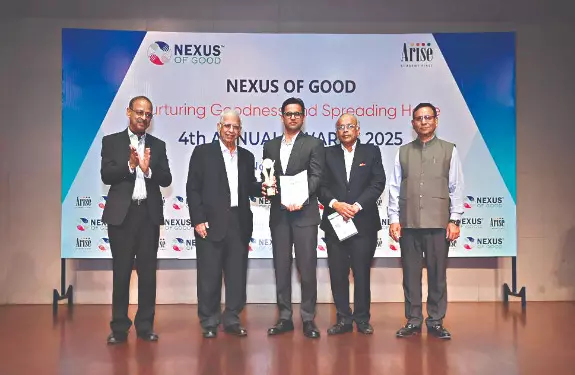
Manish Kashyap, a dedicated forester, was conferred with the Nexus of Good Annual Award, 2025, for this initiative. The model that he has put in place is replicable and scalable through public-private partnerships. This approach could serve as a blueprint for similar ecological conservation projects worldwide.
Views expressed are personal. The writer is an author and a former civil servant



