
Rise of the Female Protagonist
The evolving portrayal of women in Indian cinema reflects changing social realities, and audiences are increasingly receptive to nuanced female characters
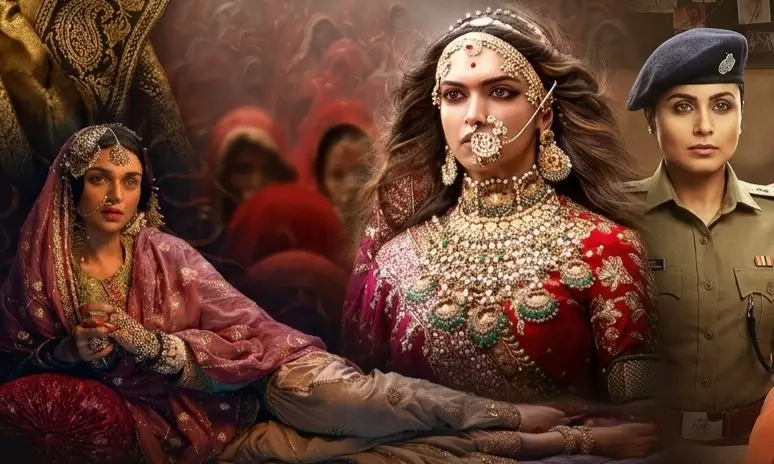


Not until very long, stories led by women were treated as deviations from the mainstream - men would be cast as proactive, capable and physically strong. In contrast, women are sidelined or portrayed in supporting roles. However, this view has been changing gradually. Today, several powerful Indian films feature female characters at the centre of conflict, ambition and ethical choices. The change is subtle; it can be seen through casting decisions, genres associated with women and the level of commitment filmmakers demonstrate in narrating stories about women.
Kahaani (2012), directed by Sujoy Ghosh, is one of the most obvious turning points. Vidya Balan is an example of how a mainstream thriller can exist without diminishing the tension or the film's scale. The film's success changed industry perceptions regarding what type of central figure would be acceptable in this genre, historically dominated by men and gave its leading lady an intelligence and emotional conviction that would hold on to the suspense. After Kahaani, more filmmakers began to explore this space with diverse stories and styles. In Vikas Bahl's Queen (2013), the film explored a young woman finding herself after the cancellation of her wedding, thereby allowing Kangana Ranaut's character to grow on her own without needing romantic approval. Alankrita Shrivastava’s Lipstick Under My Burkha (2016) foregrounded female desire and autonomy, while Gauri Shinde’s English Vinglish (2012) gave Sridevi a deeply relatable arc of self-worth. In Meghna Gulzar's Raazi (2018), Alia Bhatt was the main character in a political espionage film, and was more focused on the emotional impact of patriotism than on the big spectacle of it. Meghna Gulzar also directed Chhapaak (2020), showing the strength and dignity of an acid attack victim.
Recalibration was also adopted by large-scale productions. Sanjay Leela Bhansali built an entire epic period drama around a woman who negotiates her way through a patriarchal system with Gangubai Kathiawadi (2022), and its narrative scale matched her power, indicating that large-scale stories do not need a male hero. The same resemblance can also be seen across his several works, including Padmaavat and Heeramandi. Anubhav Sinha's Thappad (2020) also found its dramatic strength in a domestic environment, where Taapsee Pannu's very subtle performance took a single incident of disrespect against her and magnified it into multiple areas of the importance of agency and self-worth. Regional cinema has reinforced this momentum. In Tamil, Aramm (2017), directed by Gopi Nainar and starring Nayanthara in the lead role as a District Collector during a public crisis, which highlighted the qualities of an administrator (competence, compassion) as driving forces behind the plot. The inclusion of these types of roles has increased the variety of women's professions, moral dilemmas, and social statuses portrayed on screen.
More than just female characters taking centre-stage, it is the story that defines this phase of films featuring female leads. Protagonists are now investigators, negotiators, survivors and decision-makers all in one. Their arcs shape the film's trajectory rather than embellish it. The audience's response has affirmed that films with these types of stories should not be considered niche or novelty items, but rather essential elements of modern storytelling.
The progression of female leads through Indian cinema has been indicative of a transition in narrative focus/value. The audience has been receptive to nuanced character studies across genres, and as a result, the movie industry has shifted its output to reflect them. The result has been an array of characters whose value lies not in being a supporting cast member; rather, it is their own story that defines them. This change has made Indian Cinema more extensive and accurate in its representation of the world.
The writer can be reached at [email protected]



