
Asha Bhosle: The Many Shades of Versatility
A genre-defying icon of Indian playback singing, Asha Bhosle passed away at 92 after an eight-decade journey. She leaves behind an unmatched legacy
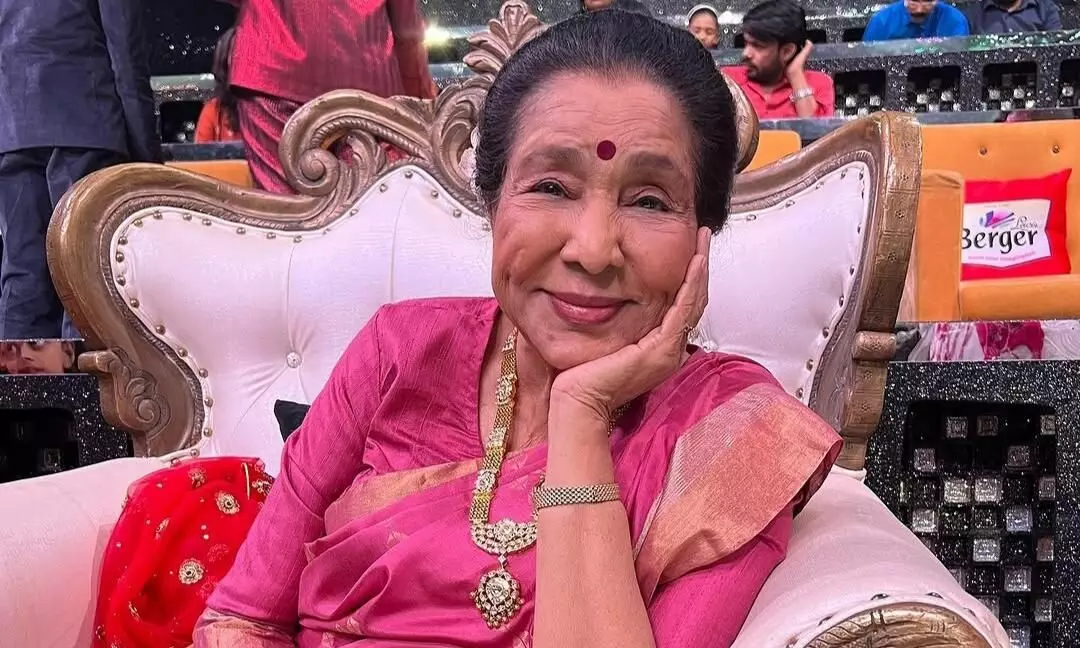


If versatility had a name in Indian playback singing, it would be Asha Bhosle. On Sunday, India lost one of its greatest cultural icons as the legendary singer passed away at 92 following a cardiac arrest a day earlier. With her passing, an era in Indian music comes to a close. Her career, spanning over eight decades and more than 12,000 songs, stands as one of the most extraordinary in the history of Indian music. She is survived by her son, Anand and granddaughter Zanai Bhosle.
Across the world, fans are grieving. Yet, what she leaves behind is nothing short of a musical universe, songs across languages, moods and genres. Bhosle could slip into any style with effortless ease, be it ghazal, cabaret, pop, folk or classical. She could be highly evocative in ‘Mera Kuchh Saaman’ (‘Ijaazat’), a song that won her a National Award and just as easily turn electric with ‘Piya Tu Aab Toh Aaja’ (‘Caravan’). From the delicate ghazal ‘Dil Cheez Kya Hai’ (‘Umrao Jaan’) to the hippie anthem ‘Dum Maro Dum’ (‘Hare Rama Hare Krishna’), her voice had both soul and swagger.
Often called the ‘Queen of Pop’ for her bold, Western-influenced songs, she brought a playful, expressive quality that redefined what playback singing could be. Veteran actress Hema Malini, who lip-synced to many of her tracks like ‘Bechara Dil Kya Kare’ or ‘O Mere Raja’ said how the legendary singer made many of her songs popular with her ‘unique voice and style’. “Asha Tai is no more! I just can’t believe how someone so full of life, she who lent so much vivacity and character to her songs, has left us grieving. I had a very special relationship with both Lata ji and Asha ji, who have contributed in no small measure to my rise in the film industry,” she wrote.
Through the decades, Bhosle became the voice behind countless leading ladies, from Meena Kumari, Madhubala and Zeenat Aman to Kajol and Urmila Matondkar. Born in Sangli, Maharashtra, on September 8, 1933, she was introduced to music by her father Dinanath Mangeshkar, alongside her sister Lata Mangeshkar. She began young, recording her first song in 1943 for the Marathi film ‘Majha Bal’. What followed was a journey of sheer longevity and reinvention. Even in the shadow of the iconic Lata, she carved a space entirely her own, one defined by true versatility. Lata also passed away at the age of 92 (in 2022).
Singer-composer Shankar Mahadevan summed up the collective grief. “I cannot believe that our dearest Asha Tayi is no more. I am not able to express my sorrow and what I am feeling right now, as a musician, as didi’s worshipper, as a very close family friend and looking up to her like Maa Saraswati. But didi and her music will never ever perish from the face of the earth till humans exist because her contribution cannot be described in words. She is somebody who is going to live forever and be there on our phone, on TV, on every single medium where music plays. She is going to be there with us, with her amazing voice resounding all over the planet,” he said.
Singer and composer AR Rahman wrote, “She lives forever with her voice and aura… What an artist.”
Bhosle’s voice came to define the bold, modern sound of the 1960s and 1970s through her collaborations with R D Burman, whom she married in 1980 and O P Nayyar. Beginning with ‘Teesri Manzil’ (1966), her work with Burman ranged across cabaret, rock, disco, ghazals and classical. With Nayyar, she found her early footing, delivering unforgettable songs like ‘Aaiye Meharbaan’ (‘Howrah Bridge’), ‘Yeh Hai Reshmi Zulfon Ka Andhera’ (‘Mere Sanam’) and ‘Aao Huzoor Tumko’ (‘Kismat’) and many more. Another early believer in her talent was Khayyam. Their association began with ‘Biwi’ (1948), when he was an assistant music director and continued through films like ‘Footpath’ and ‘Phir Subah Hogi’. But it was ‘Umrao Jaan’, which made this pairing timeless.
Singer-composer Anu Malik said, “She sang countless songs of every kind. A very big contribution to my journey has been made by Asha Bhosle. This is very sad news, for me, for my family, for the entire country and I would say for the whole world. A great artist like Asha Bhosle will never come again in this world.”
The Padma Vibhushan awardee will be cremated at Shivaji Park in Maharashtra with full state honours. Her mortal remains will be kept for final darshan at her Lower Parel residence on Sunday before the last rites.
AWARDS GALORE
• Awarded the Padma Shri in 1997
• Awarded the Padma Vibhushan in 2008
• Won the Dadasaheb Phalke Award in 2000
• Won National Film Awards for ‘Best Female Playback Singer’ (1981) for ‘Dil Cheez Kya Hai’ (‘Umrao Jaan’) and ‘Best Female Playback Singer’ (1987) for ‘Mera Kuch Samaan’ (‘Ijaazat’)
• Won the Maharashtra State Film Award for ‘Best Female Playback Singer’, a record of 18 times
• Entered the Guinness World Records as the artist with the highest number of studio recordings in music history



