Size, Not Sense
Seven seats, looming bonnets and luxury trappings define our car dreams now, revealing a cultural shift where size, space, status and safety outrun practicality
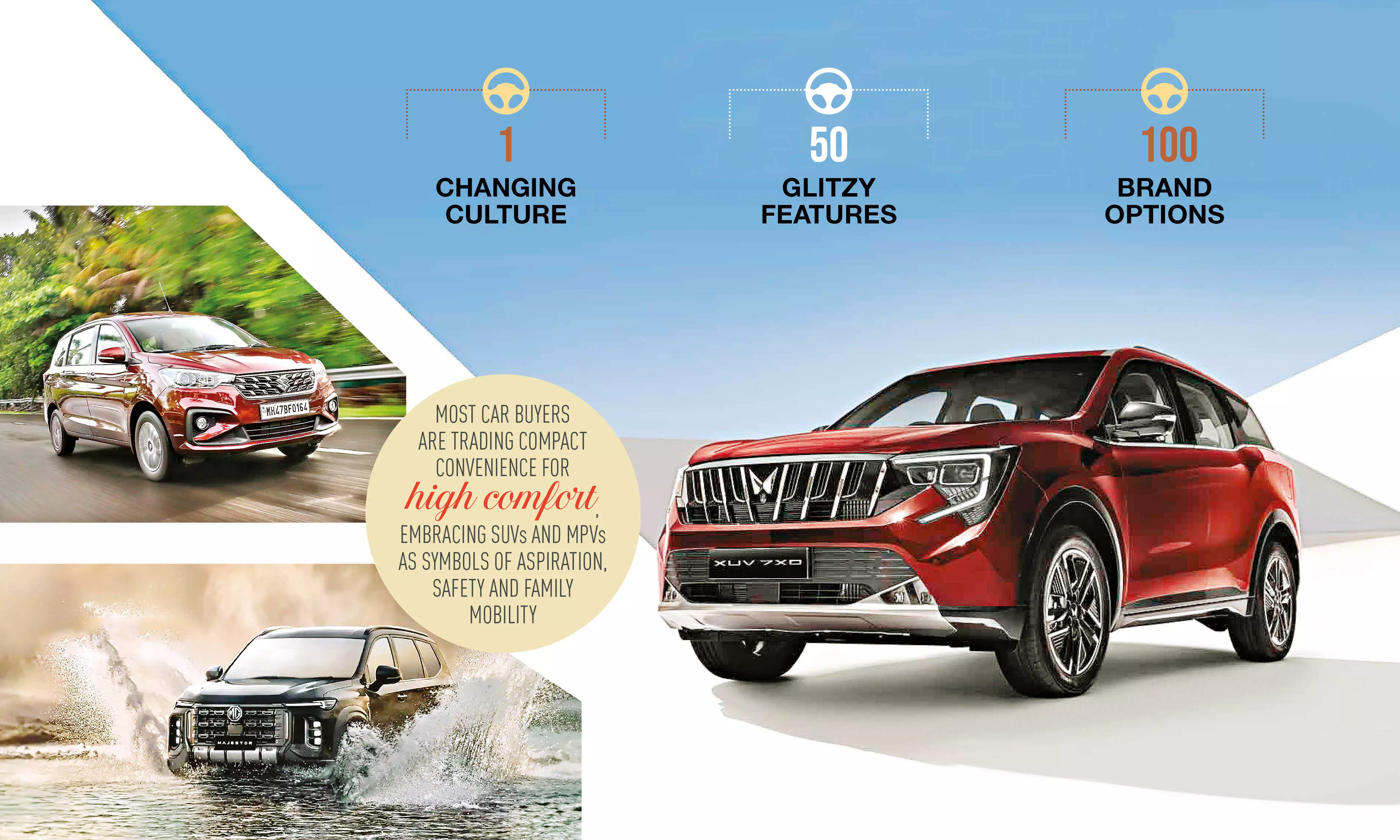


Back in the driver’s seat on an open highway after months of being stuck in city traffic, I allowed Cruise Control and Lane Assist to take charge, stretched my legs and looked around. Ahead, behind and everywhere close by, everything that moved was large and boxy. Hatchbacks, those little darlings that once reigned supreme on India’s highway carscape, were conspicuous by their absence. Everything around was big, bold and (I am not so sure) beautiful. Clearly, the seven-seater bug has nibbled away at India’s heart and brawn. The phenomenon is a near-madcap trend on city streets too. Today’s middle-class families, not just off-road enthusiasts and car-buffs, are demanding personal vehicles that are more living rooms on wheels than mere transport pods.
Space Fever is Catching
With no need to shift gears or manage the brakes, my driving mind wandered to India’s urban neighbourhoods and the curious sights seen there – SUVs and MPVs with third rows parked on streets that once saw nothing but sedans and micro SUVs. I wasn’t tasting nostalgia, but a structural shift in how we use personal transport now.
Data crunching throws up startling numbers. Seven-seaters account a whopping 78 per cent of sales in the longer SUV category over 4.5 metres, up from 58 per cent in 2022. The humble five-seater has tumbled from 43 per cent to 18 per cent. In the MPV segment of similar length, seven-seaters dominate a massive 86 per cent of sales. That’s not just a trend chart climbing, that’s a tectonic gas pedal smash reshaping the market.
What’s driving this appetite for automotive real estate? The answer is that we love versatility. The extra row is not merely for grandchildren or cousins; even nuclear families are adopting three-row SUVs and MPVs. For they offer the flexibility to handle everything from long-hauls to local errands without cramming the brood into a sardine can on wheels. “This shift in configuration demand is not cyclical, it’s structural,” an analyst said. Clearly, car-buyers are chasing a lifestyle equation where comfort and capability trump compact convenience.
Beyond Space: Comfort+Tech
This is not a revolution in seating capacity. Ask anyone what matters today. ‘Comfort’, ‘technology’ and ‘safety’ are the dumbed-down answers. Today’s seven-seaters offer a cabin experience that makes sedans blush. Plush interiors, panoramic sunroofs, ventilated seats, multi-zone climate control and advanced driver assistance systems – features once seen only in luxury cars – are now common in modern three-row vehicles. SUVs have taken ADAS mainstream, embedding radar-based safety tech into the SUV shopping list.
Automatic transmissions are rewriting expectations too. Long drives that required clutch discipline are easily managed with paddle-shifter grace. Don’t forget comfort-centric gizmos like connected car-tech, wireless smartphone integration and adaptive cruise control, which transform expressway stretches from endurance runs to serene corridor cruises. It is an erasure of boundaries between functionality and indulgence.
Market Masters, Rising Stars
If this were a race for fun, the Suzuki Ertiga would be the hot favourite. With its blend of affordability, efficiency and spaciousness, this humble car tops the seven-seater charts, clocking thousands of sales even amid broader market slowdowns and regulatory hang-ups. Toyota hasn’t sat quietly either. The Innova’s legacy as India’s quintessential people-mover continues, with the Hycross hybrid variant adding premium appeal, strong fuel efficiency and more upscale touches that justify its loyal following.
Mahindra’s duo – the rugged Scorpio and the feature-rich XUV700 – appeal to those who want presence and performance alongside practicality. Even the otherwise reserved MPV segment is flexing aspirational muscles; Kia Carens has seen solid growth with its family-friendly blend of comfort and tech, while niche vehicles like Renault’s Triber combine affordability with clever space use to carve out their space in the sun. The sub-Rs 10 lakh bracket hasn’t been left out either, with compact yet capable seven-seaters addressing value-hungry buyer budgets, signalling that the family-centric vehicles are now mainstream.
Cultural Shift on Wheels
There is a deeper cultural narrative to the auto metamorphosis. Cars have always been status symbols; merely owning one used to carried prestige. Now, the type of car you own signals your mindset. The image of grandma sprawled in comfort on a long drive, with kids watching movies in the back row and parents discussing route maps over tea… That’s aspirational imagery fulfilled in real time.
The shift cuts across demographics. Data shows the average age of seven-seater buyers has fallen from 40 to 37 in a few short years, proving this is no ‘old-man’s cart’ phenomenon. Young families, tech enthusiasts and even ride-share businesses are being increasingly found in larger cabins. India’s auto has evolved from functional to territory, a mobile living room that symbolizes a family’s identity and aspirations.
While India’s seven-seater boom owes much to its social fabric like larger families, packed holiday schedules and status aspirations, the trend echoes global patterns. Europe and North America have seen similar surges in three-row SUV popularity, albeit at higher price points. What’s distinct in India is the segment’s democratisation. Seven seats are no longer the preserve of premium cars; they are a choice across budgets and lifestyles.
Destination India: What Next?
If there’s a lesson here for India, and indeed for the world watching this dynamic market. Family-oriented mobility is no niche. It’s becoming the baseline expectation. Carmakers ignoring this risk being left in a cloud of others’ dust. The path forward lies in nurturing this momentum: EVs and hybrids tailored to three-row platforms, safety standards that make seating comfortable for adults and tech that blends utility with luxury.
The car is no longer just about getting from A to B. For millions of Indians, it is the stage on which family stories unfold; from road trips to school runs to pilgrimages. If car brands deliver vehicles that match these narratives in comfort, safety and emotional resonance, India’s highways will be crowned with the new heroes of the road. Seven-seater lifestyle vehicles.