Indian Steel, Global Sparks
Global automobile firms are investing heavily in India – creating jobs, reshaping manufacturing and overhauling the nation’s role in the future of world mobility
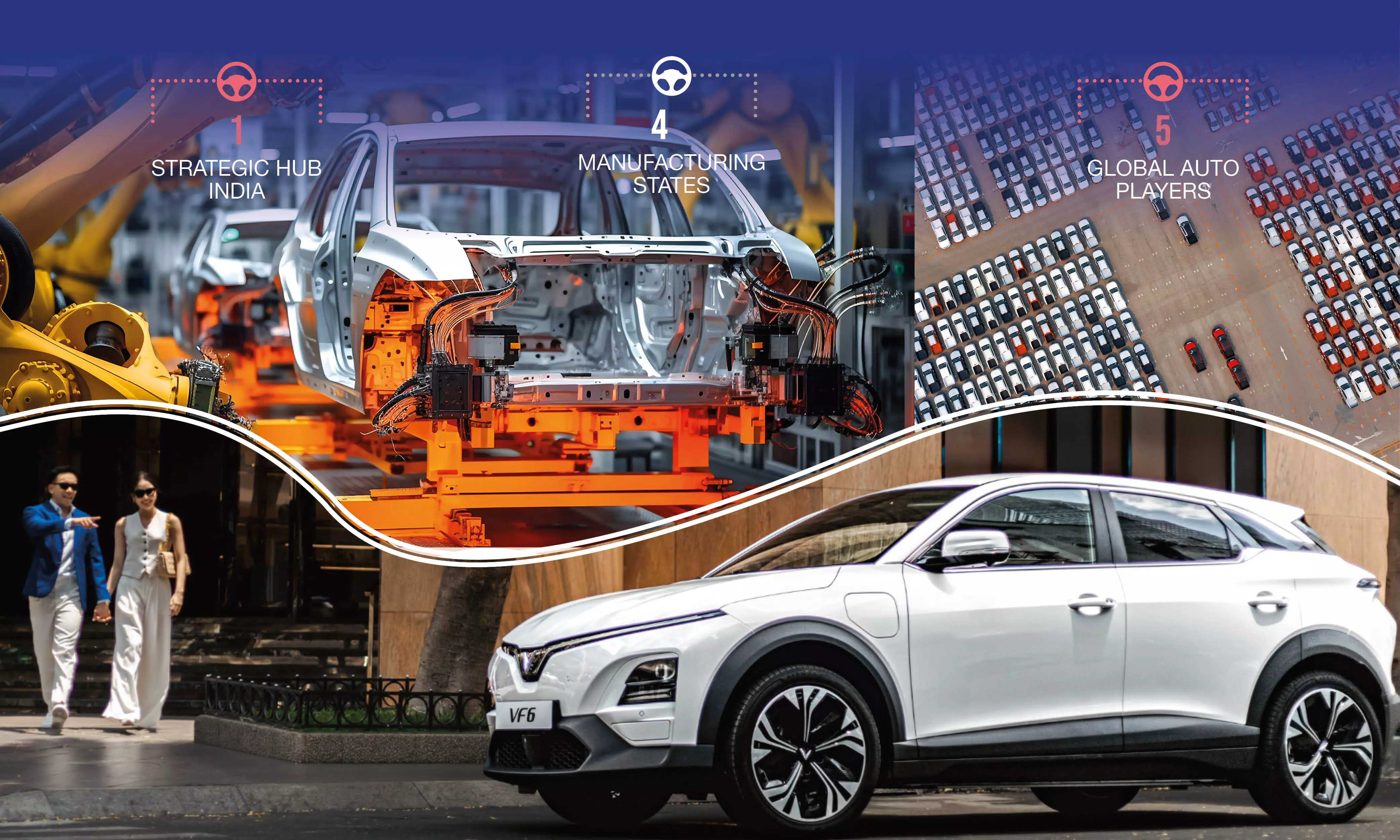


The smokestacks are silent, but the engines of a new kind of revolution are humming in Tamil Nadu. In Thoothukudi, acres of gleaming factory floor, robotics arms and assembly lines tell a story we are not accustomed to – global auto firms are no longer content with exporting vehicles to India, they want to make them here. This shift is not about metal and machines. It is about jobs, local economies, global market strategy and national identity.
Vietnamese electric‑vehicle maker VinFast broke ground on a sprawling EV manufacturing complex in Tamil Nadu, indicating how India is transitioning from car‑buyer to car‑building powerhouse. For decades, the narrative was written by the likes of Maruti Suzuki, Tata Motors and M&M, alongside global partners that chose India because of cost advantages. But now, global firms are making India the anchor of their strategy, recognising that it offers more than cheap assembly. It opens up a door to scale, talent, logistics and a gateway to the whole world.
The air is different. It is a heady mix of expectation, steel and the hum of megaprojects. In Tamil Nadu, Gujarat, Maharashtra and Haryana, plants and logistics corridors are no longer conduits for making cars. They are proving grounds for a bold new vision: India as a global auto production juggernaut.
India’s Changing Relevance
For decades, India has been a striking outlier: world‑class auto design and usage, with much of the manufacturing relevance being quiet and under‑leveraged. That is changing. Start with the buzz around new EV facilities and scale up to the steady expansion of legacy giants. The story is less about creating vehicles for India. It is more about creating them in India for the world.
VinFast’s Thoothukudi facility, the first outside Vietnam, is backed by a $500 million-investment, to be expanded by a potential $2 billion. The plant will assemble SUVs and produce up to 150,000 vehicles annually, with an eye on exports, generating 3,000 direct jobs and catalysing ancillary growth. Suzuki Motor has pledged to spend Rs 70,000 crore ($8 billion) to build EVs for exports, underscoring how India is winning confidence from those with global footprints. The move is not an isolated headline-grab. It is part of a deliberate shift where global auto firms are locating production muscles in India not to serve Indian consumers, but global markets.
Driving this convergence of global aspirations on Indian soil is a mixture of scale, strategic advantage and policy. India is the world’s third‑largest automobile market by volume and the fourth‑largest in production, making it both a vibrant market and an attractive base for exports. Vehicle production surpassed 28 million units in FY 2023‑24, contributing to manufacturing GDP and supporting millions of jobs across the supply chain.
Auto Hub in the Making
The conceptual leap is from ‘assembly hub’ to ‘value‑chain hub’. The past saw auto production in India anchored in labour cost advantages. It is now about integration of technology, electrification eureka, local supplier ecosystems and export networks stretching from Africa to Europe.
Take the rise of utility vehicle exports. Once an afterthought compared to cars and two‑wheelers, utility vehicle sales have surged worldwide. In 2025, such shipments overtook passenger car exports for the first time, signalling that Indian manufacturing can produce vehicles that other markets want and can rely on. Nissan recently marked an export milestone by sending more than 1.2 million vehicles from its Tamil Nadu plant to markets in the Gulf region and beyond.
It is not just foreign brands exporting from India. Domestic leaders like Maruti Suzuki and Hyundai are scaling exports too, doubling down on local production to serve global customers. In FY2025, India exported 5.3 million vehicles, including cars, two‑wheelers and commercial vehicles, recording YoY growth that reaffirmed its rising global footprint.
Jobs, Skills & Ecosystems
The promise of jobs is a tangible aspect of this renaissance. Auto factories are engines of employment not just for assemblers, but for a web of ancillary workers such as technicians, logistics personnel, engineers and suppliers. According to NITI Aayog’s Vision 2030, automotive output could generate 2.5 million direct jobs by 2030, bolstering livelihoods while energising local economies.
For regions emerging as automotive hubs, the impact goes beyond the factory gates. Houses get built, roads get upgraded, training centres flourish and new small enterprises (like canteens and tyre shops) sprout. Sure, the transition is not effortless. Modern auto production demands a workforce with tech-literacy, digital skills and an aptitude for quality control far beyond the old assembly‑line paradigm. Bridging these human capital gaps remains a challenge for both industry and policymakers.
Clear Signs of Progress
In Haryana’s Kharkhoda, a new Maruti Suzuki plant began operations in early 2025, adding capacity and supporting export ambitions tied to an aggressive growth roadmap that could see annual output increase to multi‑million units by the end of the decade. At the same time, Tata Motors is investing thousands of crores into new passenger and EV portfolios, planning new models with production in India for both local and global consumption.
Mahindra & Mahindra’s strategic acquisition of SML Isuzu reflects such a transition, strengthening its commercial vehicle presence. Tata Motors’ hefty commitment to future car portfolios reflects an indigenous determination to compete across segments that matter to tomorrow’s customers, EVs included. What binds global and domestic efforts together is a shared understanding that India’s role in the future of mobility is not incidental anymore, it is strategic.
But Many Risks Lie Ahead
Such ascent is not without risk. India’s share of global auto components lingers at 3 per cent of traded parts, a figure that betrays ‘under-realised potential’, given the sector’s scale at home. Building deeper integration will require investments in technology, supply chain security and innovation systems. Also, electrification adds complexity. Battery manufacturing, semiconductors and advanced electronics are areas where India trails established leaders.
India’s automotive manufacturing renaissance is a story of ambition and alignment between investors seeking growth, domestic leaders reshaping themselves and policy frameworks aligning industrial incentives with global opportunities. In the span of a decade, India has gone from regional production hub to a central node in global automotive value chains.
For buyers, this means choice and better cars. For workers and local economies, this means jobs and industrial ecosystems. For global auto, India represents not just scale and cost pluses, but the promise of innovation, market diversity and a strategic anchor. The future may be electric, digital or ICE, but the roads we travel will be typically Indian. With the right mix of skills, policy and ambition, India may not just build cars, it could also drive the future of auto manufacturing on its own terms.