
Middle East worries over possible US strike on Iran
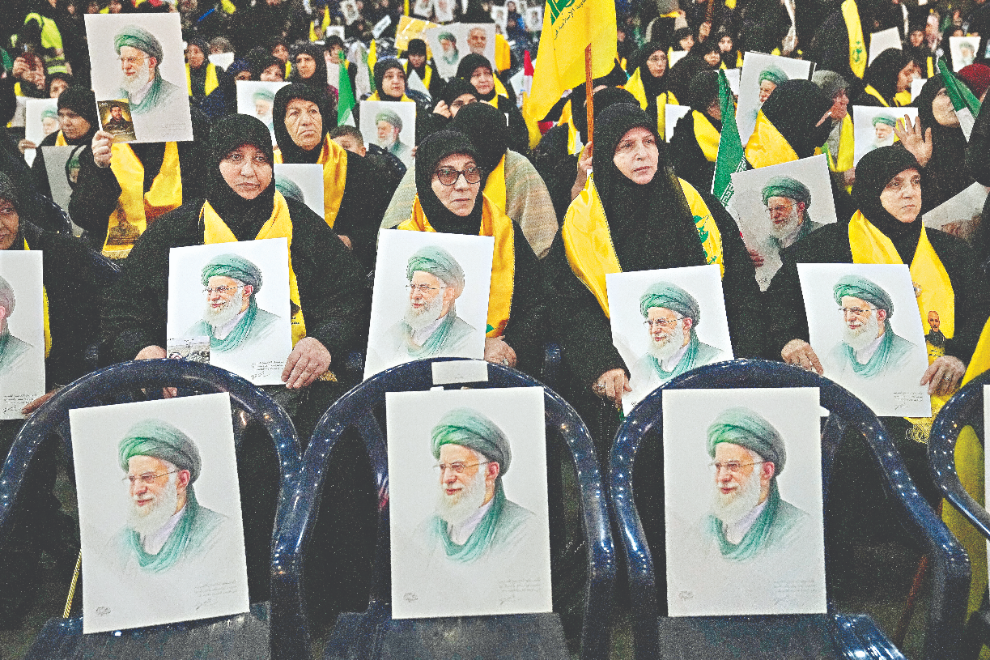


Dubai: Iranian officials reached out to the wider Middle East on Wednesday over the threat of a possible US military strike on the country, while the value of Iran’s currency reached a new low a month since the start of protests that soon spread nationwide and sparked a bloody crackdown.
Two nations, Saudi Arabia and the United Arab Emirates, have signalled they won’t allow their airspace to be used for any attack. But America has moved the USS Abraham Lincoln and several guided missile destroyers into the region, which can be used to launch attacks from the sea.
Iran’s currency, the rial, fell to a record low of 1.6 million to $1, according to local currency traders. On Tuesday, the rial fell to 1.5 million rial to $1. Economic woes had sparked the protests that broadened into challenging the theocracy.
It remains unclear what US President Donald Trump will decide about using force, though he laid down two red lines — the killing of peaceful demonstrators and the possible mass execution of detainees.
The protests saw at least 6,221 people killed as Iran launched a bloody crackdown on the demonstrations, with many others feared dead, activists said Wednesday.
“Hopefully Iran will quickly Come to the Table’ and negotiate a fair and equitable deal - NO NUCLEAR WEAPONS - one that is good for all parties,” Trump wrote on his Truth Social platform on Wednesday. “Time is running out, it is truly of the essence!”
Mentioning the June strikes on Iran as the US inserted itself in Israel’s 12-day war on the Islamic Republic,
Trump wrote: “The next attack will be far worse!”
Iran’s mission to the United Nations was quick to respond to Trump, posting on X that “Iran stands ready for dialogue based on mutual respect and interests — BUT IF PUSHED, IT WILL DEFEND ITSELF AND RESPOND LIKE NEVER BEFORE!”
Iran’s state-run media, which now only refers to protesters as “terrorists,” remains the sole source of news for many as Tehran cut off access to the global internet some three weeks ago.
But Iranians have become angry and anxious, seeing footage of protesters shot and killed while worrying about what may happen next as the economy — the original focus of the protests — sinks further.
“I feel that my generation failed to give a better lesson to younger ones,” said Mohammad Heidari, a 59-year-old teacher in Tehran. “The result of decades of teaching by my colleagues and me led to death of thousands, and maybe more injured and prisoners.”
Egypt’s Foreign Ministry said its top diplomat, Badr Abdelatty, separately spoke with Iranian Foreign Minister Abbas Araghchi and US Mideast envoy Steve Witkoff to “work toward achieving calm, in order to avoid the region slipping into new cycles of instability”.
The statement offered no details, though Iranian state media quoted Araghchi as saying third-party mediators had been in touch. Witkoff, a billionaire real estate developer and Trump’s friend, had earlier negotiated over Iran’s nuclear programme. There was no immediate acknowledgment from the White House of the call. The Turkish foreign minister also spoke by phone with Araghchi about reducing regional tensions. Turkish officials have expressed concern that intervention in Iran could spark instability or trigger a refugee influx.



