India, US reach framework for interim trade pact; opens $30 trn market for Indian exporters
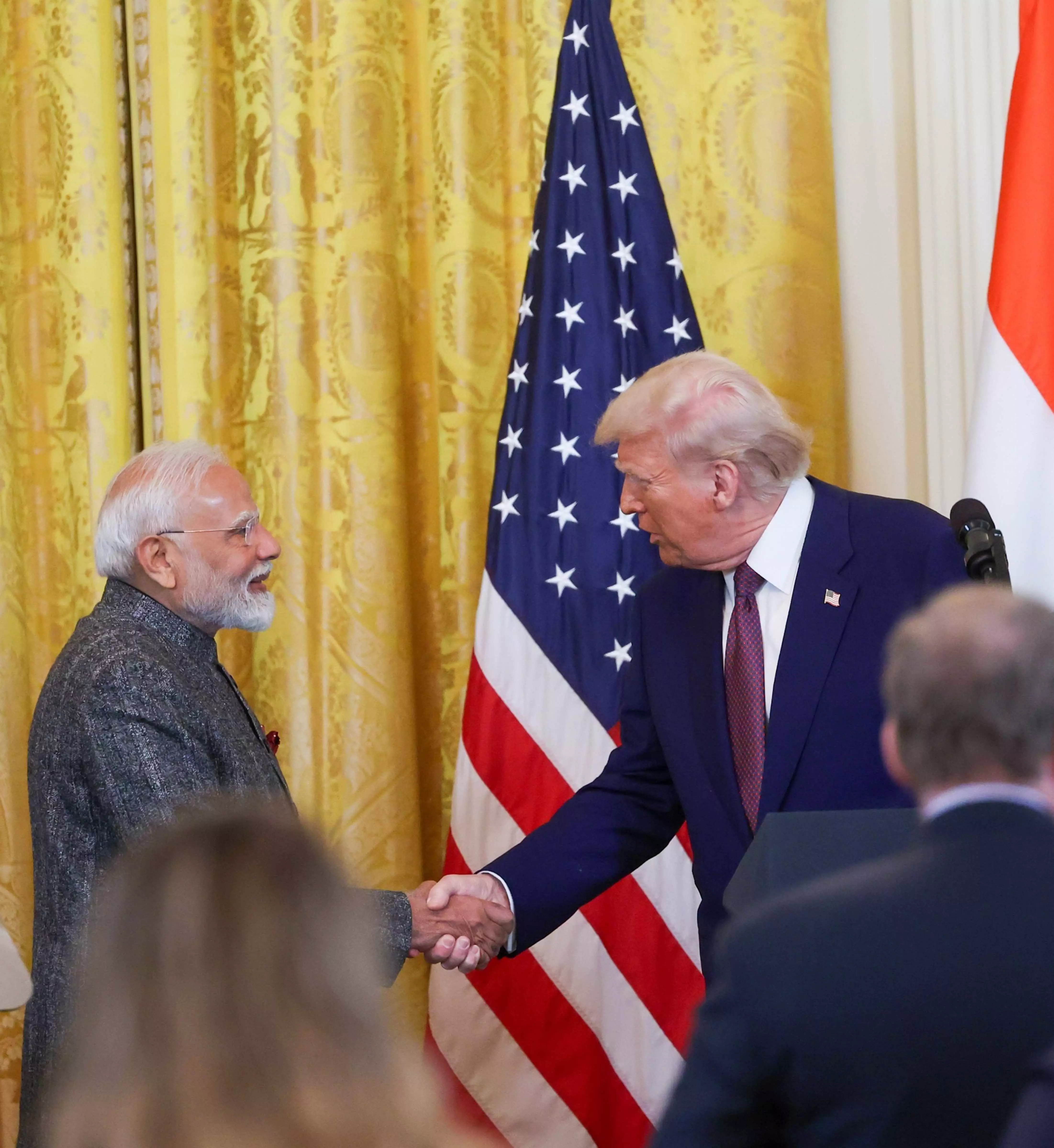


New Delhi/Washington: India and the US on Saturday announced they have reached a framework for an interim trade agreement under which both sides will reduce import duties on a number of goods to boost two-way trade.
While the US will reduce tariffs on Indian goods to 18 per cent from the present 50 per cent, India will eliminate or cut down import duties on all US industrial goods and a wide range of American food and agricultural products, including dried distillers' grains, red sorghum for animal feed, tree nuts, fresh and processed fruit, soybean oil, wine and spirits.
According to a joint statement issued by both sides, India has expressed its intention to purchase USD 500 billion of US energy products, aircraft and aircraft parts, precious metals, technology products and coking coal over the next five years.
"The US and India are pleased to announce that they have reached a framework for an Interim Agreement regarding reciprocal and mutually beneficial trade," the statement said.
Further, through an executive order, US President Donald Trump has removed the 25 per cent tariffs, or additional import duty, that it imposed on India in August last year for purchasing Russian oil, citing that the country has undertaken "significant steps" and New Delhi has committed to stop directly or indirectly importing oil from Moscow.
The US added that India has committed to stopping, directly or indirectly, importing Russian oil.
"Effective with respect to goods entered for consumption, or withdrawn from the warehouse for consumption, on or after 12.01 am eastern standard time on February 7, 2026, products of India imported into the United States shall no longer be subject to the additional ad valorem rate of duty of 25 per cent imposed pursuant to Executive Order 14329," the order said.
On the development, Prime Minister Narendra Modi said the interim trade pact will strengthen 'Make in India' by opening up new opportunities for farmers and entrepreneurs, and create jobs for women and youngsters.
Commerce and Industry Minister Piyush Goyal said the interim pact will open a USD 30 trillion market for Indian exporters, especially MSMEs, farmers and fishermen, as the US duties on Indian goods will come down to 18 per cent from 50 per cent earlier.
In August last year, the US imposed 25 per cent reciprocal tariffs and an additional 25 per cent levy on India for its purchase of Russian oil, hitting Indian exporters hard as America is their largest export destination.
The reduction in tariffs will help boost exports of India's labour-intensive sectors such as textiles and apparel, leather and footwear, plastic and rubber, organic chemicals, home decor, artisanal products and certain machinery.
Additionally, tariffs will go down to zero on a wide range of goods, including generic pharmaceuticals, gems and diamonds, and aircraft parts, thereby further enhancing India's export competitiveness and Make in India.
India will also get exemptions under section 232 on aircraft parts, tariff rate quota on auto parts and negotiated outcomes on generic pharmaceuticals, leading to tangible export gains in these sectors.
"At the same time, the Agreement reflects India's commitment to safeguarding farmers' interests and sustaining rural livelihoods by completely protecting sensitive agricultural and dairy products, including maize, wheat, rice, soya, poultry, milk, cheese, ethanol (fuel), tobacco, certain vegetables, meat, etc," Goyal said.
The United States Trade Representative has (USTR) said that US President Donald Trump is expanding American farmers and producers' access to one of the largest economies in the world under a trade deal with India.
"President Trump is expanding American farmers and producers' access to one of the largest economies in the world, with India committing to eliminate or lower tariffs for all US industrial goods and a wide array of agricultural products; address long-standing non-tariff barriers to trade; buy more American goods and services and purchase over USD 500 billion of US products," the USTR said in another post.
Hailing the agreement, US Trade Representative Ambassador Jamieson Greer said President Donald Trump's “dealmaking” is unlocking one of the largest economies in the world for American workers and producers.
The joint statement also said that the two countries will "promptly" implement this framework and work towards finalising the interim agreement with a view to concluding a mutually beneficial Bilateral Trade Agreement (BTA).
In February last year, the two nations entered into negotiations for the first phase of the BTA. This framework will now be converted into a legal pact, which is expected to be signed by mid-March, following which India will start cutting down duties on specified American goods.
After the successful conclusion of the interim pact, tariffs will go down to zero on a wide range of Indian goods, including generic pharmaceuticals, gems and diamonds, and certain aircraft and aircraft parts.
"Similarly, consistent with the US national security requirements, India will receive a preferential tariff rate quota for automotive parts subject to the tariff imposed to eliminate threats to national security," the statement said.
The statement added that New Delhi has agreed to address long-standing barriers to the trade in US medical devices, eliminate restrictive import licensing procedures that delay market access for, or impose quantitative restrictions on American Information and Communication Technology goods.
"Recognising the importance of working together to resolve long-standing concerns, India also agrees to address long-standing non-tariff barriers to the trade in US food and agricultural products," the statement said.
India and the US will also significantly increase trade in technology products, including Graphics Processing Units and other goods used in data centres, and expand joint technology cooperation.
To enhance ease of compliance with applicable technical regulations, the two countries plan to discuss their respective standards and conformity assessment procedures for mutually agreed sectors.
During 2021-25, the US was India's largest trading partner in goods. The US accounts for about 18 per cent of India's total exports, 6.22 per cent in imports, and 10.73 per cent in bilateral trade. In 2024-25, the bilateral trade touched USD 186 billion (USD 86.5 billion exports and USD 45.3 billion imports).
With America, India had a trade surplus -- or the difference between imports and exports -- of USD 41 billion in 2024-25. It was USD 35.32 billion in 2023-24 and USD 27.7 billion in 2022-23.