Uncharted Landscapes
Often reduced to myths and distance, Nagaland unfolds as a land of living cultures, wild landscapes and journeys that turn inward as much as they move forward


- Sometimes you find yourself in the middle of nowhere.
And sometimes, in the middle of nowhere, you find yourself.
For many Indian travellers, the North East still exists in the realm of half-knowledge and inherited myths. Nagaland, one of the eight sister states, often enters conversations wrapped in a single adjective—mysterious. Fierce warriors. Remote hills. Tribal lore. And little else. It is spoken of as though it were a place frozen in time, distant both geographically and culturally.
Then you arrive.
And the stereotypes quietly fall apart.
The hills glisten under a generous winter sun. Forests appear gloriously unspoilt, unapologetically green. The air—clean, sharp, almost celebratory—forces you to breathe deeper, slower. Nagaland reveals itself gradually, through colour, culture, silence and warmth of people who seem entirely comfortable with who they are.
Drive through the state, and you will discover terrains that feel uncharted, landscapes that reward patience, and roads that off-roaders would find purpose-built for adventure. This is a land where maps often surrender, and instinct takes over. Where journeys matter as much as destinations.
The Festival of Festivals
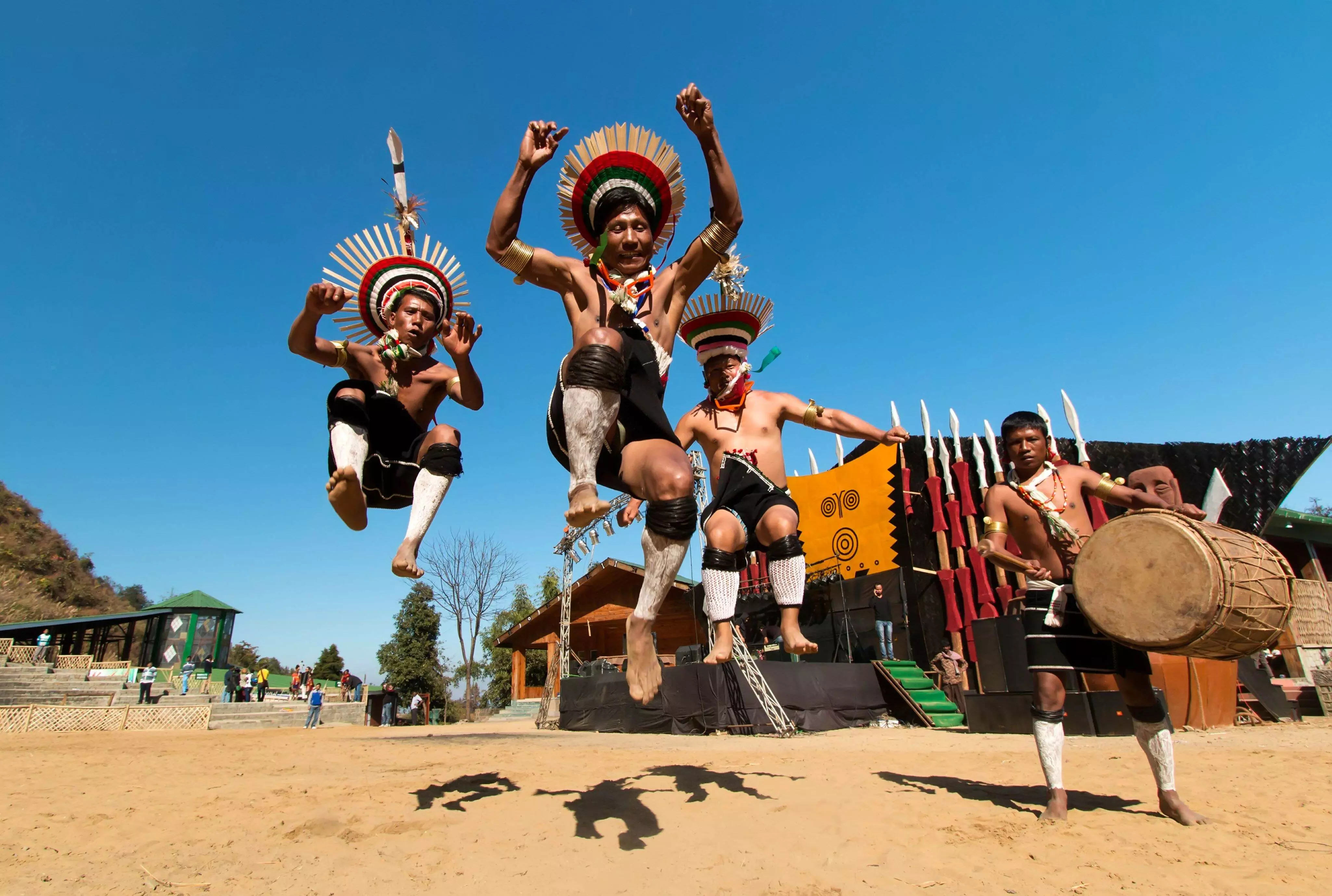
If Nagaland has a heartbeat, it pulses strongest in the first week of December at the Hornbill Festival—aptly titled the Festival of Festivals. Held at the Naga Heritage Village, Kisama, just outside Kohima, this ten-day cultural spectacle is both a celebration and a statement.
It is pomp, colour and confidence rolled into one.
What began as a regional cultural showcase has now secured its place firmly on the global cultural calendar. Foreign tourists arrive in droves, cameras ready, expectations high—and leave visibly transformed. What unfolds before them is an electrifying display of art, attire, music, dance and indigenous expression, not just from Nagaland but from the wider North Eastern region.
Seventeen Naga tribes take centre stage—Angami, Ao, Chakhesang, Chang, Garo, Khiamniungan, Kachari, Konyak, Kuki, Lotha, Pochury, Rengma, Sangtam, Sumi, Tikhir, Yimkhiung and Zeliang—each bringing its own rhythm, palette and cultural grammar. Martial arts-heavy performances test stamina and strength. War cries echo briefly, then dissolve into laughter and applause.
The costumes deserve their own standing ovation. Crafted from locally grown cotton and wool, woven in eye-popping colour patterns, and embellished with feathers, animal teeth, horns, skins and intricate beadwork, they are nothing short of haute couture with ancestry, elegance and grace. These are garments that command attention; drape one, and you instantly become photogenic. If international fashion runways are searching for inspiration, Kisama quietly sets them on fire—without ever calling it fashion.
Kisama and the Afterglow
After the sensory overload—dance, drums, colours and inevitable shopping—it is time to move. Kisama’s open-air amphitheatre, nestled amid rolling foothills, slowly fades into memory as I head out towards the next stop: Kapamodzü Peak, in Phek district.
The journey is not gentle.
At 2,620 metres, Kapamodzü is a tabletop grassland and a hiking and trekking destination offering sweeping, uninterrupted views of the Saramati range to the east, Japfü Peak to the south, Kohima in the distance, and even villages of Manipur on a clear day. The trail is lined with wild roses, orchids, rhododendrons, trumpet flowers and ferns. Butterflies appear suddenly, performing what feels like an unsolicited welcome dance.
As sunset arrives, the sky slips into hues of orange and pink. Darkness follows. Stars emerge unmarred by city light. Here, lungs feel rewarded. Minds quieten. The body, usually restless, finds an unfamiliar stillness.
Cold Nights and Quiet Towns
From here, the road leads to Pfutsero, Nagaland’s highest—and coldest—town. Just 50 kilometres from Kohima, it remains surprisingly untouched by tourism. In December, fleeting snowflakes sometimes visit the valleys after midnight, disappearing as quietly as they arrive. It is a refreshing spot for nature lovers.
Pfutsero is home to the Chakhesang tribe, whose hospitality makes the cold easier to bear. Conversations are unhurried. Silence is not awkward. The town, precisely, lingers long after you leave.
Nearby lies Zhavame village, declared a “vegetable village” for its organic farming practices, especially cabbage and potatoes. Surrounded by paddy fields and traditional architecture, it sits at the foothills of Kapamodzü. The village offers enormous eco-tourism potential, but more importantly, it offers a perspective—of lives lived close to land, season and community.
Into the Wild: Lake Shilloi
The next morning begins early. Very early.
A gruelling off-road journey lies ahead—to Lake Shilloi, near the Indo-Myanmar border. The drive demands patience, endurance and alertness. Sharp turns, slush, sand, gravel, rivers and boulders test both vehicles and resolve. Pine forests give way to open fields. Roads fork without warning.
Lake Shilloi—the largest natural lake in Nagaland—rests quietly amid the Patkai mountain range. Its remoteness is its greatest charm. Mist floats gently over the water. Silence settles in. Migratory birds appear like punctuation marks in an otherwise unbroken sentence of calm. Camping here recalibrates time. Clocks lose relevance.
The return journey feels no less cinematic. Waterfalls tumble down mountain faces. Cherry blossoms bloom unexpectedly. Mud-puddling butterflies stage encore performances, lingering long enough to be noticed.
Stops along the way punctuate the journey. Laruri village is known for its clay pots. Chezami is renowned for weaving and local textiles. Chakabama, a final halt before heading back. In Chezami, handwoven shawls and textiles prove impossible to resist. Each piece feels less like a souvenir and more like a portable memory—woven with patience, precision and pride.
Finding Yourself, Quietly
Nagaland is not a checklist destination. It does not lend itself to hurried itineraries or superficial consumption. It is layered, demanding and deeply rewarding. It challenges perceptions, tests endurance, and rewards curiosity in equal measure.
If remote terrains, living cultures, long roads, unexpected conversations and being welcomed by strangers with genuine warmth are your idea of travel—then cherish Nagaland.