Beyond Mood Swings
Bipolar disorder is more than mood swings—it is a cyclical mental health condition requiring early recognition, structured treatment and sustained family support


My father is 52, a successful businessman, and someone we’ve always looked up to. But over the last few years, we’ve noticed patterns we don’t understand. There are phases where he barely sleeps, takes big financial risks, starts multiple projects, talks excessively, and seems unusually confident—almost unlike himself. He becomes irritable if questioned. Then, after a few weeks, he crashes. He withdraws, avoids work, loses interest in everything, and seems deeply low and fatigued. A psychiatrist has diagnosed him with bipolar disorder. What does this mean? How do we help him?
World Bipolar Day, observed on March 30, exists for exactly these situations—to improve recognition and reduce stigma around a condition often misunderstood as “just mood swings.”
Let’s break this down.
The first phase you describe is mania or hypomania. During this period, your father appears energised, productive, and driven. He may sleep very little, take on ambitious plans, spend impulsively, and make high-stakes decisions with unusual confidence. To others, this can look like peak performance. Clinically, however, it reflects a state of elevated mood and dysregulated energy.
Common features of mania include a reduced need for sleep without fatigue, racing thoughts, pressured speech, increased goal-directed activity, and risk-taking behaviour. Irritability when questioned is also typical. While this phase may seem productive initially, it is often unsustainable and followed by consequences—financial strain, interpersonal conflict, or poor decision-making.
This is followed by the second phase: the depressive crash. Here, your father becomes withdrawn, fatigued, and disinterested. This is not simple burnout. It aligns with a depressive episode marked by persistent low mood, loss of interest, slowed thinking, and feelings of hopelessness.
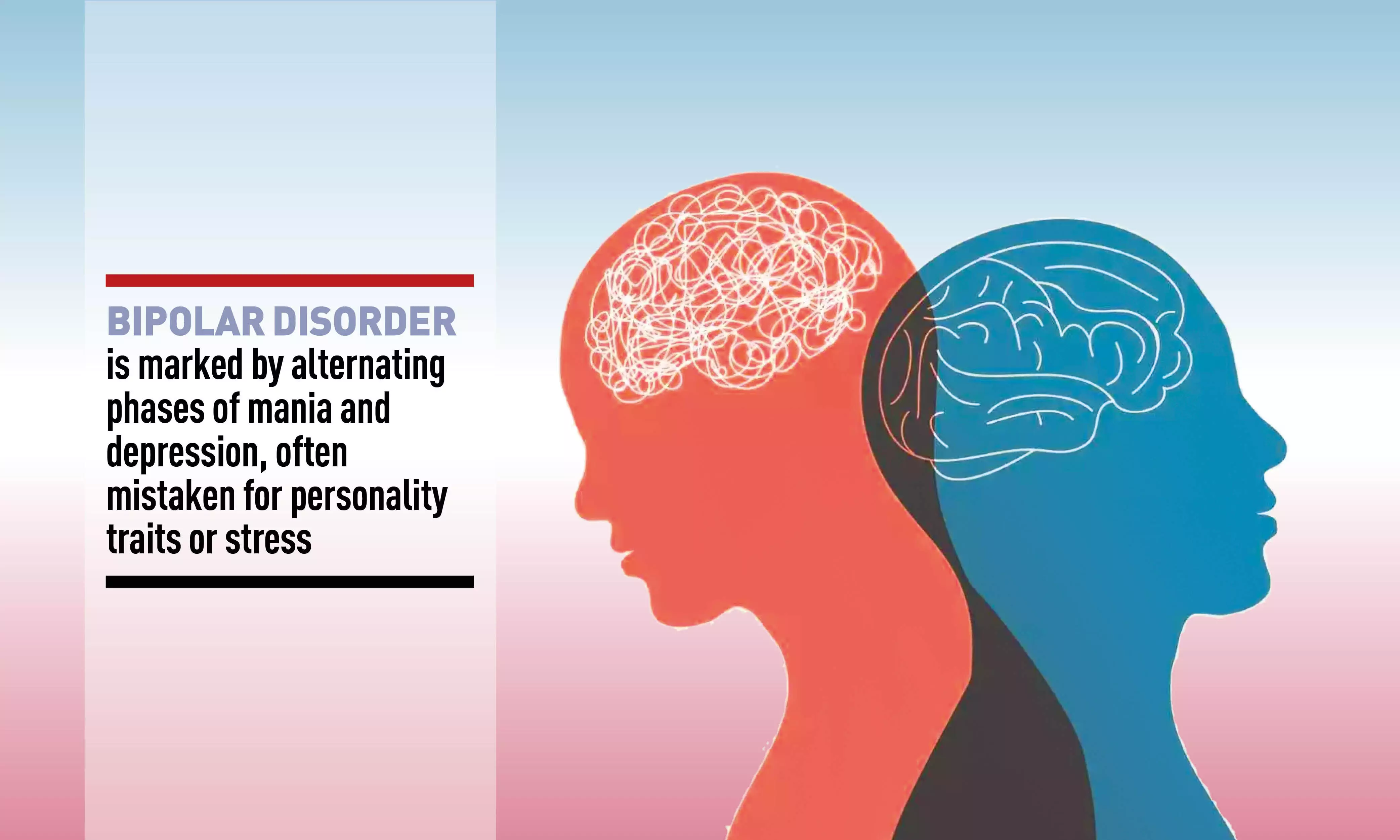
What defines Bipolar disorder is this cyclical shift between elevated and depressed states, not isolated mood changes.
Why does this happen?
Bipolar disorder is a biological condition with genetic and neurochemical underpinnings. The brain’s systems regulating mood, sleep, and energy become unstable. Triggers such as sleep disruption, stress, or major life events can precipitate episodes, but the underlying vulnerability remains.
It affects roughly 1–2 per cent of the population and presents in different forms:
Bipolar I involves full manic episodes
Bipolar II involves hypomania with depression
Cyclothymia involves milder but chronic fluctuations over two years or more
A key reason bipolar disorder is often missed, especially in adults, is that mania is misread as personality or success. Families usually seek help during depression, while the earlier “high” phase goes unnoticed. Many individuals are initially treated for depression alone, delaying accurate diagnosis.
So what can you do as a family?
Start with concern, not confrontation. Instead of labelling every behaviour, say: “We’ve noticed these changes and we’re worried about you.” Encourage continued psychiatric care, as diagnosis and treatment are ongoing processes.
Treatment is effective but structured.
Medication is essential—typically mood stabilisers and, in some cases, antipsychotics. Therapy, such as Cognitive Behavioural Therapy and Interpersonal Social Rhythm Therapy, helps regulate routines and identify triggers.
Equally important is routine stability. Fixed sleep schedules, predictable daily patterns, and avoiding sudden lifestyle changes are critical. In bipolar disorder, sleep is a powerful regulator.
Families can also watch for early warning signs. Before mania, there may be reduced sleep, increased activity, or impulsive decisions. Before depression, withdrawal, fatigue, and loss of interest appear. Recognising these early helps prevent escalation.
World Bipolar Day matters because too many families spend years confused, attributing these changes to stress or personality. Bipolar disorder is not a flaw. It is a treatable medical condition. Your father is not “changing as a person”—he is experiencing episodic shifts in brain function. With the right treatment and consistent support, stability is achievable.
The goal is not to suppress who he is, but to help him remain consistently himself—without the extremes taking over.
Public figures like Stephen Fry, Demi Lovato, Carrie Fisher, and Kanye West have helped bring visibility to bipolar disorder. Films like Silver Linings Playbook and Infinitely Polar Bear also depict its lived realities.