
‘Big mess-up’: ten Doeschate rues loss, clears Axar’s omission
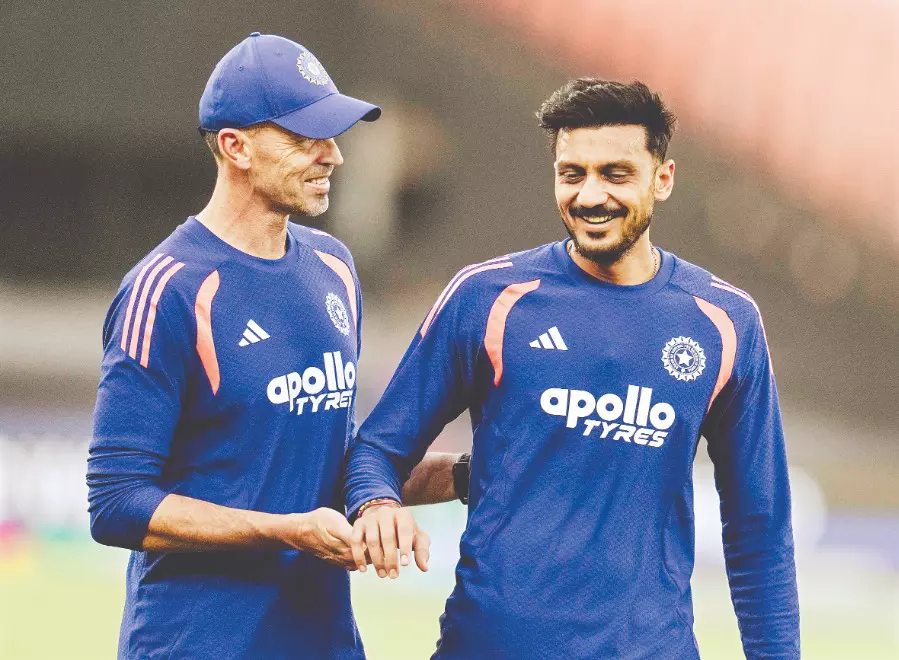


Ahmedabad: India’s campaign veered into crisis mode after a bruising defeat to South Africa, and assistant coach Ryan ten Doeschate made no attempt to dilute the reality. “We’ve made a lot of mistakes tonight… we messed up on a grand scale,” he admitted — a candid assessment that underscored how comprehensively India misread the conditions, their combinations, and their own blueprint with bat and ball.
The most contentious decision of the night — omitting vice-captain Axar Patel in favour of Washington Sundar — was immediately questioned. Ten Doeschate described it as a match-up call against South Africa’s left-hand-heavy top-order. “Our analysis was that the biggest threat was going to come from the left-handers… and we wanted someone who could bowl in the powerplay,” he said. “We envisaged Washington bowling two overs there.” But the match unfolded in a way that rendered that logic obsolete. South Africa’s early collapse meant Sundar was never deployed in the role he was selected for, and India were left without Axar’s middle-order assurance and all-round balance.
Ten Doeschate conceded the optics. “He didn’t bowl in the powerplay tonight, and then it looks like we’ve gone for a middle-overs option — in which case you would choose Axar.” Still, he maintained the decision was taken with the team’s best interests in mind. “In a tournament like this, you expect players to understand we are trying to pick the best XI to win the game.”
If selection was one fault line, India’s batting template was another. For the third time in five matches, they lost a wicket in the opening over. “We’ve started almost every innings 0 for 1… that puts immediate pressure on the middle order,” he noted. Opposition sides have increasingly targeted India’s left-hand-heavy top order with early spin — a pattern he acknowledged as troubling. “Four times teams have opened with spin against us and taken a wicket… we have to look at that.”
The team management now faces a choice between continuity and recalibration.



