Whose war is it anyway?
Global wars are closer to home than ever before, with their aftermath causing shortages and uncertainty on Indian shores
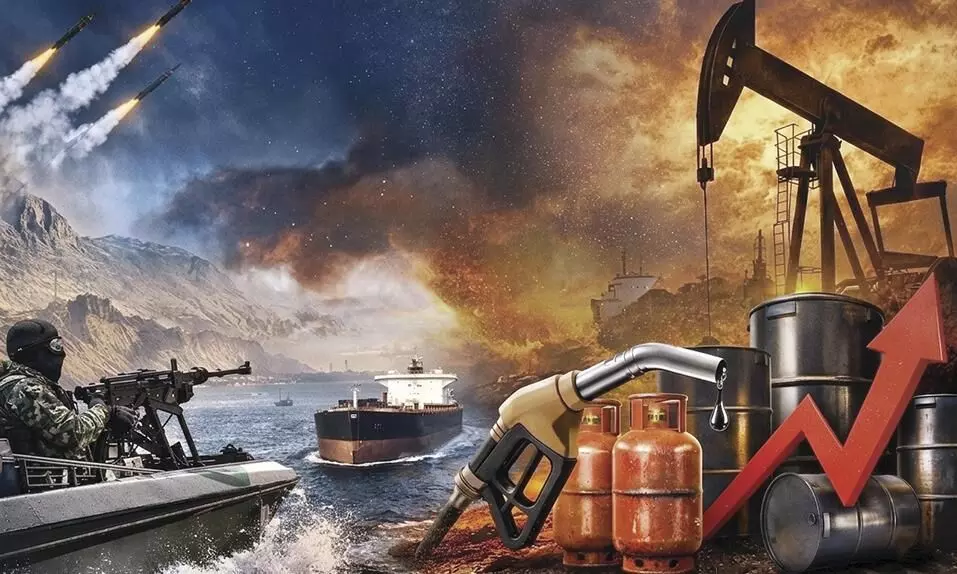


Where unnecessary, uncalled-for wars go, the current one tops the list. This is what fragile egos and hollow men achieve — bloodshed, tension, shortage. The US-Israel versus Iran war is having a cascading effect on us all. When friends and family get stranded abroad, or gas supplies vanish at home, that war which felt hundreds of kilometres away seems to be at our doorstep. As the world was still reeling from the after-effects of Covid-19, and just about managing to resuscitate itself, human viruses have struck with alacrity. What would you call this world but a political order that we have elected? Across nations, such megalomaniacs have been democratically elected, who relish in strife, whose adrenaline rush stems from destroying world economies. Stock markets crash, lakhs may go hungry, but the glib rhetoric carries on. And remember, we the people have elected these part-buffoons and full-time evil warmongerers.
There are things that we must fight against — climate change, poverty, gender imbalance, violence against women and children. There are perversions that must be fought and people protected. If we want disruptions, artificial intelligence (AI) is providing a ready one. Mother Earth is crying out for intervention; our air and water scream for rejuvenation. And yet, these men, these small men in their ivory towers, revel in triggering war-related exigencies. And then they go after a nation that has probably been preparing for such a day for the last few decades. US President Donald Trump and Israeli Prime Minister Benjamin Netanyahu have underestimated the doggedness of the Iranian regime. It’s most pertinent to also note that the aggression of two leaders is negatively impacting over a dozen nations directly and indirectly, while putting at least nine nations in harm’s way of facing military attacks. The destabilisation of an entire region is on the shoulders of these men who have given two hoots about anyone except themselves. In one sweeping gesture, their actions blocked 20-25 per cent of the world’s seaborne crude supply that passes through the Strait of Hormuz, affecting primarily Asian importers such as India, China, Japan, and South Korea.
Herein is a curious phenomenon. The effects of war are felt far and wide, and yet the decisions that precede these actions have little to no parliamentary approval or global support. So while you can feel the repercussions of another nation’s actions, you have no influence to stop them and scant power to protect your own. Immaturity, foolhardiness, selfishness, racism, or fear — whatever prompted Trump and Netanyahu to attack Iran has faced mild, toothless criticism from world leaders. While some have declined extending support to Trump when he asked for help to secure the Strait of Hormuz, several nations, including India, have tactfully played it safe. The hard reality is that dialogue and compromise seem antiquated ideas. It’s akin to two school bullies unleashing chaos in the school ground, but there are no strong teachers or parents, and the other kids prefer not to get embroiled either.
So far, the war, which none of us signed up for, has pushed up energy and crude prices and halted or skyrocketed air travel. Businesses are cautious, spends are meagre, shutdowns are increasing. In India, petrol and diesel prices are increasing more and more every day, commercial gas is being sold in black markets, while domestic LPG has an uncertain delivery date. The restaurant and food sector is struggling with establishments shutting down in the wake of the commercial gas shortage. Reports suggest that over 170 tile factories in Morbi, Gujarat, have stopped operations, while over 15,000 MSMEs are already sputtering due to gas and fuel shortage. Steel and cement industries are facing losses, as are the agriculture, logistics, and gems and jewellery industries. Supply chains are jittery, job loss is not far behind, and perhaps worryingly, neither is food shortage. And all of this over an unsolicited skirmish that we didn’t even start. I suppose this is indeed kalyug (the age of darkness).
Views expressed are personal. The writer is an author and media entrepreneur