Voices Beyond The Cities
Urban-centric narratives dominate India’s media landscape, leaving rural realities underreported and weakening democratic accountability where it matters most—at the grassroots level
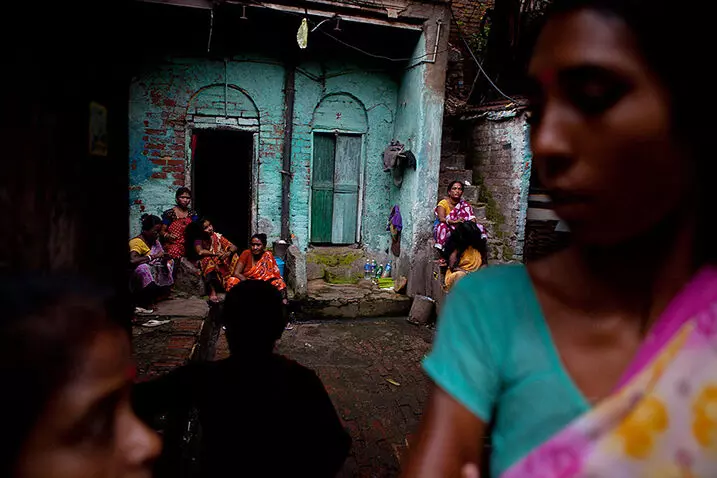


The media, which was once confined to newspapers and broadcasting, today, with the digital revolution, has transformed into an indispensable public institution with immense power to influence the thought process of citizens. Revered as the ‘fourth estate’, it has always played a predominant role in educating people on the accountability of public offices vis-à-vis the rights of the citizenry. However, over time, most media have become primarily urban-centric, focusing mostly on sensational stories surrounding politics, financial scams, celebrities, sports, and promotional narratives. Resultantly, rural news concerning government schemes of development, agricultural activities, drinking water, issues of the rural economy, labour migration issues, etc., often remains unreported. Accountability of the delivery mechanism or that of elected representatives of PRIs differs remarkably in the rural landscape in comparison to urban areas, where the media constantly chases the truth and tries to inform the public. The job of the media as the “watchdog of democracy” remains incomplete when the majority of people who inhabit the backwaters of a country do not become part of the overall growth story. Especially, the voices of vulnerable classes like women, Dalits, Tribes, et al., cannot reach law-enforcing agencies and institutions of governance. Neglect of rural coverage only accentuates the rural-urban divide and disempowers rural populations at large.
The reasons are said to be manifold, including infrastructure, literacy, regulation, economic conditions, and cultural contexts. Additionally, a resource crunch, safety concerns of journalists, and inaccessible terrains make investigative journalism an unenviable enterprise in rural areas. Nonetheless, rural journalists keep struggling to report on issues of public health, drinking water, environmental concerns, education, migration, and more, though the circulation of dailies and journals in rural belts has always been a logistical issue.
Media consumption in India is of a hybrid nature. Reportedly, nearly 47 per cent of rural consumers engage with both traditional (TV, print) and digital (YouTube, Facebook, WhatsApp, short-form video) formats. While the digital revolution helped create an ecosystem of fast communication, it has also brought along extra baggage: misinformation, addictive content, and cultural erosion. A new wave called ‘citizen journalism’, mainly urban-centric and thriving on blogs, social media sites, and podcasts, has flooded the internet with loaded content—more disinformation in character than information. The current panic among the public about fuel and LPG supply on account of the ongoing Gulf war is one such example, as the ground realities stand contrary to it. Absent gatekeeping by professional editors, it has become an inexpensive and convenient avenue for the dissemination of fake news and sectarian views, which poison the innocent minds of peace-loving village folk. Moreover, even as the digital divide disallows hassle-free permeation of news to rural areas, subscriptions raise affordability issues, not to mention cybercrimes and digital arrests.
However, there is a silver lining in the narrative of rural media. Community radio has emerged as one of the most effective tools for rural audiences worldwide, especially in areas marked by poor literacy and inaccessibility. Radio is successful in communicating not only advisories related to farming, healthcare, disaster management, etc., but also in helping local populations ventilate their grievances in local dialects. In Nigeria, South Africa, and Sub-Saharan regions, radio has become a popular medium in addressing development issues and empowering people. In China and parts of Asia (e.g., Thailand), rural broadcasting with state support has been very effective in informing and educating people on agricultural extension and development programmes. In the US, NPR (National Public Radio) and PBS (Public Broadcasting Service) are major American non-profit public media organisations established through the Public Broadcasting Act of 1967. They are run by public and private funding and serve rural people by educating them on various issues. In Latin America, there are effective community media movements with radio and other information outlets focusing on rural rights and indigenous populations in relation to land issues, environment, and social justice. However, in countries like China and some Latin American nations, public voices are not encouraged, and in extreme cases, the state resorts to crackdowns.
India too has more than 400 community radio broadcasting systems, many of which are run either by marginalised communities or by NGOs. Stations like Radio Bundelkhand, Sangham Radio (Telangana’s first all-female station), and others broadcast in local dialects on topics such as farming, women’s rights, education, and disaster preparedness, along with participatory content. Similarly, as reported by Al Jazeera (9 February 2026), Khabar Lahariya, a women-led newspaper founded in 2002 in Madhya Pradesh (now operating in multiple states and dialects like Bundeli, Awadhi, and Bhojpuri), is run by reporters from weaker sections. It broadcasts investigative stories about corruption, governance failures, caste and gender issues, and rural neglect. A study by Amit Verma, Preeti Singh, et al. (Journal of Communication and Management, 22 March 2025) highlights community radio’s role in SDGs (poverty reduction, health, education) across developing countries, with India often cited as a large-scale model alongside African and Latin American examples. However, these broadcasting systems face problems of financial sustainability and cannot afford to scale up.
In spite of heavy odds, rural and vernacular papers all over the world continue to put up a brave front in holding their ground, sometimes even outperforming mainstream publications. They enjoy the trust of readers in rural settings, especially among older demographics, despite the challenges posed by the digital shift. They prove their indispensability in covering stories of development and issues of rural empowerment based on grassroots-level field information, so much so that at times even big media houses cite them in their national-level telecasts. This pattern is observed even in Africa and Asia, where small-time local dailies fill the gaps left by big media houses. However, resource crunch remains an obstacle on their path to growth. For example, according to The Washington Post, November 30, 2021, about 2,200—nearly a quarter of American local newspapers—closed between 2005 and 2021. More than 200 counties with no newspaper at all turned into ‘news deserts.’ The story is not much different in the UK and Europe as well. However, they manage to survive, benefitting from overall infrastructure, unlike their counterparts in the Global South. Moreover, some countries also dole out subsidies to encourage rural media.
According to Statista, India is the largest market for the industry, with over 1,46,000 newspapers and periodicals as of 2023, amounting to a total circulation revenue of 306 billion rupees between 2014–22. However, business models overshadow the social responsibility of necessary outreach. Media, as a popular institution of public good, must adhere to principles of inclusivity by reaching out to hitherto neglected areas. There is tremendous scope for rural media to scale up, provided state support is extended through subsidies and generous concessions on par with mainstream media. An inclusive and hybrid ecosystem, with a special place for rural media, is the way forward to empower rural populations, especially vulnerable classes and women, to participate in the democratic process and equitable development.
Views expressed are personal. The writer is a former Additional Chief Secretary of Chhattisgarh