The Infrastructure Reckoning
India’s infrastructure push must shift from scale to sustainability, embedding resilience, efficiency and climate intelligence to secure long-term economic stability and competitiveness
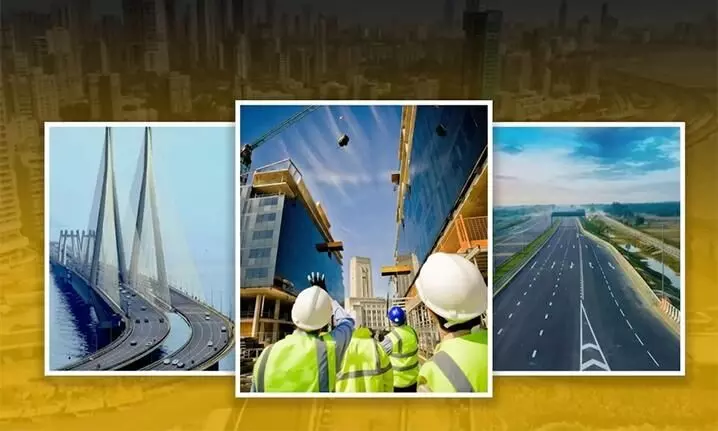


India is building its infrastructure at a speed and scale that few countries have ever experienced. Highways, industrial corridors, smart cities, and energy systems are transforming the country’s economic landscape. But scale, by itself, is no longer the right metric of success. The real question is not how much India builds, but what it builds, and whether it is fit for the future.
For decades, infrastructure has been approached as a quantity-driven exercise. Today, that approach is increasingly misaligned with reality. Climate extremes – heatwaves, floods, erratic rainfall – are already testing the limits of existing systems. Infrastructure built for yesterday’s conditions is struggling to cope with today’s disruptions. In this context, the idea of “business as usual” is not just outdated; it is risky.
This is where the idea of a green reset becomes critical. Green infrastructure is not a niche category or a parallel agenda. It is about embedding sustainability, resilience, and efficiency into the very definition of infrastructure. The shift is fundamental: infrastructure can no longer be climate-neutral. It must be climate-intelligent by design. The infrastructure choices India makes today will determine not just the pace of growth, but the stability and resilience of that growth over the next century.
The False Dichotomy
One of the most persistent misconceptions in infrastructure debates is that green solutions are more expensive. But this perception rests on a flawed understanding of cost. Traditional, or “brown” infrastructure, appears cheaper because it excludes a range of hidden liabilities: inefficient energy use, high maintenance costs, vulnerability to climate shocks, and the eventual need for retrofitting or rebuilding. These costs are not eliminated; they are simply deferred.
Green infrastructure, by contrast, demands greater attention – and sometimes investment – upfront, but delivers long-term savings through efficiency, durability, and resilience. The real choice, therefore, is not between green and non-green infrastructure. It is between paying once for resilience or paying repeatedly for failure.
As climate risks intensify, these hidden costs will become increasingly visible in the form of fiscal stress, disrupted supply chains, and lost productivity. Seen through this lens, green infrastructure is not an environmental preference; it is a form of economic risk management. The cost of building resilient systems is upfront. The cost of not building them is permanent.
Competing Green
Green infrastructure is no longer just a domestic development issue; it is becoming central to global economic competitiveness. Trade and investment patterns are shifting. Carbon footprints, sustainability standards, and access to green finance increasingly influence supply chains. Regulatory frameworks are evolving to favour low-carbon production systems. In a carbon-conscious world, infrastructure will quietly determine who competes and who falls behind.
Energy-efficient industrial zones, low-carbon logistics networks, and sustainable urban ecosystems directly shape production costs, export competitiveness, and investment attractiveness. Countries that fail to align their infrastructure with these evolving standards risk facing implicit trade barriers and higher costs of capital. Those who move early stand to gain. For India, this presents a strategic opportunity.
Smart, green infrastructure can significantly reduce operational costs, improve efficiency, and enhance reliability. More importantly, it can position India as a preferred destination in a world where sustainability is becoming a key determinant of economic engagement. Green infrastructure, therefore, is no longer about compliance; it is about positioning effectively in a changing global economy.
Designing Green
Delivering on a green infrastructure agenda requires a shift not just in intent, but in design. Too often, sustainability is treated as a compliance requirement – something to be addressed after core decisions have been made. This approach is both inefficient and costly. Sustainability cannot be retrofitted at scale; it must be embedded at the design stage.
Technology offers powerful tools to enable this shift – data is becoming as critical to infrastructure as concrete and steel. Digital solutions such as Building Information Modelling (BIM), IoT-enabled systems, and real-time analytics allow infrastructure to be simulated, stress-tested, and optimised before it is physically built. Increasingly, infrastructure will be constructed twice – first digitally, then on the ground.
But green design goes beyond technology. It requires rethinking what qualifies as infrastructure. Natural systems – wetlands, forests, and coastal ecosystems – often provide more resilient and cost-effective protection than engineered solutions alone. Integrating these into planning is not an environmental compromise; it is a smarter engineering choice.
Equally critical is the need to place water at the centre of infrastructure thinking. Groundwater depletion, urban flooding, and rainfall variability are emerging as systemic risks to India’s growth. Yet, water systems remain fragmented and underinvested. Treating water management, from rainwater harvesting to watershed restoration, as core infrastructure is essential to building long-term resilience.
Finally, green infrastructure must be inclusive. Climate risks disproportionately affect vulnerable populations, and poorly designed systems can deepen inequalities. True resilience is not just technical; it is social.
From Transition to Transformation
If the case for green infrastructure is so compelling, why does progress remain uneven? The answer lies in two structural constraints: capability and capital.
On the capability side, India faces a significant skills gap. The infrastructure workforce must now integrate climate awareness, digital tools, and sustainability principles into planning and execution. This requires a fundamental shift in education and training – through updated curricula, modular certification programmes, and wider access to specialised skills beyond major urban centres.
On the capital side, financing models must evolve. While green infrastructure delivers long-term value, upfront costs can be a barrier. Innovative approaches such as performance-based contracting, energy-as-a-service, and pay-as-you-save models can help align investments with realised benefits and reduce initial financial burdens.
Ultimately, green infrastructure will scale only when it becomes both technically viable and commercially attractive. But beyond these constraints lies a larger opportunity. India is not merely a participant in the global green transition; it has the potential to shape it. Unlike many developed economies, India is still building much of its infrastructure. This creates a rare opportunity to embed sustainability, resilience, and efficiency from the outset. If India succeeds, it will do more than transform its own economy. It will create scalable, cost-effective models for other emerging economies facing similar challenges. In doing so, India will not just build infrastructure. It will define a new development paradigm – one that aligns growth with sustainability and resilience.
The infrastructure India builds today will determine not just the economy it creates, but the risks it carries and the resilience it secures for generations to come. The case for a green reset is no longer environmental; it is economic, strategic, and unavoidable. And the question is no longer whether India can afford a green reset. It is whether it can afford to delay it.
Views expressed are personal. S Priyadarshi is the President, and S Kurian is a Research Associate, both at Chintan Research Foundation