The Cost of Complacency
The Bondi Beach terror attack was not an intelligence failure but a collapse of vigilance, where ignored warnings, unchecked radicalisation and lax gun laws proved fatal
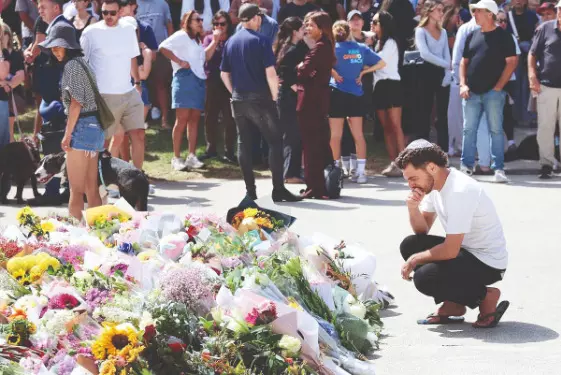


Terrorists have struck again, killing 15 people—this time at the heart of Australia—targeting the Jewish community during their religious festival, Hanukkah, at the popular tourist destination of Bondi Beach in Sydney. Prima facie, it is clearly evident that the terrorists, a father-and-son duo, both Australian citizens—Sajid Akram (50) and Naveed Akram (24)—carefully chose the Jewish community in an apparent move to strike at it in pursuit of their antisemitic blueprint, ostensibly to avenge the October 7 retaliation by Israel related to the Gaza violence.
Further, it is also clear that the perpetrators behind the mass shooting at the Jewish celebration in Sydney were motivated by Islamic State (IS) ideology, as per the Australian government. Investigators have further stated that police found two homemade IS flags in the car that the suspects drove to the site of the massacre on December 14. Police also recovered improvised explosive devices from the vehicle. This confirms that radical perversion continues to pose a serious challenge. This assessment was also endorsed by Australian Prime Minister Anthony Albanese while speaking to the media.
In the meantime, it has also emerged that both the father and son had travelled to the Philippines last month, the reasons for which are being proactively investigated. According to the Philippine Bureau of Immigration, the men arrived in the country together on November 1, reporting their final destination as Davao—a city considered the gateway to the southern region of the country, which is largely terror-prone. Parts of the southern Philippines are already known as centres of IS activity. The two men left the country on November 28. Informal sources do not rule out their nexus with the Philippines-based Abu Sayyaf Group (ASG) for indoctrination, fine-tuning, and training in weapon handling for this well-crafted terror attack. IS has long maintained a presence in Western Mindanao and the Sulu Archipelago of the Philippines. These networks have also been linked with Jemaah Islamiyah (JI) of Indonesia, which targeted Australian tourists, among others, in the 2002 Bali bombings—one of the deadliest terror strikes that killed over 200 people.
The father, Sajid, was a licensed holder of six firearms that were legally registered to him, according to authorities. Officials had previously stated that the son had come to the attention of authorities in 2019, but it was determined at the time that he did not pose an immediate threat. The Australian government needs to take a fresh look at its liberal gun laws. This is essential to prevent immigrants and others from easily obtaining firearm licences and misusing them to take innocent lives.
Meanwhile, Australian news media has also reported—citing unnamed police sources—that the 2019 investigation focused on Naveed Akram’s links to Isaac El Matari, a self-proclaimed IS commander based in Sydney who was convicted of plotting a terrorist attack. It may be relevant to point out that the Bondi Beach attack, which was the deadliest mass shooting in Australia in almost three decades, also left around 25 people injured, including several in critical condition.
The Australian Prime Minister disclosed that the Five Eyes intelligence network—the United States, United Kingdom, Canada, and New Zealand—would assist in investigating the deadly terrorist shooting, which left at least 15 victims dead. Albanese also said that the investigation would include whether the pair had been radicalised by an extremist ideology. However, this does not appear to be a very mature statement. The perpetrators must have been indoctrinated; otherwise, they would not have resorted to such a lethal course of action. Last year, there were antisemitic attacks in Sydney and Melbourne. Synagogues and cars were torched, businesses and homes vandalised with antisemitic graffiti, and Jews were attacked in cities where 85 per cent of the nation’s Jewish population resides. Still, alertness on the part of authorities was conspicuously missing, despite clear wake-up calls.
By these indications, it would appear that Australian intelligence may have fallen short of expectations. Once there were such glaring acts of targeting synagogues, the antennae of the authorities should have been automatically raised. Leaders of the Jewish community in Australia stated after the Bondi attack that the writing was on the wall and that they had anticipated an attack at any time. They had warned authorities, but their pleas went unheeded. Such indifference on the part of an affluent, developed, and technologically advanced country like Australia is hard to fathom. Another striking feature of the Bondi terror act exposes the extent of religious indoctrination that prompted a father and son to commit such a heartless act—firing indiscriminately and killing so many. It is high time that decisive steps are taken to halt the ongoing radicalisation among religious extremists.
The incident in question has drawn international attention, with world leaders condemning the dastardly terror act. Reacting to the Bondi terror attack, US President Donald Trump condemned, on December 16, the deadly antisemitic terror attack in Australia, stating that all nations must stand united against what he described as the evil forces of radical Islamic terrorism. He made these remarks while speaking at a Hanukkah reception at the White House.
The Bondi act of terror calls for a fresh global review of counter-terror (CT) policy, especially as the festive season approaches. Christmas and New Year celebrations are imminent and appear vulnerable due to emboldened terror designs by potential perpetrators. A well-coordinated anti-terror approach is clearly called for. India, with the New Delhi car explosions of November 10 still fresh in memory, offers a sobering reminder. That incident involved the complicity of academics, making the threat landscape even more perilous. A zero-tolerance approach to terrorism appears indispensable.
Views expressed are personal. The writer is a retired IPS officer, Adviser NatStrat, and a former National Security Advisor in Mauritius