Thawing the Diplomatic Frost
PM Modi’s Kuala Lumpur visit signals a deliberate thaw after years of strain, anchoring ties in digital payments, resilient supply chains, local-currency trade and shared maritime security
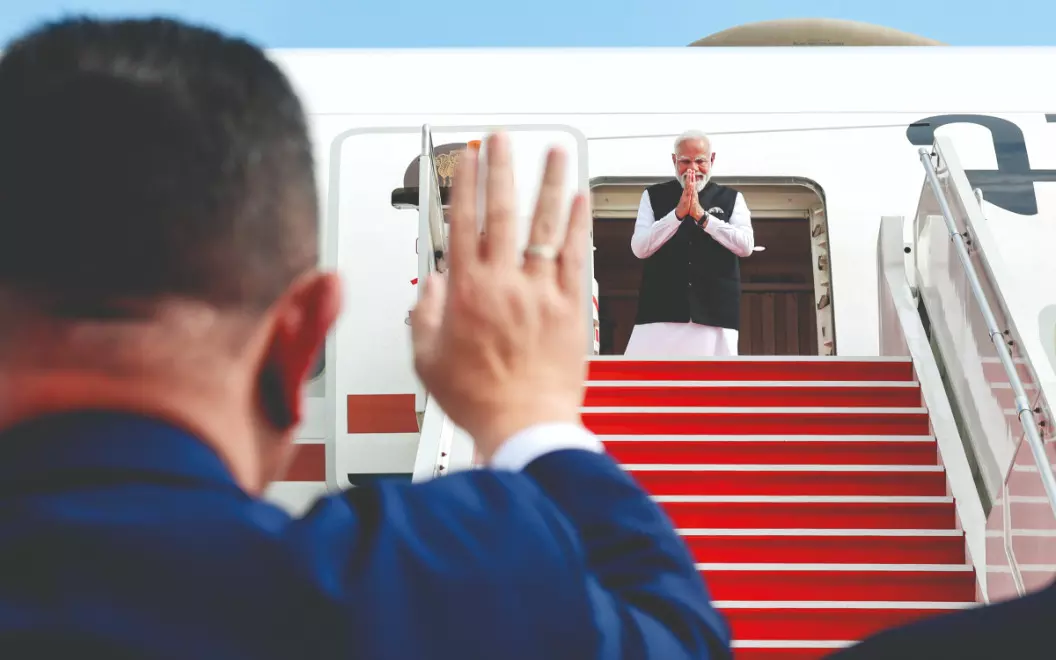


Prime Minister Narendra Modi’s latest visit to Kuala Lumpur is significant not simply because of new agreements, but because it marks a conscious reset after one of the coldest periods in modern India–Malaysia relations.
That chill traces back to Malaysia’s dramatic 2018 political upheaval. The 14th General Election ended Barisan Nasional’s uninterrupted 61-year rule and returned Dr Mahathir Mohamad to power at the age of 92. His comeback was historic, but it also reshaped Malaysia’s foreign policy tone. Once mentor and later nemesis of current Prime Minister Anwar Ibrahim, Mahathir remains one of the most consequential figures in Malaysian politics. His 22-month second stint in office, however brief, proved disruptive for ties with India.
At the United Nations General Assembly, Mahathir accused India of “invading and occupying” Jammu and Kashmir — language he had previously reserved for major Western powers. He openly criticised India’s Citizenship Amendment Act and questioned New Delhi’s domestic policies. His refusal to extradite controversial preacher Zakir Naik further deepened tensions. India responded with restrictions on Malaysian palm oil imports, a move widely read as diplomatic retaliation. What followed was a rare public spat between two countries that had historically managed disagreements quietly.
Unlike his mentor-turned-foe, Prime Minister Anwar has projected a more pragmatic, economically anchored diplomacy. He speaks openly about cultural pluralism, embraces Malaysia’s multiethnic identity, and frames international partnerships through growth and technology rather than symbolism. That difference is central to understanding why India–Malaysia ties are warming again.
Modi’s visit symbolises that reset. India’s Unified Payments Interface (UPI) entering Malaysia is more than a technical upgrade. It represents India exporting public digital infrastructure as a model of economic cooperation. Nearly half of the world’s real-time digital transactions now take place in India, largely driven by UPI. Linking it with Malaysia’s PayNet system creates a new financial corridor that reduces friction for businesses, travellers, and small enterprises.
The Malaysia–India Digital Council signals that both governments now see technology as a strategic pillar. Semiconductors, advanced manufacturing, artificial intelligence, cybersecurity, and digital finance are not peripheral sectors; they are the industries shaping the next industrial era. Malaysia’s electronics ecosystem complements India’s engineering scale. Few bilateral partnerships offer such natural economic symmetry.
This cooperation comes as global supply chains undergo realignment. Companies are diversifying production to reduce geopolitical risk, and Southeast Asia is emerging as a trusted manufacturing hub. Malaysia’s infrastructure and India’s expanding design capacity position them to build a resilient, high-tech value chain together.
The economic base is already substantial. India and Malaysia’s bilateral trade reached around USD 18.6 billion in 2025, with Malaysia exporting about USD 12.2 billion worth of goods to India and importing around USD 6.4 billion from India. This reflects depth, but the decision to encourage settlement in local currencies — the Indian Rupee and Malaysian Ringgit — may prove even more consequential. In an era of currency volatility, reducing dependence on third-party currencies strengthens economic autonomy and insulates trade from global shocks.
Security cooperation adds another dimension. Both leaders emphasised maritime security, intelligence sharing, and counter-terrorism collaboration within the Indo-Pacific framework. Their joint condemnation of terrorism reflects recognition that economic modernisation and security are inseparable in a world where emerging technologies create new vulnerabilities.
Equally important is the human bridge. Malaysia hosts one of the largest Indian-origin communities outside India. Cultural familiarity, education exchanges, and expanded scholarships ensure that ties extend beyond governments.
The symbolism of Modi and Anwar travelling together and projecting personal rapport signals restored trust. Trust is the rarest currency in geopolitics, and its recovery after a period of strain suggests diplomatic maturity on both sides.
Views expressed are personal. The writer has worked in senior editorial positions for many renowned international publications