Terror, Instability, Exodus
Pakistan’s own media warns that rising terrorism, failing security responses, and mass outward migration point to a deeper crisis of governance, stability and national direction
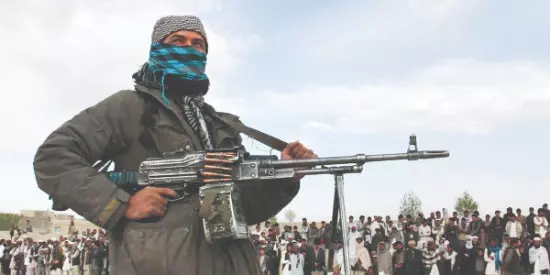


There is no let-up in acts of terrorism in Pakistan. Taking stock of the prevailing terror scenario with an objective assessment carried out in relation to Pakistan in the preceding year (2025), the most widely read Pakistani English newspaper, Dawn, in an editorial dated January 5, 2026, captioned “Ongoing Threat”, has comprehensively assessed the security situation in the country. It estimates that violence has begun to feel routine in Pakistan. The security situation plummeted sharply in 2025, marking the fifth consecutive year of rising terrorism. According to the Pakistan Security Report 2025, published by the Pakistan Institute for Parliamentary Services (PIPS), the country registered 699 terrorist attacks—a 34 per cent increase over 2024. These attacks claimed 1,034 lives and injured 1,366 others, reflecting a 21 per cent rise in fatalities. Overall conflict-related violence, including terrorist attacks, counterterrorism operations, border clashes, and abductions, rose sharply to 1,124 incidents, up by 43 per cent from 2024. These incidents can no longer be viewed merely as setbacks, according to security professionals. They reflect a crisis that is increasing sharply in scale, appears difficult to control, and is fast getting out of hand.
The most crucial shift lies in who is being targeted. Security personnel now constitute a large share of those killed in terrorist attacks. Police stations, patrols, and checkpoints have been repeatedly targeted. Military units, too, have suffered devastating losses. Terrorists appear focused on exhausting the state, stretching its forces thin, and undermining morale. The return of suicide attacks, after several relatively quieter years, reinforces this assessment. Such attacks require meticulous planning, resources, and confidence—all indications of regrouping rather than desperation.
According to the write-up, the violence is also geographically concentrated. Almost all terrorist attacks took place in Khyber Pakhtunkhwa (KP) and Balochistan. In KP’s southern districts, attacks on law enforcement agencies have become commonplace. In Balochistan, insurgents have intensified their tactics beyond hit-and-run operations to include highway blockades, kidnappings, and infrastructure sabotage. It has become clear that Pakistan’s western belt remains the country’s most vulnerable security zone.
On its part, the security establishment has responded with force. Counterterrorism operations rose sharply, with claims of over 1,000 terrorists killed. Yet this heavy reliance on kinetic action highlights a serious problem. Despite hundreds of operations, attacks remain unending. Significantly, much of this violence is driven by religiously inspired terrorist groups, particularly the Tehreek-e-Taliban Pakistan (TTP), which has regained considerable strength and operational capability. Terrorists are adapting rapidly, using more sophisticated weapons, night-fighting equipment, and drones, while exploiting local grievances, weak governance, and gaps in intelligence coordination. Intelligence, by many accounts, appears to be in a pathetic state. Security experts warn against accepting this situation as the new normal. While civilian deaths have fallen slightly, violence against the state is on the rise. That, they argue, should serve as a lesson. A security policy built primarily on raids and reprisals cannot, by itself, deliver lasting peace—especially when ideological militancy, cross-border sanctuaries, and political uncertainty remain unaddressed. This is the calculation of security professionals.
Dawn further opines that firepower alone is insufficient to dismantle this terror syndicate. Political clarity, effective civilian governance in conflict-hit areas, and serious regional engagement are no longer optional. Nor are police reforms, intelligence sharing, and judicial follow-through. Without these measures, the country risks slipping into a permanent state of insecurity and fear—and that, it suggests, is already happening.
In another assessment that appears, on the face of it, objective, The Express Tribune—also a widely read Pakistani daily—points out that what often gets lost is the uncomfortable reality that life abroad is far harder than it initially appears. According to the latest official data, more than 800,000 Pakistanis left the country in the past year alone, seeking jobs, education, or permanent residence overseas. This figure is often cited as evidence of an accelerating brain drain, a damning indictment of Pakistan’s economy and governance. Social media amplifies this narrative daily, turning migration into both a trend and a marker of “wisdom.” The reasons usually cited for this exodus are familiar and not entirely misplaced: a precarious economic situation, shrinking job opportunities, corruption, security concerns, and an overall bleak outlook for the future. For many young Pakistanis, leaving the country appears to be the only rational escape from a system they believe is rigged against merit and hard work. Migration from developing or third-world countries is not unique to Pakistan. While these factors are not directly linked to security alone, the dismal domestic security environment arguably provides a compelling reason for seeking greener pastures abroad.
In sum, Pakistan’s own media establishment appears pessimistic about the country’s future, given its economic woes, instability, and above all, the deteriorating security scenario—graphically described through their own analytical assessments. Fahd Husain, a noted journalist and television anchor, writes: “Conflicts can be unpredictable. Alliances can be untrustworthy. Big powers can flip sides. What ultimately matters—what is the only guarantee against external shocks—is internal stability and financial strength. This year, therefore, is the perfect time to focus on both by taking advantage of the position. This will require looking beyond narrow political interests and focusing on strategic goals.” The observation is largely on target, as parochial political interests have long afflicted Pakistan’s political, security, and defence establishments.
One hopes that Field Marshal Munir, the Chief of Army Staff (COAS) and a self-hyped megalomaniac, is listening and will recalibrate his priorities in 2026 towards a more peaceful Pakistan, with genuinely pacific overtures towards its neighbours. Such a shift could help lower the hostile temperatures currently prevailing in South Asia.
Views expressed are personal. The writer is a retired IPS officer, Adviser NatStrat, and a former National Security Advisor in Mauritius