Restoration Without Illusions
True restoration of the Aravallis lies not in hurried plantations, but in slow ecological recovery—guided by terrain, water, and the lives that depend on these hills
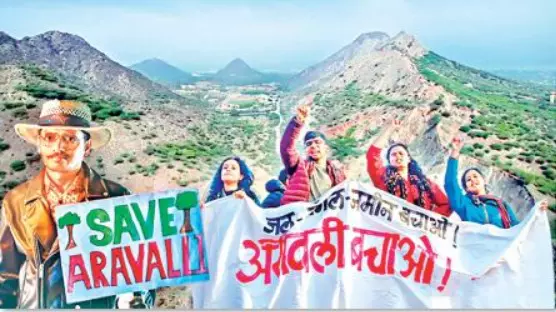


The Aravalli range continues to attract attention amid persistent challenges, including legal disputes over land for mining leases, encroachments, and degradation. While these issues remain critical, the focus must shift from reiterating the range’s importance to addressing a more practical question: how can restoration be engineered for longevity in a dryland, hard-rock ecosystem?
Emerging research and landscape-scale planning underscore two foundational principles. First, eco-restoration interventions must align with the site’s ecological succession stages and the constraints of arid and semi-arid terrains. Second, long-term success necessitates integrating livelihoods that alleviate resource pressures while fostering community stewardship.
Eco-restoration and Successional Dynamics
National assessments by the Ministry of Environment, Forest and Climate Change (MoEFCC), like the 2025’s ‘Detailed Action Plan: Aravalli Landscape Restoration (Aravalli Green Wall)’ states that approximately 96.4 million hectares of land in India, which is close to 30 per cent of total geographical area, is affected by degradation, forming the basis of the country’s restoration and Land Degradation Neutrality commitments. Within this national context, the Aravalli landscape has been identified by the Ministry as a priority intervention zone under its detailed landscape-level restoration planning, reflecting the need for ecologically appropriate approaches tailored to dryland and hard-rock systems.
As one of the planet’s most ancient mountain systems—approximately two billion years old—the Aravallis feature shallow soils, a fractured quartzite bedrock, and erratic, low rainfall. Native vegetation comprises drought-adapted scrub forests, grasslands, and open thorn woodlands, dominated by species such as Terminelia pendula (Dhok), Boswellia serrata (Salai), Senegalia senegal (Kumta), Salvadora oleoides (Pilu), Prosopis cineraria (Khejri), Ziziphus mauritiana (Ber), and Capparis decidua (Ker). Mischaracterising these sparse assemblages as “degraded”—without considering a site’s current ecological succession stage—has historically prompted unsuitable afforestation efforts. It is like prescribing treatment to a patient without realistic diagnostic tests. In simple terms, ecological succession means allowing vegetation to recover in stages, starting with grasses and shrubs that prepare the ground for trees, rather than forcing a mature forest where conditions do not yet support it.
In response to these ecological constraints, the Aravalli Green Wall Project (AGWP) was launched in 2023 by the MoEFCC as a landscape-scale initiative aligned with India’s commitment to achieve land degradation neutrality by 2030 and contribute to the Bonn Challenge (2011). The project envisages an extensive green corridor, stretching roughly 1,400 kilometres in length and about 5 kilometres in width, across the Aravalli landscape in Haryana, Rajasthan, Gujarat and Delhi.
The MoEFCC’s Detailed Action Plan for the Aravalli Green Wall represents a paradigm shift, emphasising assisted natural regeneration, soil-moisture conservation structures (e.g., check dams and contour trenches), revival of traditional water bodies, and selective planting of terrain-specific, drought-tolerant natives. Priority is given to removing invasives like Neltuma juliflora (formerly Prosopis juliflora, Vilayati kikar) to facilitate native species recovery.
The Sankala Foundation, through its field studies and research, has developed an ecological design framework based on baseline studies and scientific evidence. This model incorporates five landscape units (including habitation areas) and six tested intervention components (e.g., integrating traditional knowledge) for comprehensive restoration in this unique landscape. The micro-plan design guides site-specific treatments based on realistic diagnosis.
This approach follows natural ecological succession in dryland systems. Recovery begins with hardy grasses that stabilise bare or mined ground and improve moisture retention, enabling shrubs such as wild Indian jujube and white crossberry to establish in sheltered patches. On gentler mid-slopes, where deeper soils allow stronger root anchorage, species such as gum acacia can gradually establish, while higher, rockier slopes with shallow soils and greater moisture stress support slower succession dominated by drought-hardy species such as dhok and salai. As a result, plant communities in the Aravallis are naturally heterogeneous, shaped by terrain rather than homogenous planting.
Eco-restoration works best when the landscape is treated as a whole. Small, isolated interventions may show quick results, but these fade when they are not connected to surrounding scrublands, ridges, streams and commons. Planning across entire watersheds, guided by natural succession and supported by local communities, leads to more lasting outcomes. In the Aravallis, this means restoring ecological processes step by step, rather than chasing unplanned plantation drives.
Livelihood Integration as a Prerequisite for Sustained Protection
The Aravallis constitute lived landscapes, where communities derive grazing, fodder, fuelwood, and non-timber forest products. Degradation frequently arises from economic imperatives rather than neglect.
Initiatives disregarding livelihoods often prove transient, reverting under renewed pressures post-enforcement. Sustainable models embed pathways like managed rotational grazing, enterprises based on native NTFPs (Non-timber Forest Produce), agroforestry, eco-tourism, and employment in nursery propagation or conservation works. Conservation-led livelihoods are the bedrock of successful restoration models. Regenerative eco-tourism is one emerging option. Sankala Foundation’s research shows that livelihoods in the Aravallis remain tightly linked to land, water and forests. Community willingness for eco-restoration is high, but sustained participation depends on visible livelihood gains, pointing to assisted natural regeneration (ANR), managed grazing and regenerative eco-tourism as practical pathways aligning income generation with ecosystem recovery.
Landscape-scale experiences, including work by the Sankala Foundation, show how community-managed scrub-lands, protection of regenerating native vegetation, and revived water structures can generate incomes while speeding up eco-restoration. In the Aravallis, separating restoration from livelihoods weakens eco-restoration efforts and threatens livelihoods that depend on these forests.
By restoring functional dryland ecology through terrain-appropriate planting and natural recovery, the Aravallis can strengthen water security and socio-economic stability across western India. This is not conservation alone, but a form of governance that demands sustained, multi-stakeholder engagement.
Views expressed are personal. VB Kumar is a former Principal Chief Conservator of Forests & Head of Forest Force, Punjab; Utkarsha Rathi is a Research Associate, Sankala Foundation