Power Of AI Leverage
Fears of AI replacing jobs are misplaced; the real shift is subtler, reshaping work itself, rewarding those who use it, and exposing those who don’t
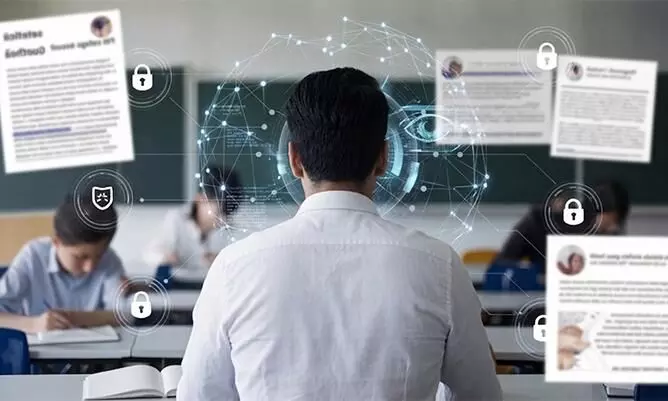


Every few months, a headline warns that artificial intelligence is about to erase millions of jobs. Writers worry about AI-generated articles; programmers’ eye code-completion tools; analysts wonder whether algorithms will soon own every data-driven decision. The anxiety is understandable—AI can write essays, generate images, crunch massive datasets, and mimic conversation with startling fluency.
But the reality inside most workplaces is less dramatic and more consequential. AI isn’t replacing people wholesale. It’s changing how the work gets done. The professionals pulling ahead aren’t the ones with the fanciest degrees; they’re the ones who’ve learned to use AI well.
The real threat, then, isn’t the model. It’s the colleague, competitor, or student who treats AI as a power tool. This isn’t humans versus machines. It’s humans with AI versus humans without it.
Technology and Human Adaptation
We’ve seen this movie before. When Gutenberg’s press spread in the fifteenth century, scribes feared obsolescence. During the Industrial Revolution, looms and steam engines were blamed for gutting craft trades. Later, computers triggered panic as they automated calculation and record-keeping.
Each wave followed the same arc: fear first, then a redefinition of work. The press didn’t kill writing; it expanded literacy and created new professions. Factories didn’t erase craftsmanship; they scaled production and spawned technical roles that hadn’t existed. Computers didn’t end analysis; they birthed software engineering, UX, and the digital economy.
AI is the latest turn of that wheel—with one twist. It reaches into cognitive work: drafting, researching, coding, analysing, designing. Google’s Gemini shines at research-heavy tasks and live information. Meta AI is tuned for quick, casual interactions woven into social platforms. OpenAI’s ChatGPT helps professionals brainstorm, draft, and distil complex material in seconds. Developers lean on GitHub Copilot for suggestions and debugging; designers prototype with DALL·E before refining by hand. None of these erases expertise. They compress the grunt work so people can spend time on strategy, judgment, and creativity.
Rise of AI-Augmented Professional
A new archetype is emerging: the AI-augmented worker—not a replacement, but a partnership. The human sets direction; the model supplies speed, breadth, and a first draft of almost anything.
In marketing, tools like Jasper or ChatGPT let a team spin out a dozen ad variants in minutes, test tones, and iterate—rather than polishing a single draft all afternoon. In journalism, reporters feed thousands of documents into AI-assisted text analysis and surface patterns that once took weeks to spot. In academia, researchers use Elicit or Semantic Scholar’s AI features to triage literature reviews, summarise papers, and map gaps far faster than manual skimming.
The result isn’t fewer professionals. It’s professionals who can carry more weight, explore more options, and deliver sharper insights.
Productivity in the Age of Intelligent Tools
The productivity lift is hard to ignore. Work that used to take hours now collapses into minutes. An analyst who once cleaned spreadsheets, ran stats, and built charts by hand can now lean on Microsoft Copilot or AI-assisted Tableau to generate dashboards and call out insights almost instantly. Studies of coding assistants consistently show developers finishing tasks markedly faster than peers working without them.
Expectations shift with that speed. Teams assume quicker turnarounds and broader exploration. A gap opens—not because some people are smarter, but because some people have better leverage.
Opportunity and Competition in an AI-Driven World
AI also flattens the playing field. Capabilities that once demanded specialists or expensive software are now in the hands of students, solo founders, and small teams. A founder can research a market, draft a pitch, mock up brand assets in Canva’s AI tools, and prototype a landing page without hiring a full crew. Students use Notion AI or Perplexity to organise notes, summarise readings, and generate study guides.
Access alone isn’t the edge, though. When everyone can open the same toolbox, the difference is how well you use it—creatively, strategically, consistently.
Human Edge in the AI Era
As AI settles into daily workflows, the skill stack is changing. Domain expertise still matters, but AI literacy is now table stakes: knowing what a model can do, how to prompt it, and where it trips. Verification is non-negotiable because models can be confidently wrong. Human judgment is the filter.
And some strengths remain stubbornly human: empathy, ethical reasoning, contextual nuance, original creativity. AI can flag anomalies in medical images; treatment still hinges on a clinician’s judgment and a conversation with a patient. It can draft a policy memo; leadership—weighing trade-offs, reading a room, taking responsibility—remains ours.
The pattern is clear: AI doesn’t erase the need for professionals; it redefines what makes a professional valuable. The advantage goes to those who pair human insight with machine efficiency.
Adaptation is the Real Competitive Advantage
AI is one of the defining technological shifts of our time, but the central challenge isn’t raw automation or job loss. It’s adaptation—how we rethink work, learning, and leverage.
Ignore the tools, and you risk falling behind, not for lack of talent, but because others can do more with the same hours. Embrace them and you expand what you’re capable of.
The future of work won’t belong to machines alone, or to humans alone. It will belong to humans who know how to collaborate with intelligent systems. Which is why one line keeps landing with such force: AI won’t replace you. But someone using it might.
Views expressed are personal. John Felix Raj is the Vice Chancellor, and Sovik Mukherjee is an Assistant Professor of Economics, both at St. Xavier’s University, Kolkata