Livelihoods Over Rhetoric
As Tamil Nadu heads toward the 2026 Assembly elections, industrial stability, job security and policy clarity may outweigh identity politics; writes Bagmita Borthakur
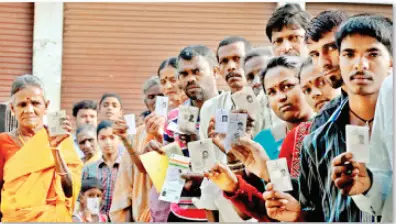


As Tamil Nadu moves closer to the 2026 Assembly elections, much of the political messaging will revolve around identity, language and centre-state relations. Those themes are familiar and powerful. But below the surface, a more material concern is building across the state’s industrial belts. In towns where factories anchor local economies and small workshops operate on thin margins, the conversation is less about ideology and more about the continuity of supply, employment and policy stability.
Tamil Nadu’s leaders, across parties, often point to the state’s industrial strength. It accounts for a significant share of India’s manufacturing output and is regarded as one of the country’s most diversified industrial economies. Textiles, automotive components, engineering goods, and pumps and motors form tightly linked production clusters. The system works because it is interconnected. When one link weakens, the strain travels quickly.
The closure of the Sterlite copper plant was one such moment of disruption. Industry bodies have noted that the plant once accounted for a substantial share of India’s copper production. After its shutdown, domestic supply tightened, and manufacturers increasingly relied on material sourced from other states or imports, often at higher cost. In clusters such as Coimbatore, where thousands of MSMEs manufacture motors, pumps and compressors, higher copper prices translated directly into reduced margins and slower expansion.
But this is not simply about copper. It is about certainty. Can Tamil Nadu provide an industrial environment that strikes a balance between environmental safeguards and production needs? Can policy decisions be firm, transparent and predictable? Investment follows clarity. Employment depends on it.
Privatisation has added another layer to this debate. Protests by sanitation workers over solid waste management reflect wider concerns about job security and contractualization. Trade unions fear erosion of protections; policymakers argue for efficiency and reform. The larger issue is trust — whether reforms can proceed without creating insecurity among workers.
Together, these developments point to a broader test for Tamil Nadu’s industrial model. The state’s growth has rested on manufacturing strength, labour participation and relative policy stability. When any one of these pillars weakens, confidence dips.
As 2026 approaches, voters in industrial regions may not be looking for louder slogans. They may prioritise clarity over rhetoric, particularly on employment, policy stability and safeguards against future disruptions.
This is where the election should be fought. Not only on identity or ideology, but on a clear industrial roadmap. Which party has a credible plan to protect employment, support MSMEs and ensure predictable decision-making? Which leadership can convince workers and investors that stability will not be sacrificed?
In the end, the 2026 verdict may hinge less on rhetoric and more on reassurance. Because in Tamil Nadu’s factory towns, the real ballot question is simple: who can safeguard livelihoods?
The writer is a research fellow at BITS Pilani. Views expressed are personal