India’s Green Hydrogen Ambition
Ambitious targets are in place, pilot projects are underway, but demand creation and cost reduction will decide green hydrogen’s future in India
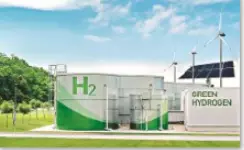


As Budget 2026 approaches, India’s green hydrogen ecosystem stands at an inflexion point. Following several years of ambitious targets, pilot projects, and policy announcements, the focus is shifting from planning to implementation. The key question for policymakers and industry is how quickly green hydrogen can move from concept to practical deployment and whether fiscal and regulatory measures can bridge the gap between early ambition and market demand.
Why Green Hydrogen Matters
Hydrogen is already part of India’s energy system, but its emission profile varies by production pathway. Grey hydrogen, produced from natural gas, has high carbon emissions, while blue hydrogen also relies on fossil fuels and employs carbon capture, though it does not fully eliminate emissions. In contrast, green hydrogen is produced by splitting water using renewable electricity, generating almost zero carbon emissions.
This positions green hydrogen as a strategic enabler of India’s climate transition, particularly for decarbonising sectors like steel, fertilisers, and oil refining, where electrification is challenging. By enabling deep emissions reductions in these sectors, green hydrogen directly supports India’s updated NDC targets of a 45 per cent reduction in emissions intensity and about 50 per cent of installed power capacity from non-fossil sources by 2030, reinforcing the pathway to net-zero emissions by 2070.
India’s Green Hydrogen Momentum
India has laid a strong foundation through the National Green Hydrogen Mission (NGHM), allocating Rs 19,744 crore up to 2029-30 and aiming for 5 million tonnes annual production by 2030. Programmes like Strategic Interventions for Green Hydrogen Transition (SIGHT) aim to incentivise green hydrogen production and domestic electrolyser manufacturing, with the goal of positioning India as a global green hydrogen hub. India’s installed capacity reached 234 GW by June 2025, with renewables contributing over half of the total, providing a strong renewable base to scale green hydrogen.
Early deployments are already taking shape. Bharat Petroleum Corporation Ltd (BPCL) has commissioned a 5 MW green hydrogen plant at its Bina refinery, reducing around 9,000 tonnes of CO₂ annually. National Thermal Power Corporation (NTPC) has piloted hydrogen microgrids, hydrogen blending with piped natural gas (PNG), and fuel-cell mobility solutions, while also building a major green hydrogen hub in Andhra Pradesh. Adani New Industries has set up India’s first off-grid, solar-powered 5 MW green hydrogen plant in Kutch, Gujarat, and Indian Oil Corporation (IOC) is developing a 10,000 tonne per annum facility at Panipat, targeting to replace half of its hydrogen consumption with green hydrogen by 2030. Despite this momentum, India’s green hydrogen sector is still in its infancy, with most of the announced 11.2 million tonnes per annum capacity yet to materialise, and only ~ 9,770 tonnes under construction and ~ 0.3 million tonnes operational (MNRE).
Challenges
Despite strong policy momentum, India’s green hydrogen sector faces several challenges: (i) current production costs of Rs 397/kg (USD 4.6/kg), significantly higher than theUSD 2/kg target for commercial viability; (ii) infrastructure complexity due to limited pipelines, storage, and distribution networks; (iii) lack of long-term offtake contracts creates investment risks; (iv) underdeveloped domestic electrolyser manufacturing, with electrolysers accounting for 30-40 per cent of hydrogen production cost and most of the advanced components still imported; and (v) high water demand (~ 9 litres per kg of hydrogen) and land requirements, creating challenges in water-stressed and densely populated regions.
Driving Green Hydrogen Demand
Given these challenges, industry bodies including CII, Assocham and others are pushing for stronger demand-side policy support. In their pre-Budget submissions, they have proposed phased green hydrogen mandates supported by viability gap funding, carbon credits, concessional finance and fiscal incentives, suggesting mandates without cost mitigation could slow investment rather than accelerate adoption. The Mission has allocated 862,000 tonnes per annum of green hydrogen production capacity to 19 firms and 3,000 MW of electrolyser manufacturing capacity to 15 companies, reflecting a strong supply-side foundation that must be matched by demand.
CII highlights refineries, fertilisers, and steel as the most practical starting points. Government tenders already reserve hydrogen for refineries, fertiliser producers are being encouraged to replace natural gas, and steel faces growing global carbon pressure. The industry body also recommends leveraging public procurement to create early demand. Mandating 10-15 per cent of steel, cement, or ammonia used in government projects that come from green hydrogen routes could help achieve scale and lower investor risk. Complementary measures such as shared industrial hydrogen clusters, export incentives, standards alignment, and targeted financing would further strengthen participation, including MSMEs.
Globally, investments in green hydrogen are accelerating, though large-scale substitution remains limited. For India, 2026 must focus on turning policy into deployable technology by scaling domestic electrolyser manufacturing, integrating low-cost renewable power, improving water-efficient electrolysis, and aligning mandates with incentives to create a predictable offtake. Budget 2026 could play a pivotal role by providing multi-year visibility on subsidies, concessional financing and structured offtake commitments. How effectively these levers are deployed will determine whether green hydrogen remains a policy ambition or emerges as a core pillar of India’s clean energy transition.
Views expressed are personal. The writer is a Research Associate at Mobius Foundation (Think Tank) and holds a PhD from IIT Delhi