
India’s AMR Warning
Antimicrobial resistance is eroding the medical safety net that modern medicine relies on—from surgery and chemotherapy to routine infections—demanding urgent policy action


For most of modern history, infection was a matter of fate. A cut could kill. Pneumonia could be a death sentence. Childbirth itself was dangerous. What changed this was antibiotics. They turned the invisible microbial world from an existential threat into a manageable risk.
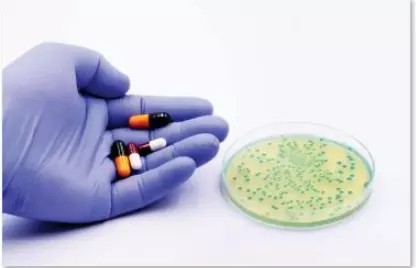
That bargain is now under strain. Antimicrobial resistance (AMR) means that bacteria and fungi no longer respond to medicines designed to kill them. The drugs still look the same. The prescriptions still get written. But the microbes have learned how to survive. Quietly, steadily, and often unnoticed, treatments that once worked stop working.
This is precisely why the Prime Minister Modi warned against indiscriminate use of antibiotics in his last Mann Ki Baat address of 2025. PM Modi said antibiotics are increasingly failing to work against common illnesses such as pneumonia and urinary tract infections (UTIs).
Recent hospital surveillance data collated by the Indian Council of Medical Research offers a sobering glimpse into how this erosion is unfolding. In 2024 alone, Indian tertiary hospitals recorded nearly 99,000 culture-confirmed infections. More than 70 per cent of bloodstream infections (among the most dangerous clinical conditions) were caused by Gram-negative bacteria, organisms that are increasingly resistant to powerful antibiotics. These are not rare pathogens; they are among the most common causes of everyday infections.
What makes the trend worrying is not just the level of resistance, but its trajectory. Resistance is rising steadily over time. Carbapenem resistance in Pseudomonas aeruginosa, a pathogen frequently seen in hospital pneumonia, has increased from about one-quarter of isolates in 2017 to over 40 per cent in 2024. In Acinetobacter baumannii, another hospital-associated organism, resistance to meropenem has reached over 90 per cent, effectively eliminating one of the last reliable treatment options. Among Gram-positive bacteria, methicillin-resistant Staphylococcus aureus (MRSA) has climbed from roughly 33 per cent to over 50 per cent in eight years.
These numbers matter because they translate directly into clinical risk. When first-line antibiotics fail, doctors are forced to use “reserve” or “salvage” therapies, drugs that are often more toxic, less predictable, and far more expensive. In some severe infections, treatment now relies on medicines such as colistin, which can damage kidneys and nerves. This increases not just mortality, but length of hospital stay and overall cost of care. Drug-resistant infections are estimated to cost two to three times more per patient than susceptible infections.
AMR is especially dangerous because it undermines the safety margin of modern healthcare. Antibiotics are not used only to treat infections; they are what allow medicine to take risks elsewhere. Without reliable antimicrobial cover, complex surgeries become hazardous, chemotherapy becomes unsafe, and organ transplantation becomes far less viable. Even routine procedures start carrying 19th-century levels of risk. Resistance, in this sense, is a systemic threat, not a specialised infectious-disease problem.
One might assume that medical innovation will keep pace. History suggests otherwise. Developing a new antibiotic typically takes 10 to 15 years, costs billions of dollars, and yields modest financial returns. As a result, many pharmaceutical companies have exited antibiotic research altogether. Bacteria, meanwhile, evolve quickly. Resistance genes spread between organisms and across borders in a matter of years, sometimes months. The biological clock is moving far faster than the pharmaceutical one.
The economic implications are equally serious. Drug-resistant infections increase healthcare expenditure, reduce labour productivity, and disproportionately affect poorer patients who cannot afford newer treatments. Globally, AMR is projected to cause millions of deaths annually and impose trillions of dollars in economic losses by mid-century if current trends continue. What begins as a microbiological problem quickly becomes a development and fiscal challenge.
The World Bank, in its report titled “Drug-Resistant Infections”, estimated that in a best-case scenario, global GDP could drop 1.1 per cent by 2050 due to low AMR impacts, costing over USD 1 trillion annually after 2030. In a worst-case scenario, annual GDP could fall 3.8 per cent by 2050, with a USD 3.4 trillion annual loss by 2030. Since these pre-COVID calculations are dated (2017), the number would have significantly gone up.
Crucially, much of this crisis is driven by human behaviour. Antibiotics are frequently used when they are not needed, prescribed for viral infections, taken for too short a duration, or deployed pre-emptively “just in case.” Broad-spectrum drugs are often chosen where narrower ones would suffice.
Under India’s drug laws, most antibiotics are classified under Schedule H, which means they are legally prescription-only medicines. In practice, this rule is weakly enforced. Antibiotics are routinely sold over the counter by chemists without prescriptions. The reasons are structural rather than mysterious: doctor visits are costly in time and money, pharmacies are often the first point of care, and retail competition discourages refusal. Enforcement is sporadic, penalties are mild, and antibiotics are culturally seen as “strong cures,” not risky drugs. The result is widespread self-medication, incomplete courses, and unnecessary use.
A second, less visible channel is antibiotic use in poultry and dairy farming. Antibiotics are frequently used not only to treat sick animals but also to prevent disease and promote faster growth, especially in intensive farming systems. Residues can enter the human food chain through meat, milk, and eggs, while resistant bacteria spread through direct contact, waste, and the environment. Even when individual farmers act rationally to protect yields, the collective effect is a steady amplification of antimicrobial resistance outside hospitals and clinics.
India’s response to antimicrobial resistance must now shift from awareness to enforcement and system design. This means strict, routine enforcement of Schedule H, with real penalties and digital prescription tracking to end over-the-counter antibiotic sales; tight regulation of antibiotic use in poultry and dairy, phasing out growth-promotion use and strengthening residue surveillance; and embedding antimicrobial stewardship as standard practice across hospitals and clinics. Antibiotics are a finite national asset: protecting them requires treating AMR not as a niche medical issue, but as a core public-health and economic security priority.
Views expressed are personal. The writer is a public policy professional



