Healthy and Graceful Ageing
India’s rapidly greying population demands a shift from episodic treatment to continuous, community-based, compassionate geriatric care backed by skills, finance and family


At a time when advances in medical science are increasing life spans faster than societies are learning to cope, ageing has emerged as one of the defining public health challenges of our times. India, long perceived as a young nation, is now witnessing a demographic point of inflexion, being home to roughly 153 million people above the age of 60, and projected to increase to around 230 million by 2036. Within a decade, nearly one in seven Indians will be over the age of 60, and by mid-century, projections place India’s elderly population close to 347 million. These figures are not merely statistical markers but cause for reflection and resolution.
The scale of this transformation is historic and global. In 2019, the number of people aged 60 years and older worldwide was about 1 billion, and this figure is projected to rise to 1.4 billion by 2030 and 2.1 billion by 2050. Health systems that were designed to treat specific illnesses now face the sustained challenge of long-term conditions of ageing, such as heart disease, diabetes, respiratory disorders, arthritis, osteoporosis, and neurodegenerative diseases. Healthcare must, therefore, transform its focus from intervention to continuous monitoring and coordinated support. Geriatric health is treated as a consequence of longevity rather than a domain requiring specialised skills, investment, and ethical attention. The question before India and the world is no longer how long people live, but how well our systems are prepared to support life in its later decades.
Experiences from other countries offer perspective. Japan, where roughly 30 per cent of the population is aged 65 or older, has developed community-based and widespread care systems for senior citizens. In the United Kingdom, professional expertise and geriatric-specific treatment is provided by established hospitals that look beyond episodic disorders to the individual’s overall condition. These examples reaffirm the principle that ageing is not merely a clinical issue but is social, emotional, and human, and must be treated as such. Effective geriatric care needs to be holistic, multidisciplinary, and ensure a smooth integration with community life.
The nature of ageing itself demands such an approach. Older adults often live with multiple health conditions at the same time. Managing blood pressure, cholesterol levels, and blood sugar is essential to preventing strokes, heart disease, kidney damage, and visual impairment. Regular health check-ups and periodic screenings are, therefore, necessary for early detection and timely intervention. Prevention remains the cornerstone of geriatric health, while balanced nutrition, adequate sleep, and regular physical activity help maintain strength, mobility, and independence.
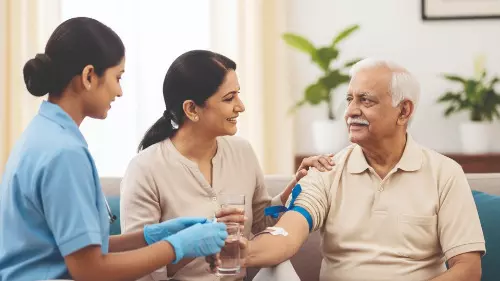
Equally important is emotional and mental well-being. Loneliness, depression, anxiety, and cognitive decline are common among older persons, especially when they lack social support systems. Early detection of cognitive impairment and dementia is, therefore, essential to enable timely support and slow functional decline where possible. Practices such as meditation and yoga are invaluable and can support both physical balance and emotional stability in later life. Families, who provide close and long-term support, are also crucial, as they shoulder significant emotional and practical responsibilities. Technology is also providing new possibilities. Assistive devices, remote consultations, and monitoring tools are enabling care in the comfort of homes. Simple home modifications, such as improved lighting and support rail,s can prevent falls that often cause permanent impairment in later life. Used thoughtfully, technology strengthens human care and helps older persons remain safe and independent within their own homes.
India has traditionally drawn strength from its joint family system, where older persons were not only cared for but also remained deeply integrated into daily life, decision-making, and intergenerational exchange. Elders often played a central role in nurturing children, passing on values, culture, and life experience, while parents attended to work and other responsibilities, strengthening emotional bonds and moral grounding within families. However, the steady shift toward nuclear families, urban migration, and changing work patterns has altered this social fabric. Interaction between generations has reduced in many homes, and elderly individuals increasingly rely on external support systems, professional caregivers, or institutional services for assistance. While such arrangements address practical needs, they cannot fully replace the continuity of guidance, lived wisdom, and sense of belonging that elders naturally bring into family life. This is a practical reality of our times, not merely a matter of choice. It has implications not only for children but also for older persons, whose sense of purpose and dignity is closely tied to meaningful roles within the family. To navigate these changes, we must seek a balance between the enduring values of Indian traditions that place respect and responsibility toward elders at the centre of family life and the inevitable pressures of a modernising society. Geriatric care systems must, therefore, evolve in ways that supplement families, strengthen community networks, and ensure that no older person feels isolated in an age of transition.
The insufficiency of appropriate resources must also be addressed. Geriatric care requires trained professionals, yet the number of formally trained geriatricians in India remains inadequate, and specialist training opportunities are limited. India has around 300 to 350 formally trained geriatricians in practice today and about 31 MD seats in geriatric medicine across nine colleges. International benchmarks (American Geriatric Society) recommend one geriatrician per 700 elderly persons, implying that India’s requirement by 2050 would be about 59,000 geriatricians to serve this group adequately. When expertise is scarce, families and general physicians carry responsibilities that require better support.
Financing presents another challenge. Healthcare for seniors is still largely paid out of pocket, and only about 18 per cent of people above 60 are covered by health insurance. Medical costs are a mix of government-supported inpatient care and heavy out-of-pocket spending, particularly for chronic ailments that require frequent investigations and appropriate treatment. Medicines, diagnostics, physiotherapy, and long-term care can quietly strain household resources. Financial protection must, therefore, be seen as a key component of geriatric care.
Acknowledging this challenge, the Government in the recent Union Budget has recognised the growing needs of an ageing population through strong commitments. This initiative stands out as a commendable and necessary policy step of considerable importance. In her presentation, the Finance Minister stated that “a strong care ecosystem, covering geriatric and allied care services, will be built,” and outlined the development of NSQF (National Skills Qualification Framework)-aligned programmes to train multi-skilled caregivers equipped with core care abilities along with allied skills such as wellness support, yoga, and the operation of medical and assistive devices. The health sector allocation has crossed Rs. 1.06 lakh crore, reflecting nearly a 10 per cent increase over the previous year. This renewed emphasis on strengthening the healthcare ecosystem is also visible in large-scale training initiatives, including plans to train up to 1 lakh allied health professionals and 1.5 lakh multi-skilled caregivers, reinforcing the human resource base that geriatric and long-term care depend upon. Measures aimed at improving healthcare infrastructure, expanding access to specialised services, and rationalising duties on critical medicines carry important implications for older persons, who often face multiple chronic conditions and high treatment costs. The Budget further strengthens mental health infrastructure, including the proposed establishment of NIMHANS 2.0 in North India and upgrades to existing national mental health institutions, a timely step given the rising burden of depression, anxiety, and cognitive disorders among older populations. This approach will bring preventive, rehabilitative, and daily functional support closer to senior citizens’ homes and communities, reducing dependence on hospitals for routine or chronic care, thereby lowering travel, treatment, and readmission costs for families.
The Finance Minister’s emphasis on building this ecosystem also signals that elderly care will move away from isolated episodes of treatment toward ongoing, structured support. Instead of only reacting to illness in hospitals, seniors can access regular monitoring, mobility support, wellness activities, and assistive services delivered through trained personnel in community and residential settings, helping identify illnesses earlier and manage chronic conditions more effectively. It is my belief that this marks an important beginning. As India’s elderly population continues to grow rapidly, the scale of trained caregivers, community-based services, and integrated support systems will need to expand significantly to meet the demands of the decades ahead.
The National Programme for Health Care of the Elderly (NPHCE) is a comprehensive programme already in place dedicated to elderly healthcare services from primary to tertiary care through regional geriatric centres, training initiatives, and National Centres for Ageing. The expansion of Ayushman Bharat PM-JAY to include citizens aged 70 and above, with coverage of up to Rs. 5 lakh per family, constitutes an important step toward protection. Several institutes are also providing caregiver training that has seen over 36,000 trainees graduate in 2023–2024, giving yet another boost to support the elderly.
At the Illness to Wellness Foundation, health is considered a continuum that spans the entire life course, and ageing demands the same seriousness and foresight as early-life health. Geriatric care, therefore, cannot be confined to peripheral attention or episodic interventions. It must be integrated within mainstream health centres, besides being facilitated in home-based settings where older persons live and age. Such care calls for a coordinated, multidisciplinary approach, bringing together specialised geriatricians and nurses with physiotherapists, nutritionists, mental health professionals, social workers, and trained caregivers. Care that is holistic in scope, attentive to physical, mental, and social well-being, not only aligns with contemporary medical science but also resonates with enduring cultural values that place respect, quality of life, and compassion at the heart of care for the elderly.
Lifestyle choices remain central to wellbeing. Physical activity, balanced diets, and following a treatment regimen can prevent complications that lead to disability. Community awareness and engagement can encourage a shift in focus from reactive treatment to preventive health. When ageing is seen as a shared responsibility rather than a private burden, outcomes improve for individuals and families alike.
Ultimately, geriatric care is about dignity. Ageing should not be associated with neglect. It should be a stage of life where experience is valued and well-being is protected. As life expectancy rises, the endeavour should not be merely to add years to life, but quality to being. Investment in trained professionals, supportive environments, and integrated medical policies is a social and moral necessity.
The time to act is now. Families, communities, healthcare institutions, civil society, and policymakers must work together to strengthen geriatric care across the nation. By placing prevention, compassion, and coordinated support at the centre of our systems, older Indians can live in security and grace, not in vulnerability. That is the direction in which our efforts must move.
Views expressed are personal. The writer is Chairperson, Advisory Council, Illness to Wellness Foundation