Governance Beyond Political Spectacle
As Tamil Nadu approaches elections, Palaniswami’s governance reflects a blend of welfare, infrastructure and grassroots engagement rather than high-decibel political messaging
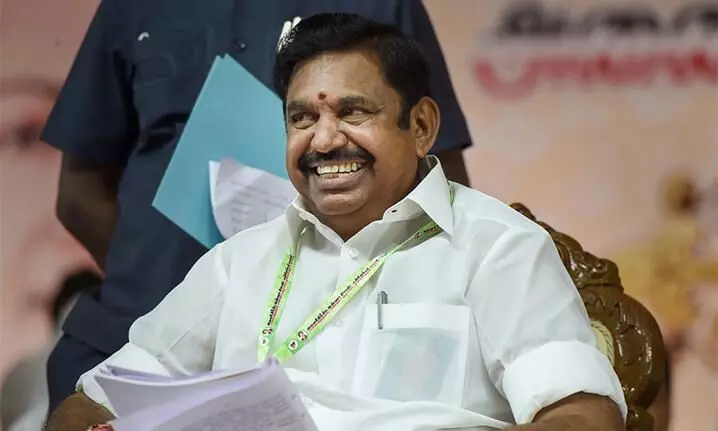


On a routine district visit, Edappadi K. Palaniswami’s convoy slowed to an unscripted halt. A farmer had stepped forward with a question about water supply, pressure, and timing. For someone who grew up there, these are not complaints but questions that shape local reality.
Palaniswami stopped, listened, and responded in the language of canals, storage, and release schedules. This incident didn’t make the headlines but is perhaps the most useful way to understand Palaniswami: not through the usual arc of speeches and distant appearances, but through a certain closeness with governance and people on the ground.
Long before he held office, Palaniswami’s world was shaped by agriculture and small trade, making him well aware of the uncertainties that come with them. It is a background that tends to produce a particular kind of political thinking—not ideological, not rhetorical, but practical. Problems are immediate, solutions must be workable, and results are measured not in announcements.
His political journey mirrors that temperament. Entering the AIADMK in 1974 as a branch-level worker, he spent decades in the kind of roles that people rarely want, from building booth networks to managing district equations and understanding how local grievances translate into political shifts. By the time he entered the Assembly in 1989, he was not stepping into public life as an outsider, but as someone who had spent years observing how policy translates into everyday impact.
When he became Chief Minister in 2017, it was not about celebrations or power; it was under circumstances that would have tested any leader. The passing of J. Jayalalithaa had left both the government and the party in a fragile state, raising questions about continuity and control. His leadership during this period was marked by a certain administrative restraint. He focused on bringing stability to the state and the party.
Despite the trying times, a defining characteristic of his administrative tenure was his unwavering commitment to infrastructure development. The construction of highways, rural roadways, irrigation networks, and water management systems exemplified this focus, supporting the economic growth of the region. These are investments that rarely produce immediate political dividends, but they shape the conditions for growth in more lasting ways.
At the same time, his administrative style retained a strong element of accessibility. Palaniswami worked to reduce the distance between the government and citizens. The grievance redressal mechanism instituted during his tenure reflected an attempt to make the state more responsive in practice, not just in principle. Frequent district visits and review meetings reinforced this, ensuring that governance remained anchored in feedback from the ground.
Perhaps the clearest illustration of his approach came during the COVID-19 pandemic. In Tamil Nadu’s case, the response under Palaniswami combined scale with balance. Testing capacity was ramped up rapidly, welfare support reached around Rs 40,000 crore, and there was a conscious effort to keep industrial activity moving where possible. He attempted to manage both public health and economic continuity without allowing one to completely overwhelm the other.
With Tamil Nadu heading for elections, the party’s current approach, which combines welfare measures like income support and cost-of-living relief with a broader push for infrastructure-led growth, reflects an attempt to balance immediate needs with long-term capacity building.
In many ways, Palaniswami’s politics resists easy categorisation. It is not built on high-decibel messaging or singular moments of projection. Instead, it is defined by accumulation—of organisational experience, administrative familiarity, and a consistent engagement with the mechanics of governance.
Which brings the story back to that brief roadside exchange. In a state where politics often plays out on large stages, it is in such smaller, unscripted moments that a different kind of leadership becomes visible—one that measures itself not just by what is promised, but by what can be explained, implemented, and ultimately delivered.
Views expressed are personal. The writer is a senior journalist with diverse experience across leading national news organisations