From Doctrine to Implementation
The Supreme Court’s decision in the Harish Rana case transforms passive euthanasia from a theoretical right into a practical reality, raising urgent ethical and legislative questions
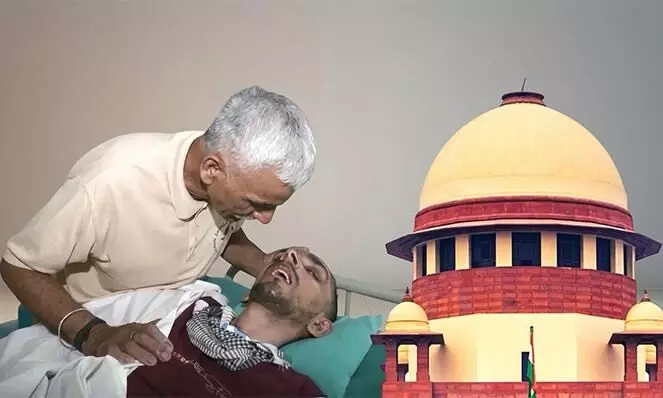


The Supreme Court’s decision allowing the withdrawal of life support for Harish Rana marks a turning point in India’s constitutional jurisprudence. Rana, a 31-year-old man from Ghaziabad, had been in a permanent vegetative state for over thirteen years following a severe accident in 2013. After prolonged medical treatment with no hope of recovery, the Court permitted the withdrawal of life-sustaining treatment, invoking the constitutional principle of dignity under Article 21. Rana has since passed away following the withdrawal of life support, bringing a deeply personal and legal journey to its inevitable close. The judgment is historic not because it created a new right, but because it operationalised an existing one. India’s constitutional courts had recognised passive euthanasia and the right to die with dignity more than a decade earlier. Yet until now, the promise remained largely symbolic. The Rana decision is therefore less about creating law and more about bringing constitutional theory into the lived reality of medical decision-making.
The Constitutional Journey: From Sanctity of Life to Dignity in Death
Indian constitutional jurisprudence on euthanasia has evolved cautiously. The starting point lies in Gian Kaur v. State of Punjab (1996), where the Supreme Court rejected the notion of a general “right to die” under Article 21, holding that life is a natural right protected by the Constitution. Yet even in denying such a right, the Court recognised a crucial distinction: the right to life may include the right to die with dignity in cases of terminal illness or irreversible suffering. This observation laid the foundation for subsequent developments.
The issue resurfaced in Aruna Shanbaug v. Union of India (2011), where the Court, while rejecting the specific plea for euthanasia, permitted passive euthanasia under strict conditions. Passive euthanasia was defined as the withdrawal of life‑sustaining treatment, allowing the natural process of death. However, the requirement of judicial approval rendered the mechanism cumbersome and rarely used in practice.
A more definitive articulation came in Common Cause v. Union of India (2018), where a Constitution Bench held that the right to die with dignity is an intrinsic part of Article 21. The Court also recognised living wills or advance medical directives, affirming personal autonomy in end‑of‑life decisions and elevating passive euthanasia from a limited judicial exception to a constitutional principle.
The Procedural Maze: Why the Right Remained Dormant
Despite progressive jurisprudence, the right to die with dignity remained largely theoretical due to procedural complexity rather than constitutional deficiency. The 2018 guidelines mandated multiple layers of verification, including hospital medical boards, extensive documentation, and stringent formalities for advance directives, making implementation difficult for both hospitals and families. In Common Cause v. Union of India (2023), the Supreme Court sought to address these barriers by simplifying procedures and easing the formal requirements for living wills, allowing execution before two witnesses and attestation by a notary or gazetted officer. These reforms aimed to render passive euthanasia a workable medical practice rather than a rare judicial intervention. Yet hesitancy among hospitals and legal uncertainty persisted, leaving the framework largely untested. The Rana case thus marks the first meaningful implementation of India’s constitutional architecture on euthanasia.
The Harish Rana Case: Constitutional Compassion in Practice
The facts of the case are deeply tragic. Harish Rana suffered catastrophic brain injuries in a fall in 2013 and remained in a permanent vegetative state for over a decade, with no prospect of recovery. Throughout this period, medical evaluations consistently confirmed the irreversibility of his condition, while his parents continued his care. Acting on the Supreme Court’s permission, life support was withdrawn under medical supervision, and Rana subsequently passed away, bringing a prolonged legal and ethical journey to its end. In permitting passive euthanasia, the Court emphasised that constitutional dignity extends to the end of life and must guide medical decision‑making. Justice JB Pardiwala’s reference to Shakespeare’s “To be or not to be” captured the deeper ethical question: whether the law should insist on preserving life at all costs, even when existence is reduced to an irreversible state devoid of consciousness or autonomy?
The Ethical Debate: Autonomy, Vulnerability and the State
Even as the judgment advances constitutional compassion, it raises difficult ethical questions. The central argument in favour of passive euthanasia is autonomy. If individuals have the right to control their bodies, they must also have the right to decline medical treatment that artificially prolongs life. Modern medical technology can sustain biological functions indefinitely, but this does not necessarily preserve meaningful human existence.
Yet the counterargument is equally compelling. The law must protect vulnerable individuals from coercion, economic pressure and emotional manipulation. In societies with deep inequalities, end-of-life decisions may be influenced by financial burdens rather than genuine autonomy. Indian law attempts to reconcile these competing concerns by drawing a strict distinction between active and passive euthanasia. Active euthanasia—directly administering a lethal substance—remains illegal. Passive euthanasia merely involves withdrawing extraordinary medical interventions that artificially prolong life.
This distinction reflects a cautious legal philosophy: the state may permit death to occur naturally, but it should not actively cause it. However, critics argue that this distinction is morally ambiguous. If the outcome is the same—the death of the patient—the difference between “doing” and “allowing” may appear artificial. The law nevertheless retains this distinction to maintain safeguards against abuse.
Beyond the Courtroom: The Need for Legislative Clarity
While the Rana judgment is a milestone, it also highlights a structural gap in India’s legal framework. Euthanasia in India continues to be governed primarily by judicial guidelines rather than parliamentary legislation. This raises several concerns. Medical professionals often hesitate to implement passive euthanasia because they fear legal liability. Hospitals may prefer judicial approval before withdrawing life support. Families, already dealing with emotional distress, are forced to navigate complex legal procedures.
The Supreme Court itself has acknowledged the need for legislative intervention. A comprehensive statute could clarify medical protocols, institutional responsibilities and procedural safeguards. It could also establish ethics committees within hospitals to oversee end-of-life decisions, reducing the need for court intervention. In the absence of such legislation, constitutional rights risk remaining dependent on judicial interpretation rather than systematic implementation.
From Principle to Practice
The Rana judgment marks a decisive moment in Indian constitutional law. For the first time, the abstract promise of “death with dignity” was translated into a real medical decision affecting a real family. With Rana’s passing, a long legal and human ordeal finally came to an end. But the ruling does more than express compassion. It exposes a deeper institutional failure. Courts cannot be the sole arbiters of end‑of‑life care. Without clear medical protocols and legislative backing, families are left navigating grief through legal uncertainty. Hospitals, lawmakers and doctors must now shoulder this responsibility together. For years, the right to die with dignity existed largely on paper. The Harish Rana case moves it into practice. Whether it remains an exception — or becomes a reliable reality — will depend on what institutions do next.
Views expressed are personal. Both writers are Assistant Professors of Law at Lloyd Law College, Greater Noida