
Dialogue Before Disruption
BMS views the four labour codes not as an assault on labour but as a chance to create a fairer, more transparent system that guarantees wages, social security and workplace dignity
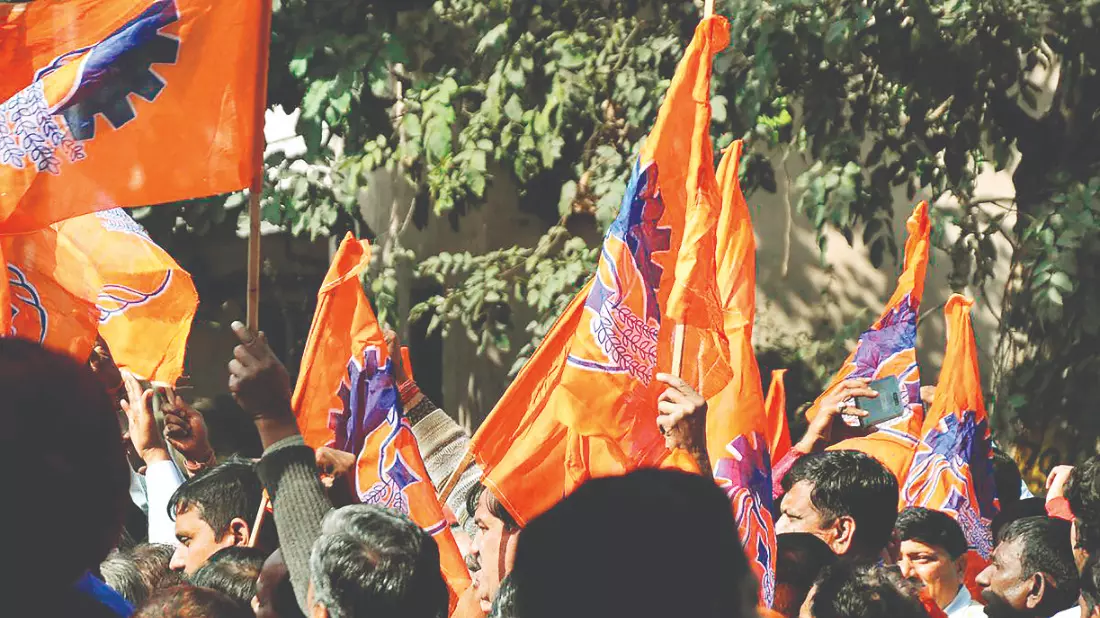


Bharatiya Mazdoor Sangh (BMS) has consistently held that comprehensive labour law reforms were long overdue to move beyond an outdated framework that no longer reflected the realities of contemporary work and employment. Over time, the multiplicity and complexity of labour laws created procedural rigidities that often weakened worker protection while also constraining productivity and growth. Rationalisation and consolidation of labour laws were therefore necessary to strengthen the dignity of labour, improve compliance, and create a more balanced and effective labour ecosystem.
The labour codes must be viewed in this broader context of modernisation. For BMS, labour reform is not an exercise in diluting workers’ rights, but an opportunity to build a worker-centric framework that ensures fair wages, social security, and humane working conditions, while also supporting economic growth and employment generation. A balanced legal structure is essential to ensure that workers’ welfare and national development progress together.
It is in this spirit that BMS has engaged with the labour reform process. BMS clarifies that it will not participate in the strike call announced by certain trade unions. The organisation believes that workers’ interests are best served through dialogue and consultation, particularly when institutional mechanisms for engagement and grievance redressal are available and functional.
This approach is reflected in the discussions on the Labour Codes between the government, trade unions, and other stakeholders, where the BMS has consistently put forth its view and suggestions on the reforms. In a tripartite consultation held on November 13, 2025, between the government, central trade unions, and employer organisations, Union Minister for Labour and Employment, Dr Mansukh Mandaviya, assured that any grievances related to the labour codes would be addressed proactively through consultations and dialogue. The same commitment to workers’ welfare through dialogue was reiterated on 21st November- the day these four labour codes were made effective. Most recently, on 6th February, in the triennial conference of BMS, the Labour Minister reassured that the government is committed to ensuring workers’ welfare and that the ministry will extend all its support in resolving issues arising out of the labour codes. In the spirit of responsiveness and cooperation, BMS remains committed to engaging constructively in this process to strengthen worker protections and ensure industrial harmony.
On 6th-8th February, 2026, BMS organised its triennial conference in Puri, Odisha, in which the BMS National executive, in consultation with all our federations and unions, unanimously decided not participate in this political strike. BMS believes that resorting to strike action at a time when dialogue is ongoing is neither necessary nor constructive. When channels of consultation remain open, confrontation risks undermining the very mechanisms through which workers’ concerns can be resolved in a sustainable manner. The present strike call by some trade unions, therefore, does not reflect a unified position of the labour movement. Proceeding with a strike despite ongoing consultations appears to be driven more by political considerations than by a genuine effort to resolve workers’ issues. Such actions may distract from meaningful engagement on labour policy and long-term worker welfare.
BMS respects the democratic right of trade unions to express dissent. However, this right must be exercised with responsibility and restraint, keeping in mind the broader workers’ interests, economic context and the need for industrial peace. At a time when employment generation and productivity enhancement are critical national priorities, constructive engagement serves workers’ interests more effectively than disruption.
Bharatiya Mazdoor Sangh reiterates its commitment to advancing workers’ rights through dialogue, consultation, and consensus-building. The organisation will continue to engage with all stakeholders to ensure that labour laws evolve in a manner that upholds the dignity of labour, ensures fair wages and social security, and supports inclusive and sustainable economic growth.
Views expressed are personal. The writer is Ex-All India Secretary, Incharge (Financial Sector), Bharatiya Mazdoor Sangh



