
Demand’s Double-Edged Sword
India’s consumption-led growth is resilient but fragile; sustaining it demands stronger private capex, steady jobs and fiscally prudent governance
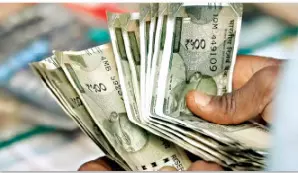


Private spending, which mainly refers to spending on goods and services such as food, housing, healthcare, household appliances, personal vehicles, and entertainment, constitutes the largest component of GDP in most countries and plays a pivotal role as a key driver of growth. According to World Bank data, the average private spending across 102 countries in 2024 was about 66.87 per cent of GDP. Advanced economies like the United States have an even higher share of 67–68 per cent, while countries largely characterised by export dependence have relatively lower shares in their GDPs. Subject to macro-economic variables such as interest rates, GDP growth rate, inflation, unemployment, exchange rates, government spending, and debt, an increase in private spending fuels job creation, innovation, and overall growth. The ripple effect of increased demand leads to higher production, more employment, and further investment. Conversely, weak consumption retards growth.
However, in addition to country-specific macro-economic factors, global headwinds such as tariffs, trade wars, geopolitical tensions, and conflicts profoundly influence private spending. How best individual nations can sustain robust private spending remains a central policy challenge.
As of now, many countries are able to sustain private spending amid challenging circumstances, mainly due to policy initiatives and reforms. The reduction of the GST rate in India last year is one such example that directly increased disposable incomes and consequently boosted spending. When fiscal measures like tax cuts and rebates increase disposable incomes, and monetary policies lower interest rates to liberalise credit and encourage borrowing, higher consumption leads to higher returns on business investments, which in turn facilitates more investment, production, and employment. Developing countries have also approached this issue through financial inclusion. Previously excluded marginalised groups were provided access to banking. The Jan Dhan Yojana in India is one such example, whereby millions of accounts were opened for people in the unorganised sector, including BPL populations, empowering them to participate in the formal economy. Additionally, healthy competition among companies in local markets, along with adaptation to consumer needs, pricing strategies, and marketing, appears to sustain domestic demand and boost spending.
Public spending on infrastructure such as roads, energy grids, and digital networks creates a foundation for private spending by generating employment, reducing production costs, and encouraging investment. In the United States, the Infrastructure Investment and Jobs Act, the Inflation Reduction Act, and the CHIPS Act have significantly attracted private capital into manufacturing and renewable energy. Many developed countries have enacted similar legislation enabling private investment through Public-Private Partnership (PPP) models, leading to exponential growth in various sectors.
According to Greg De Persio, economic growth usually stems from a combination of strong consumer spending, business investment, and supportive government actions such as tax cuts, infrastructure spending, and targeted deregulation.
Currently, the Indian economy enjoys a robust domestic demand-led expansion with a projected growth rate of 7.4 per cent, up from 6.5 per cent in the previous year, largely driven by private consumption growing at 7.0 per cent and accounting for approximately 61.5 per cent of GDP—the highest share since FY 2011–12. However, this remains slightly below the global average for consumption-driven economies (66–67 per cent). According to reports from the United Nations and the Economic Survey (2025–26), corroborated by Deloitte and India Ratings, private consumption in India is resilient and a major sustainer of growth, offsetting external headwinds such as US tariffs and global slowdowns. However, concerns remain regarding urban demand as a relative drag, uneven recovery across sectors, and dependence on public capital expenditure, even as private investment revival remains inadequate. For sustained medium-term growth above 7 per cent, many experts emphasise the need for stronger private capital expenditure alongside consumption.
Although the Union Budget 2026–27 focuses on manufacturing, infrastructure, and fiscal consolidation under the vision of Viksit Bharat—which prioritises job creation and rising household incomes—it does not provide a direct stimulus to private consumption. This marks a shift from earlier budgets that emphasised consumption-led growth toward a more balanced approach between growth and fiscal prudence. Perhaps the Economic Survey’s forecast that private consumption will remain resilient and contribute significantly to 6.8–7.2 per cent GDP growth in FY27 prompted the government to rely more on investment-led multipliers rather than direct consumption stimulus.
Fiscal discipline remains a priority, with the fiscal deficit targeted at 4.3 per cent of GDP (down from 4.4 per cent in FY26 Revised Estimates), along with a roadmap to reduce debt-to-GDP to 50 per cent ±1 per cent by FY31. However, capping revenue expenditure at 6.6 per cent may limit consumption stimulus. Nevertheless, allocations for manufacturing—such as Biopharma Shakti (Rs 10,000 crore), the SME Growth Fund (Rs 10,000 crore), and support for semiconductors, electronics, textiles, and sports goods—promise substantial employment generation. Similarly, duty exemptions on capital goods and critical minerals aim to boost domestic production and exports, thereby lowering production costs and gradually increasing disposable incomes. However, in the absence of major income tax reliefs, GST cuts, or broad-based consumption incentives, private spending may not accelerate immediately. Still, the historically low inflation rate of 1.7 per cent (as per Economic Survey 2025–26) may indirectly enhance household purchasing power, provided urban recovery strengthens through prior tax/GST rationalisation, robust rural demand supported by good monsoons, and Direct Benefit Transfers (DBTs).
An often-overlooked factor contributing to surplus household incomes and higher private spending is the provision of “freebies” by both central and state governments, driven more by political considerations than economic rationale. Unconditional cash transfers amounting to Rs 1.7 lakh crore in FY26, along with subsidies such as free electricity, water, or direct income support, boost private spending. According to the Economic Survey (2025–26), such transfers can account for 40–50 per cent of monthly per capita consumption expenditure for at least half of the rural population, freeing earnings for other private spending. However, their scale and persistence strain state finances and risk crowding out critical growth-enhancing public investments. This raises crucial questions: If freebies and unconditional transfers are reduced or withdrawn, can private spending be sustained at current levels? What would be the long-term impact on growth and macro-economic stability if such schemes continue indefinitely? How will higher fiscal deficits, reduced capital investment in infrastructure, and potential inflation eroding purchasing power be managed? These are essential considerations for sustaining healthy private spending.
India, as the world’s most populous country, is uniquely positioned with a vast domestic demand that export-oriented nations lack. Private Final Consumption Expenditure (PFCE) is rightly called the “pulse” of the economy. As the primary demand engine, it must be sustained through balanced growth and rising private investment. Private consumption thrives on optimism driven by stable job markets, rising wages, controlled inflation, and ease of doing business. Simplifying permits, easing market entry, and reducing compliance costs will encourage investment. Both government and businesses must ensure transparency and equity through broad-based participation.
Views expressed are personal. The writer is a former Additional Chief Secretary of Chhattisgarh



