
CSAT and Structural Bias
Concerns over CSAT, skewed selection patterns, and declining humanities representation raise fundamental questions about fairness, diversity and the future of India’s civil services
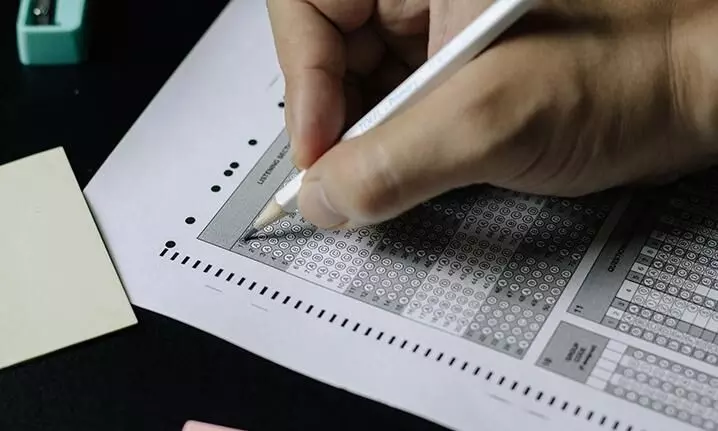


A very relevant issue regarding the selection of candidates in the UPSC-held examination for the civil services came up for discussion in the Rajya Sabha the other day. The point of contention was the Civil Services Aptitude Test (CSAT). The civil services examination is held in two parts. The first stage is the preliminary examination, which a candidate must qualify to be eligible to take the main examination. It is basically an exercise in elimination. From about 7–8 lakh students who apply for the civil services, about 80 per cent take the preliminary examination. From these candidates, about 10,000 to 15,000 qualify for the main examination. The idea is that evaluating more than five lakh students for the main examination would become a cumbersome exercise and a logistical nightmare. The marks of the prelims are not added to the overall score, but there is a cut-off, and only candidates who clear this can write the main exam.
Before 1980, the qualifying barrier of prelims was not in existence. A totally different scheme of examination existed. Prelims were introduced from 1980 onwards, and a candidate had to appear for a general studies paper and an optional paper of his choice. This system continued till 2010. Thereafter, the optional paper was removed and replaced by a CSAT paper, with the idea being that the aptitude of a candidate for civil services should also be tested, apart from his subject matter knowledge. The objective behind such thinking had a rationale because any profession requires a certain aptitude, and civil services are no exception. Initially, both general studies and CSAT papers were of 200 marks each, and a combined score was calculated, and a cut-off was declared. There was a lot of agitation against this on the grounds that the system discriminated against non-engineers and humanities students, and also those coming from rural backgrounds. The UPSC responded by making the CSAT paper purely qualifying, meaning that a candidate must score more than 33 per cent marks to be eligible for the mains if their score in the general studies paper is above the cut-off. Now, once again, this issue has been raised that CSAT should be abolished completely, as it is the engineers and science students who are better equipped to handle the pattern of this paper, as evidently it has questions on quantitative aptitude, data interpretation, and logical reasoning, which suits science and engineering students.
The pattern of the CSAT paper is such that it covers language comprehension, logical reasoning, analytical ability, basic numeracy, and data interpretation at the Class 10 level. There are eighty questions with negative marking. Candidates can take this paper in both English and Hindi, but the percentage of those doing so in English is much higher. It is alleged that the CSAT paper is, in some way, responsible for a lesser number of students with Hindi as the medium qualifying. One will have to look at the data to ascertain this, but it is a fact that, of the candidates ultimately selected in civil services, the percentage of those using the Hindi medium is very low. However, there are various reasons for this, which include things like the non-availability of preparation material in Hindi, and CSAT cannot be said to be the only contributory factor.
A scrutiny of the CSAT papers over time shows that ever since CSAT was made only qualifying, the difficulty level of the paper has gone up considerably. In particular, the questions on numeracy are definitely of a higher level than Class 10, and students of humanities, who have been out of touch with mathematics for several years, would find it difficult to handle. There can be no argument over a civil servant requiring logical reasoning and critical thinking skills to do justice to his job. Also, the ability to interpret data and be comfortable with basic mathematics is an essential requirement, as policymaking today requires an in-depth analysis of data for evidence-based solutions. I feel there is no harm in having a qualifying CSAT paper, but the questions on numeracy should be such that even students of humanities can handle them, and engineers do not have an unfair advantage. The UPSC would need to collect a group of experts to go into this issue, and I am sure a solution can be found which is fair and objective and does not discriminate against anyone.
Moving away from the CSAT paper, I feel the UPSC does need to review the current scheme of the examination because it is a fact that the majority of the candidates being selected today are from engineering or science backgrounds, and the field has considerably narrowed for humanities students. According to the data shared by the government in 2017, 2018, 2019, 2020, and 2021, a total of 715, 528, 595, 566, and 497 candidates selected in the civil services have been from engineering and science backgrounds, while the corresponding figures for humanities students were 106, 81, 77, 84, and 88. This is definitely an extremely skewed distribution, which must be looked into. Clearly, the entire scheme of the examination appears to be working against humanities students. It may be pointed out that the civil services was one of the main career options for students of humanities, and they are being deprived of this by the current examination system.
I am not against students of engineering and science entering the civil services. In fact, most of them are brilliant and bring scientific rigour to administration, which is very much required in the modern age of technological disruption. Their training puts them in a better position to introduce AI and modern technology, along with data-based decision-making, in the civil services. However, the beauty of the civil services lies in its diversity. Students of humanities carry with them a better knowledge of Indian history, culture, and society, and bring to administration a lot of emotional intelligence and a human touch, which is essential for citizen-centric administration. Ideally, the candidates selected should have an optimum mix of engineers and candidates from other disciplines.
It is argued by supporters of the current system that engineers, by their academic training, present their answers in a more logical and analytical manner and are to the point, which enables them to score higher marks. Some others say that after school, some of the best students opt for engineering, which gives them a natural advantage when they choose to write the civil services later on. I am not going into a detailed discussion on these points, but I do feel that the current system is not giving proper representation to students coming from different academic and social backgrounds.
In the light of the above, I feel the time has come for the UPSC to constitute a high-level body of experts to review the current examination scheme. I may also add that it must be evaluated whether the current system is selecting the best talent for civil services. The issues of maximum age allowed and the number of attempts allowed must also be looked into critically. The UPSC must examine why very few candidates are succeeding in their first attempt and why many are spending the best years of their youth in civil services preparation, when their talent can be used in other areas required for the development of India.
Views expressed are personal. The writer is a former IAS officer who served as the Chief Secretary, Govt of Uttar Pradesh



