Cost of Strategic Dominance
Modern warfare may achieve swift tactical gains, but it often leaves behind fractured societies, poisoned environments and a future far harder to rebuild
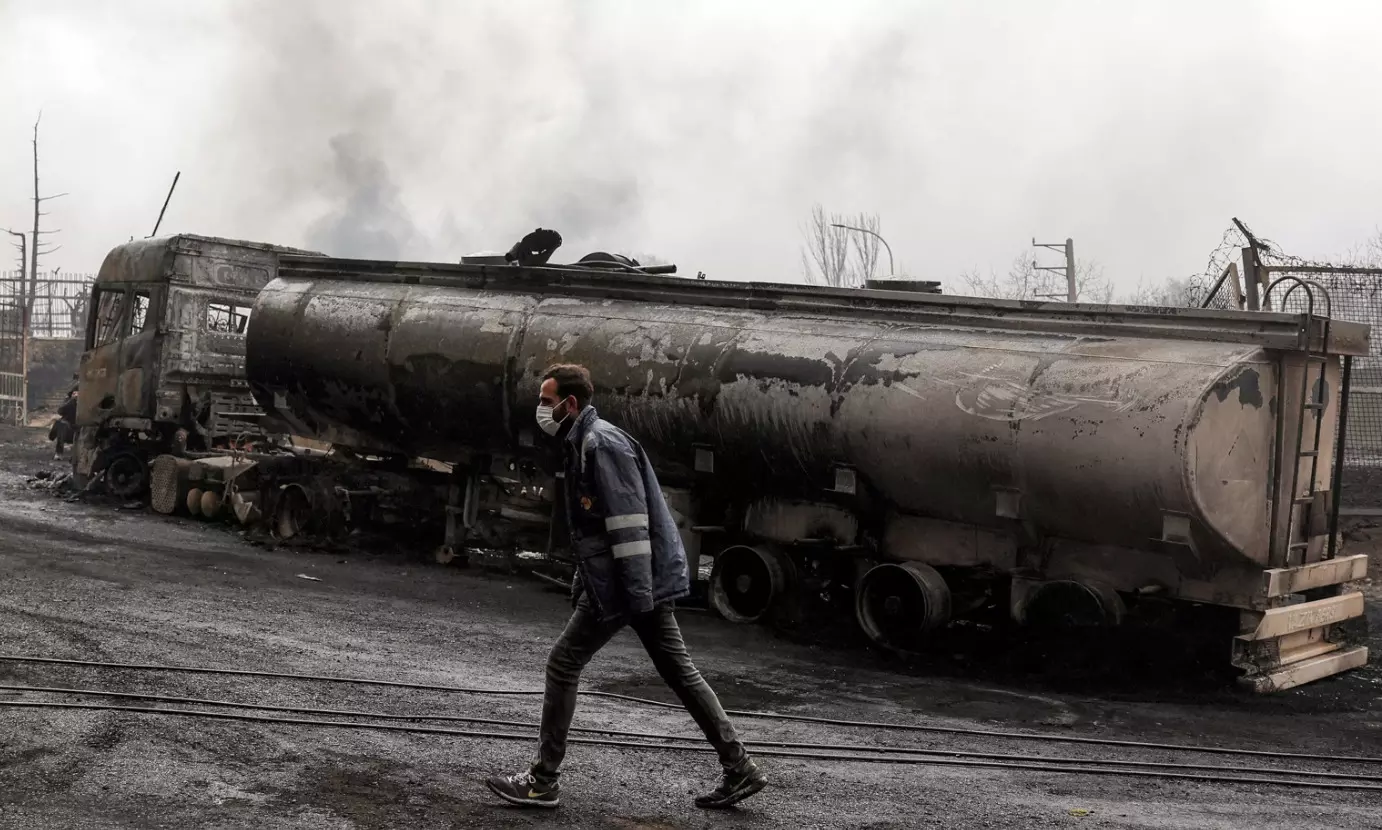


The graveyards being dug today in the Middle East stand as a grim testament to a world that has chosen strategic dominance over human security. In modern warfare, the paradox is increasingly evident—the more successful a military campaign becomes at destroying its targets, the more it erodes the fragile foundations upon which future peace must stand. As of March 16, 2026, the escalating confrontation between Iran, the United States, and Israel has plunged West Asia into one of the most volatile crises of the century. What began as a calculated military operation has now evolved into a multidimensional catastrophe—geopolitical, humanitarian, and environmental.
For decades, the geopolitical equilibrium of West Asia survived through a fragile condition often described as “no war, no peace.” That uneasy balance collapsed on February 28, 2026, when the United States and Israel launched a coordinated military campaign code-named Operation Epic Fury. The operation represented a new doctrine in modern warfare, resulting in the targeting and elimination of an adversary’s entire leadership structure in a single coordinated strike.
The surprise airstrikes reportedly killed Iran’s Supreme Leader, Ayatollah Ali Khamenei, along with several top military and political officials, including the Chief of Army Staff and the Defence Minister. Strategically, the strikes were intended to paralyse Iran’s command system and force rapid political collapse. Yet, two weeks into the conflict, it has become clear that the decapitation of leadership has not ended the crisis. Instead, it has triggered a fierce and determined retaliation by an Iranian state fighting for survival.
From a purely tactical perspective, the operation may appear to be a military success. However, from a strategic standpoint, it risks becoming a profound miscalculation. Destroying a leadership hierarchy can dismantle a chain of command, but it can also create something far more unpredictable—that of a wounded state apparatus driven by ideological consolidation and existential desperation.
This transformation has pushed the conflict dangerously close to the nuclear threshold. With the death of key Iranian authorities, inspectors from the International Atomic Energy Agency have reportedly lost access to several critical nuclear facilities—suspected to be inside the rubble—creating the possibility of a nuclear breakout. The world is discovering that a regime with nothing to lose is far more dangerous than one with a system to protect.
Meanwhile, the conflict has begun to spread across the wider region. Iran has announced that it will reopen the Strait of Hormuz to international shipping—except to what its Foreign Minister, Abbas Araghchi, has described as “the enemies who carried out this cowardly aggression.” Simultaneously, fresh missile and drone attacks have been reported in Bahrain, Qatar, and Jerusalem, signalling the escalation of a wider regional war.
Amid this escalating instability, the ongoing G20 emergency summit, convened to address the so-called “Black Rain” crisis, has descended into diplomatic deadlock. The summit reflects deep divisions within the international community. A Western-led bloc has demanded accountability for what it describes as environmental warfare, calling for immediate scientific access to the affected areas through the creation of a monitored “Green Corridor.” China and Russia, however, have rejected attempts to attribute unilateral blame, arguing instead for immediate de-escalation and negotiations. India, navigating a delicate diplomatic balance, has attempted to redirect the debate toward stabilising global energy markets and preventing economic disruption that could ripple across developing economies.
Beyond the negotiating tables, the devastation looms large. By mid-March 2026, the humanitarian landscape will have deteriorated into a full-scale regional catastrophe. More than 2,120 deaths have been verified by the World Health Organisation (WHO) across Iran and Lebanon, including over 1,100 children. Thousands more remain missing beneath the rubble of bombed residential neighbourhoods. In Lebanon alone, nearly 14 per cent of the population has been displaced into overcrowded shelters where basic infrastructure is rapidly collapsing.
In Tehran, the crisis has taken an even darker turn. Residents of the ten-million-strong metropolis are facing a phenomenon now widely referred to as “black rain”—a toxic mixture of oil soot and precipitation produced by burning industrial installations and atmospheric disturbances. Reports from hospitals describe widespread chemical burns, severe respiratory distress, and unexplained neurological symptoms. International aid organisations, already addressing ongoing conflicts, now find themselves struggling to respond to this rapidly progressing environmental crisis. Worsening cardiovascular diseases and increased vulnerability among children and the elderly are major concerns, as chronic inhalation of sulfur compounds can lead to irreversible lung damage and neurological complications.
Global health agencies have issued urgent warnings. According to assessments by the WHO and UNICEF, sulfur-laden toxic clouds rising from damaged industrial complexes are rapidly drifting across Central Asia and toward Afghanistan. What initially appeared to be a localised environmental incident now threatens to evolve into a transboundary ecological disaster.
Environmental scientists also warn that such airborne pollutants can have devastating long-term consequences. Sulfur dioxide and related gases can acidify soil, poison agricultural land, and contaminate rivers that sustain rural communities. In regions where livelihoods depend heavily on farming, the destruction of fertile soil can trigger cascading crises—from crop failures to food shortages and forced migration.
The situation is particularly precarious in Afghanistan. After decades of conflict, the country’s environmental monitoring systems and healthcare networks remain fragile. Communities already grappling with poverty and climate-induced drought now face the additional burden of toxic atmospheric pollution. For rural farmers, contaminated water and degraded soil threaten not only food production but the survival of entire local economies.
Agricultural scientists caution that sulfur deposition can alter soil chemistry for years, significantly reducing crop productivity. Staples such as wheat and barley, along with fruit orchards, could suffer severe yield losses. In a region already struggling with food insecurity due to climate change and political instability, this new environmental threat may deepen hunger and poverty.
Despite the fact that global institutions have repeatedly emphasised the need for coordinated monitoring systems and cross-border environmental governance, environmental disasters rarely respect political borders. Toxic plumes drifting across continents demonstrate how deeply interconnected ecological systems truly are. When ecosystems collapse in one region, the consequences inevitably ripple across others.
Encouragingly, some diplomatic efforts continue. On March 16, 2026, Pope Leo XIV held a telephone conversation with Mahmoud Abbas, President of the Palestinian Authority, to discuss what the Vatican described as the “alarming developments in the Middle East.” The Holy See reaffirmed its commitment to promoting peace through dialogue and respect for international law. While symbolic, such moral voices remain essential reminders that diplomacy must ultimately prevail over destruction.
Scientists often note that environmental crises rarely begin with dramatic events. They emerge gradually—through a haze in the sky, a decline in crop yields, or unexplained illnesses in vulnerable communities. When such warnings are ignored, the consequences can escalate into full-scale humanitarian disasters.
The unfolding tragedy in West Asia is therefore more than a regional conflict. It is a stark reminder of the dangers of pursuing absolute victory in a deeply interconnected world. In an age where warfare can destabilise not only governments but entire ecosystems, the true cost of power is measured not merely in military victories, but in the lives, landscapes, and futures that are lost along the way.
Views expressed are personal. The writer is Programme Executive, Gandhi Smriti and Darshan Samiti