Air Pollution’s Silent Toll
Delhi’s air crisis has become a year-round disease multiplier, raising hospital loads, costs and deaths—and it demands prevention-first governance, not seasonal firefighting
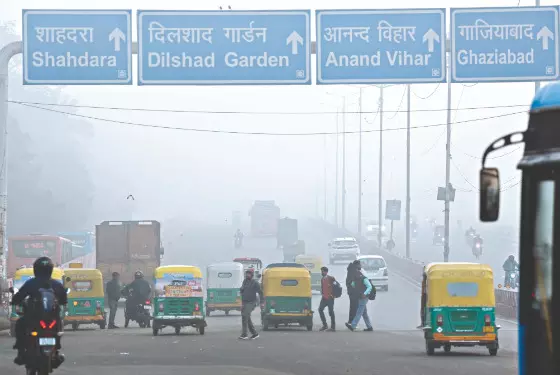


Air pollution has emerged as one of the most serious and persistent public health threats facing India, manifesting not as an occasional crisis but as a continuous and pervasive pandemic. In Delhi, average Air Quality Index levels frequently exceed 200 and often rise to 400 or higher during winter months, far beyond safe limits prescribed by global health authorities. Long-term exposure to such conditions is estimated to reduce life expectancy in the urban area by more than eight years, while sharply increasing the risk of cardiovascular disease, chronic respiratory illness, stroke, and cancer. What makes this threat especially dangerous is its universality, affecting children, working adults, and the elderly alike, often without immediate or visible warning.
Science has firmly established that fine particulate matter, particularly PM2.5, penetrates deep into the lungs and bloodstream, triggering inflammation that damages vital organs over time. Children exposed to polluted air face impaired lung development and higher rates of asthma and infections, while older adults, especially those with medical preconditions, experience elevated risks of heart attacks and respiratory failure. Studies show that children growing up in high-pollution environments can experience measurable reductions in lung function and significantly higher asthma prevalence. Individuals already living with diabetes, hypertension, or weakened immunity are especially vulnerable, as polluted air accelerates complications and worsens outcomes. Air pollution, therefore, acts as a multiplier of disease, quietly transforming manageable conditions into chronic and life-threatening illnesses.
The pressure on healthcare systems reflects this growing burden. During periods of severe pollution, hospitals across Delhi NCR report sharp increases in outpatient visits and emergency admissions related to breathing difficulty and cardiac distress. Studies indicate that respiratory and cardiac cases rise by roughly 25 per cent during peak pollution episodes, with winter smog periods often associated with a 20 to 30 per cent surge in respiratory and cardiovascular patient loads compared to cleaner months. This strains hospital capacity and increases long-term treatment costs. Insurance claims linked to pollution-related illness have risen steadily, while families bear indirect costs through lost workdays, school closures, and repeated medical expenses. What appears to be an environmental issue thus manifests as a sustained public health emergency.
The economic consequences are equally severe. At the national level, air pollution imposes an estimated annual cost of nearly USD 37 billion due to pollution attributable illness and premature mortality, while broader impacts on productivity and labour participation approach USD 95 billion each year, close to three per cent of India’s GDP. Research using national health expenditure data also indicates that air pollution contributes to over USD 10 billion annually in direct medical care costs, driven by rising hospitalisations, long-term medication, and chronic disease management. Delhi bears a disproportionate share of this burden, with air pollution estimated to have consumed nearly six per cent of the city’s economic output in a single year. Poor air quality reduces consumer activity, disrupts tourism and hospitality, and forces repeated school closures that undermine learning continuity. Schools in Delhi NCR are frequently forced to close or shift online during severe pollution episodes, often for several days at a time, disrupting household productivity. Surveys showing that many residents consider leaving the city due to air quality concerns highlight how pollution weakens talent retention and investment confidence.
Scientific source apportionment makes it clear that Delhi’s pollution challenge is fundamentally structural and year-round rather than seasonal. Vehicles contribute roughly 32 per cent of PM2.5 emissions, while construction and road dust add another 28 per cent, confirming that over 60 per cent of pollution originates from urban activity. Industrial sources, thermal power plants, crop residue burning, and household emissions add to this load throughout the year. These emissions accumulate continuously, overwhelming short-term emergency measures and exposing residents to chronic health risks. Addressing only winter spikes without correcting underlying sources cannot deliver lasting protection.
Global experience clearly shows that urban air pollution, though widespread, can be resolved when responses are consistent, data-driven, and enforced over time. Several major cities have recorded reductions of 30 to 40 per cent in PM2.5 levels within a decade through sustained enforcement, clean transport, and industrial reform. These outcomes have been achieved by combining real-time emissions monitoring, cleaner fuels, strict enforcement, reliable public transport, and urban redesign that prioritises clean mobility. Whether through low-emission zones, industrial fuel transitions, or technology-enabled monitoring, success has depended on institutional accountability and long-term planning rather than episodic crisis response. These examples confirm that cleaner air is a matter of governance and persistence, not geography or inevitability.
For Delhi NCR, prevention must therefore be treated as a core public health strategy embedded in urban policy. Controlling construction and road dust through mechanised cleaning and strict enforcement can significantly reduce particulate levels. Clean mobility reforms that improve public transport reliability, discourage high-emitting vehicles, and support walking and cycling reduce both emissions and exposure. Accelerated adoption of renewable energy, particularly rooftop solar supported by reliable grids, cuts dependence on diesel generators that worsen local air quality. Diesel generator use is a significant source of local particulate emissions, making its phase down a public health priority. Continuous oversight of industrial emissions and coordinated regional action on crop residue management are equally essential, as air pollution does not respect administrative boundaries.
Alongside structural reforms, health preparedness must become integral to pollution response. Pollution-linked health alerts, school advisories, workplace protections, and community outreach can reduce exposure during high-risk periods. Hospitals equipped to track pollution-related illness trends can strengthen early intervention and public health planning. Public awareness remains a powerful preventive tool, enabling individuals to recognise symptoms early, reduce exposure where possible, and seek timely medical care.
It is within this intersection of environmental risk and human health that the Illness to Wellness Foundation plays a critical role. Since its launch in 2014, the Foundation has promoted preventive care through health education, lifestyle awareness, and community engagement, blending traditional wisdom with modern medical understanding. As environmental determinants increasingly shape disease patterns, air pollution has become a central focus of its long-term mission. Poor air quality directly contributes to respiratory illness, heart disease, metabolic complications, stress-related disorders, and weakened immunity, making environmental health inseparable from wellness.
Guided by an experienced Governing Council comprising distinguished leaders in public health and policy, the Foundation is well-positioned to champion evidence-based dialogue and collaboration on pollution and health. Its ability to mobilise medical expertise and disseminate credible guidance strengthens community resilience during periods of poor air quality and reinforces the importance of prevention.
Delhi’s air pollution crisis is severe but not irreversible. Global evidence confirms that cities achieve lasting improvements when prevention replaces episodic response and when health considerations guide environmental policy. Clean air is not merely an environmental aspiration but a prerequisite for public health, economic resilience, and social well-being. By aligning structural reform with health education and preparedness, India can move from chronic exposure toward lasting recovery, securing healthier lives for present and future generations.
Views expressed are personal. The writer is the Chairperson, Illness to Wellness Foundation