
A Hard Look at UPSC
As lakhs chase a few hundred UPSC seats each year, the widening attempt window and heavy syllabus burden call for an urgent rethink of what India wants from its bureaucracy
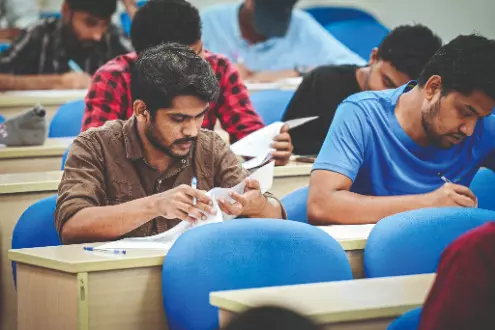


Just a few days ago, the results of the main written examination of the civil services were declared by UPSC, and now about three thousand aspirants shall compete for about 700-800 vacancies. Their hopes are riding high, and frantic preparation for the personality test and interview is going on. Candidates are attending mock interviews and also practising their communication skills. Finally, a few months from now, the final results will be announced, and less than a thousand from about ten lakhs who started the race will finally cross the finishing line. There will be joy and ecstasy in several homes, but there will be despondency and a sense of failure in a much larger number of homes.
The UPSC exam for the civil services is perhaps one of the most gruelling tests of a candidate’s endurance, intelligence, resilience, determination, and above all, the capacity for hard work and self-belief. A minuscule number gets selected, while thousands keep giving one attempt after another, spending their entire youth in this preparation. Those who manage to clear the exam on their first attempt feel vindicated, but those who struggle year after year without succeeding are left stranded in the journey of life without any destination in sight. Some of them become victims of depression, as they do not have any promising alternative available at that stage.
Due to various reasons, the number of attempts allowed to a candidate has increased significantly over time. When I wrote the IAS exam and got selected in the first attempt in 1978, the maximum number of attempts allowed to a general candidate was three, which has now been increased to five. For BC candidates, seven attempts are allowed, and for SC/ST, an unlimited number of attempts are allowed. This creates a situation where a candidate keeps trying their luck right up to middle age. If fortune does not favour her, then she is left in an unenviable position. The best part of the youth has gone into preparing for the exam, and a lot of energy and time have been spent without any tangible results. Most such candidates end up getting jobs that are far below their aspirations and potential. I see no reason why we cannot restrict the number of attempts to three for general and five for others. This would leave enough time and space for an unsuccessful candidate to pursue another decent career option for which she has the time to acquire the necessary skills.
In my time, the minimum age was 21, and the maximum was 26. We can revive these age limits. Currently, a general candidate can take the exam till the age of 32, a BC candidate till 35, and a SC/ST candidate till 37. For the reserved candidates, the maximum age limit could be raised to 28. This would imply that even if a candidate is not successful, she has time on her side to take up another career. Today, there is no shortage of excellent professions, and civil service is not the ultimate career.
There could be political reasons for these high age limits and the number of attempts allowed, but this matter needs to be seriously considered by UPSC in the interests of both the services and the candidates. In Government service, you retire at the age of 60. Joining the service in the mid-thirties shortens the career significantly, and such candidates would scarcely be able to rise to the top posts in their service. This could be a hugely demotivating factor. With a middling career apparent, the officer is more than likely to use his time and energy in activities related to personal gain rather than public interest.
When I joined the service at 21, I was full of idealism to serve the country, and my mind was like an empty cup which the training process and seniors were able to fill with ideas of ethics and also public service. You would appreciate that by the mid-thirties, the mindset of an individual has been formed, and there is no scope for changing it. Very often, such candidates have seen so much of the real world that they develop a very different attitudinal framework, which is not conducive to a career of integrity.
The question arises: why are so many attempts required currently to succeed in the UPSC exam? In my time, a large percentage of people succeeded in the first attempt, and many in the second. Today, a very small number of candidates succeed in the initial attempts, and more often than not, a candidate needs 3–4 attempts to succeed. This is not something that we should be happy about. UPSC should review the examination scheme to evolve a selection procedure which allows candidates to succeed in the first few attempts rather than keep slogging for years. Maybe the number of general studies papers could be reduced. Also, choices can be given in the papers. Today, a candidate has to assimilate a huge amount of knowledge and information. A system can be devised which reduces this burden. I find that many bright students do not write the UPSC exam because of the years of single-minded preparation that the scheme of the examination seems to demand. As a corollary, the civil service is deprived of the talent of many brilliant candidates.
Another troubling statistic is that around sixty per cent of the candidates selected are Engineers. The humanities students are now finding it extremely difficult to succeed in the civils. Whereas I appreciate the technical knowledge, analytical and logical mode of thinking of Engineers, I feel the civil service is missing out on an understanding of History, Society, and other aspects of humanity, which a student of liberal arts would bring to the service. My experience has been that administration is first about people and then about technology or systems. Ideally, there should be a blend of candidates from different streams in the civil service to make it more diverse, creative, and humane. There is a clear indication that the current examination scheme is loaded in favour of Engineers. UPSC needs to analyse this and take a call.
In the past, UPSC has reviewed and revised the scheme of civil services exams several times. It needs to realistically assess the situation today and once again come up with new ideas because somewhere the current system seems to be having apparent flaws.
Views expressed are personal. The writer is a former IAS officer who served as the Chief Secretary, Govt of Uttar Pradesh



