WhatsApp doctors? AI chatbots shake up India’s first health check
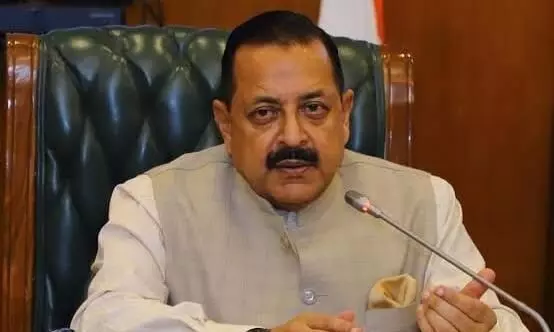


New Delhi: Artificial intelligence can be a “powerful enabler” in healthcare, but it cannot replace clinical judgement, Union Minister and physician Jitendra Singh has said, highlighting both the promise and limits of emerging digital tools.
Drawing on his medical experience, Singh noted that while AI can improve efficiency and precision, diagnosis has traditionally relied on detailed patient history and physical examination—skills that remain fundamental to care.
He was speaking exclusively to Millennium Post.
His remarks come amid a quiet shift in India’s public health landscape. For many—particularly women in underserved regions—the first point of contact is increasingly not a clinic, but a mobile phone.
Across several states, AI-powered chatbots such as askNivi, deployed on WhatsApp, are beginning to influence how and when women seek medical attention, especially in maternal and child health.
Rather than simply expanding access, these tools appear to be reshaping behaviour—helping users assess symptoms, seek timely advice, and decide when to visit a health facility.
“By leveraging digital infrastructure, askNivi delivers timely and personalised behaviour-change communication to women, supporting informed decision-making and strengthening health-seeking behaviours throughout pregnancy,” said Rubiya Bano, Project Coordinator, India, askNivi.
Early indications suggest such systems are acting as a form of pre-clinical triage. Barriers such as distance, social constraints, and limited awareness have often delayed care-seeking until conditions worsen. Instant, anonymous, and accessible guidance appears to be narrowing this gap, encouraging earlier engagement with the health system.
However, the shift raises critical concerns. The reliability of algorithm-driven advice, the risk of overdependence, and unequal digital access remain key issues. Singh emphasised that while technology can aid decision-making, it cannot substitute the trust and nuance of human interaction.
There are also operational implications. Overstretched primary health centres could see some relief if routine queries and preliminary assessments are handled digitally, freeing up resources for more serious cases.