The six weeks following flooding event critical for public health monitoring: Study
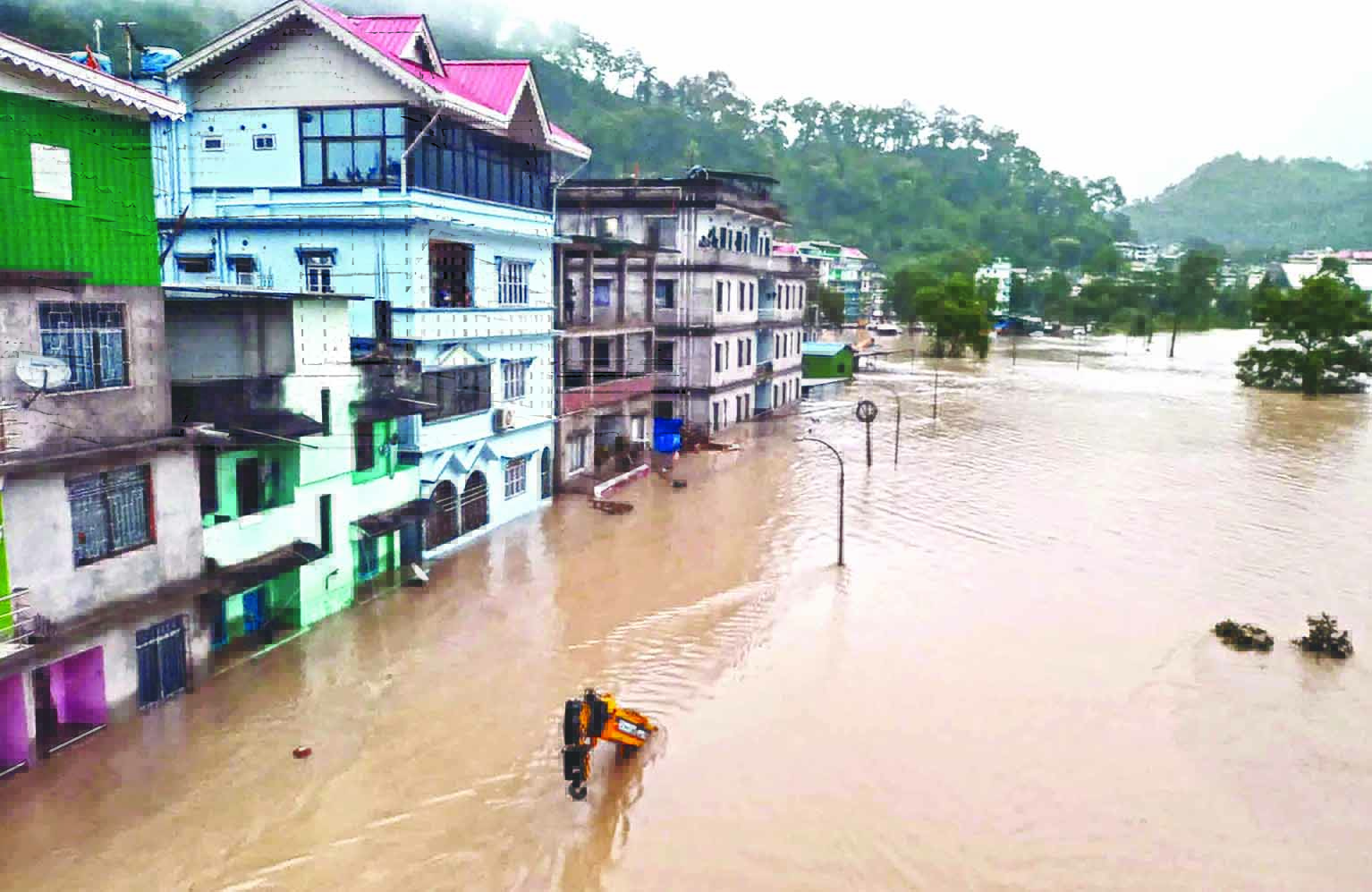


NEW DELHI: Floods heighten risk of dying in the three to six weeks window following the event, new research in the British Medical Journal (BMJ) says.
The risk of deaths in general increased by 2.1 per cent, whereas that in people having heart and lung illnesses increased by 2.6 and 4.9 per cent, respectively, a team of researchers led by those at Australia’s Monash University found.
This increased risk peaks for around 25 days, but persists for up to 50-60 days after the first day of flooding, they said in their study, having studied deaths in 761 communities from 35 countries that experienced at least one flooding event from 2000 to 2019.
In the aftermath of a flood, risk of deaths from natural causes could get enhanced due to contamination of food and water, exposure to disease-causing fungi, bacteria or virus, impaired access to health services, and psychological impairment.
These flood-and-death associations varied with local climate type and were stronger in populations with low socioeconomic status or high proportions of older population, said lead researcher Yuming Guo from the university’s School of Public Health and Preventive Medicine, whose team analysed a total of 47.6 million deaths from all causes, 11.1 million cardiovascular deaths, and 4.9 million respiratory deaths.
“Do mortality risks change after floods in the general population? The answer is yes, and this needs to be factored into policy responses to flooding events,” said Guo.
Against the backdrop of climate change, flooding events, which account for nearly half (43 per cent) of all natural disasters, are projected to become more severe, longer and more frequent.
Approximately 23 percent of individuals face direct exposure to inundation depths exceeding 0.15 metres every decade, as indicated by the findings of the study.
During the study duration, it was discerned that South East Asian populations encountered the highest frequency of flood occurrences per annum. Additionally, communities residing along the Mississippi River in
the United States, the Pacific coastline of Latin America, Lake Victoria and the Volta in Africa, coastal regions of mainland China, and the eastern coast of Australia similarly ranked among those frequently affected by flooding events, according to the research.
These results underscore the global scope of the flooding issue, affecting regions spanning from South East Asia to the Americas, Africa, and beyond. Such findings emphasise the p
ressing need for comprehensive flood preparedness and management strategies in vulnerable communities worldwide.
The study in question furnishes a chronology of the public health implications stemming from flooding occurrences, thereby equipping healthcare providers and policymakers with a blueprint for vigilant monitoring of flood-affected communities.According to Guo, the lead author of the study, healthcare practitioners should seamlessly integrate this knowledge into their professional repertoire. This, he contends, is pivotal in preparing for the sudden surges in demand for healthcare services that invariably accompany such natural calamities, consequently mitigating preventable fatalities.
Guo underscores the imperative for public health institutions to meticulously track mortality rates.