Prez Trump committed 'huge mistake' by attacking Iran; this war needs to stop: Kanwal Sibal
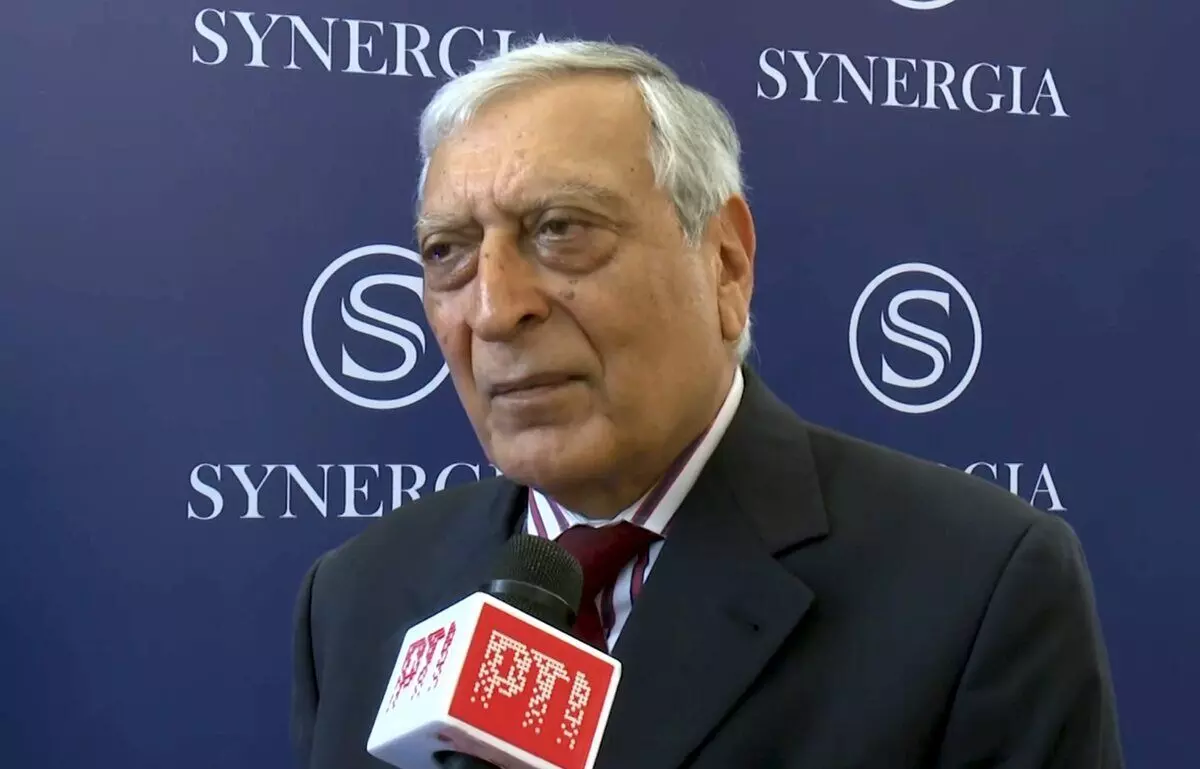


New Delhi: Former foreign secretary Kanwal Sibal has said the ongoing conflict in West Asia "needs to stop" because the price that countries are paying all over the world for this war is "unbearable". Underlining the global ramifications of the conflict for the world, including the Global South, Europe and the US, if oil prices rise further, he said US President Donald Trump has "committed a huge mistake by attacking Iran" and so has Israel. Interacting with media reporters on Thursday on the sidelines of a national conclave being hosted here by Bengaluru-based think-tank Synergia, Sibal also suggested that the recent killing of Ayatollah Ali Khamenei, while he was the Supreme Leader of Iran, seems to have strengthened Iran's resolve to fight back instead of weakening them. The West Asia conflict began after the US and Israel launched a major military attack on Iran on February 28, killing 86-year-old Ayatollah Ali Khamenei. His son Mojtaba Khamenei has been appointed as his successor by the 88-member Assembly of Experts. "I think it (conflict) needs to stop. Because the price that countries are paying all over the world for this war is unbearable," Sibal said. "It's oil that runs the global economy, as well as gas, but oil even more so. And, if this is disrupted, if supplies are not enough, and if the prices shoot up, the global economy will suffer. "And it's not only India or the Global South or the developing countries, Europe will suffer, and the United States will suffer. Already, the price at gas stations has gone up by several cents, from two-point something to three-point something. And there's already big resistance," he told in an interview.
Now, they have released reserves, Saudi Arabia has released reserves that they had, South Korea and Japan and elsewhere too in order to bring the prices down and the United States has "gone back" on the sanctions they had threatened to impose on India if we bought Russian oil, and asked India to buy Russian oil to keep the global prices stable, he said. "But this is only temporary... If the war continues, they can't keep putting into the global market their reserves. After all, they are finite reserves. And then what happens? So I'm afraid it's easy for me to say, I'm not a decision maker. I don't sit in the Cabinet or President Trump's... but I think it's a huge mistake, huge mistake that Trump has committed by attacking Iran, and Israel of course," Sibal argued. While President Trump had on Wednesday told reporters that "we're not finished yet," Iran continued to remain defiant and used choking of the strategic Strait of Hormuz as leverage against the US and Israel. Sibal asked, "What does finishing mean? They want to destroy Iran? What does it mean? Of course, they can. They have the air power. Israel has the air power. They can keep destroying the infrastructure of Iran. But, will they have support?" "At some stage, there would be a reaction. And if, which they haven't done yet, if Iran sinks a couple of ships in the Hormuz Strait, or mines it, or starts attacking the banking and financial system of the United States in the Gulf region, then what happens? Everything breaks down. The banking system, financial system, internet system, everything breaks down," he said.
On India's position in this conflict and its impact on the country, Sibal said, "Look, we had no role in what has happened in the sense that Trump has been very difficult for us. I mean, penalising us, etc, etc. It's not as if he has not delivered blows to the India relationship. So, we are hardly in a position to go and tell him, look forget about the Israeli lobby that is pushing you, forget about Netanyahu that is pushing you to attack Iran". He said India's interests are so important. So, is that a viable diplomatic strategy? "There's nothing we could do about it. And, we couldn't even tell Israel, don't do it. Because Netanyahu for the last 30-40 years has had this in mind, that the Iranian regime has to be resolved. From his vantage point, from his viewpoint of Israel facing an existential threat from Iran, it may make sense. "But, Iran is not an existential threat to us. But what they have done, Israel and United States, is not resulting in an existential threat to us, but it is very seriously damaging our interests in the Gulf, which are very deep because of our almost 10 million population, people of Indian origin there or expatriates and the energy that we get and the remittances that we get and the future," he said. All the connectivity project that India has with the UAE, and the "fulcrum of our policy in the Gulf", that is getting disrupted. Because the UAE has been the most hit in a sense. And now with the LPG production by Qatar closing and they invoking force majeure. "So we have that problem too. So we are suffering," Sibal said. On the killing of Ayatollah Ali Khamenei, he said Iran and the Shias believe in the concept of "martyrdom", and they will not back down. "And, therefore, a lot of people in Iran will probably will have that strong sentiment in them that we have to avenge this," he added.