Living With Polluted Air
From strokes and neurological disorders to lost productivity and economic strain, experts at the Illness to Wellness Conference warn that air pollution is a year-round national emergency
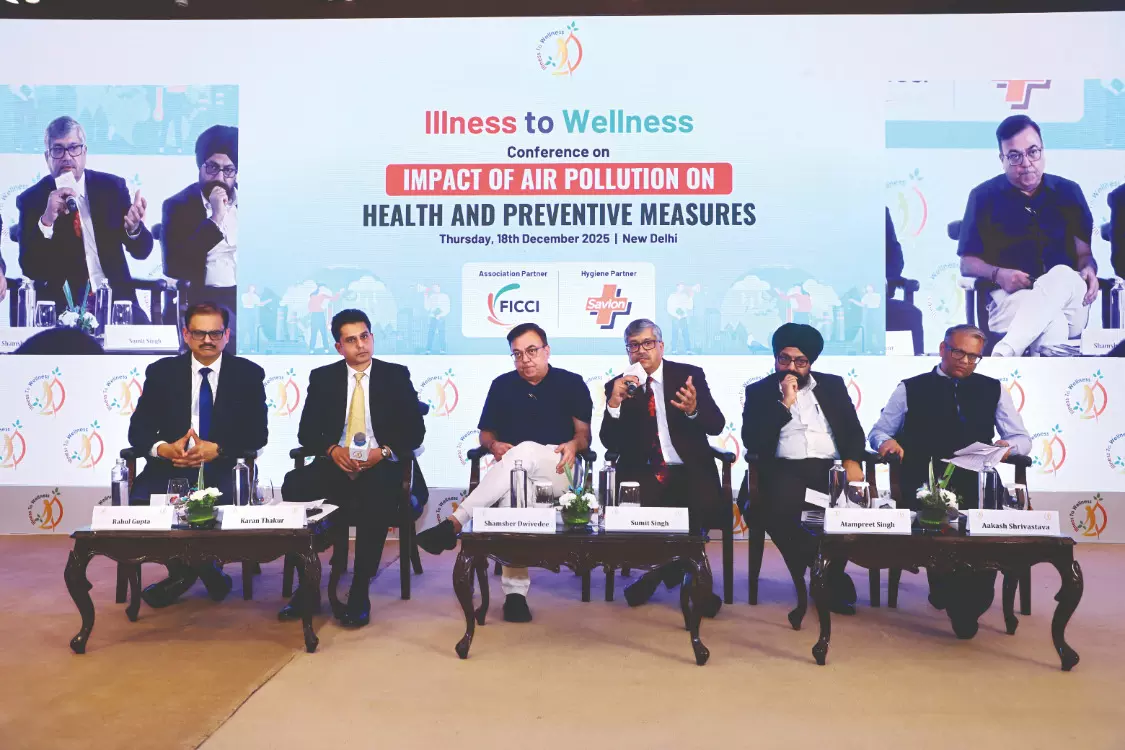


Air pollution is no longer just an environmental concern; it is steadily eroding India’s economic growth while triggering a sharp rise in serious health conditions such as stroke, cardiovascular disease, respiratory illness, and neurological disorders. These concerns took centre stage at the Illness to Wellness Conference on “Impact of Air Pollution on Health and Preventive Measures”, organised by the Illness to Wellness Foundation (ITWF) in New Delhi. Experts warned that prolonged exposure to polluted air is reducing productive life years, increasing disability, and placing a growing strain on healthcare systems—ultimately weakening India’s long-term development potential.
Delivering the keynote address, Mr Rajesh Bhushan, Former Secretary, Ministry of Health and Family Welfare, Government of India and Chairperson, Governing Council, Illness to Wellness Foundation, said, “The issue of air pollution must be understood from two perspectives—the technical causes that create polluted air, and the public health consequences of breathing it every day. Prolonged exposure does not just shorten life expectancy; it increases the number of years lived with disability. In highly polluted cities, people may survive longer but with chronic illnesses that reduce productivity, quality of life, and economic contribution. Addressing air pollution, therefore, requires coordinated action across healthcare systems, urban planning, and public awareness, with a much stronger focus on preventive and primary healthcare.”
Highlighting the neurological impact, Dr Daljit Singh, Vice Chairman, HOD – Neurosurgery and Unit Head – Neuro Intervention, Max Smart Super Speciality Hospital, Saket, said, “Stroke is increasingly being linked to air pollution, with nearly 17 per cent of strokes globally attributable to polluted air. Pollution affects brain blood circulation and significantly increases the risk of both ischemic and hemorrhagic strokes. We are now observing clear seasonal spikes in stroke admissions during high-pollution months, indicating that pollution is emerging as an independent risk factor. Beyond stroke, air pollution is also associated with neurological conditions such as Alzheimer’s disease, dementia, and Parkinson’s disease, making this a growing neurological challenge that society, scientists, and policymakers must urgently address.”
Mr Anil Rajput, Chairperson, Advisory Council, Illness to Wellness Foundation, said, “India has taken important and structured steps to address air pollution through initiatives such as the National Clean Air Programme (NCAP), launched in 2019. By covering 131 cities across 24 states, NCAP reflects a strategic, long-term approach to improving air quality. This is being complemented by measures such as the rollout of Bharat Stage emission norms, promotion of electric mobility, expansion of public transport, efforts to curb crop-residue burning, improved waste management, and increased urban green cover. These initiatives signal strong intent and direction. At the same time, the scale of the challenge calls for sustained implementation, coordination, and continued commitment across stakeholders.”
Dr GC Khilnani, Chairman, Institute of Pulmonary, Critical Care and Sleep Medicine, PSRI Hospital, said, “Air pollution is a man-made public health emergency that has already reduced the average life expectancy of Indians by several years. Its most dangerous effects are often invisible—ultra-fine particles penetrate deep into the lungs, enter the bloodstream, and damage multiple organs without early warning signs. While governments are taking steps, real change will come only when society recognises its own role in this crisis.”
Dr Harsh Mahajan, Mentor – FICCI Health Sector and Founder & Chairman, Mahajan Imaging Labs, said, “Air pollution is not seasonal, and it is not merely an environmental concern—it is a public health emergency that silently worsens almost every disease. It disproportionately affects the poor, children, and outdoor workers, even though they contribute the least to the problem. The dangerous myth is that technology alone will solve this crisis. We already know what works; what we lack is urgency and accountability.”
Following the expert deliberations, the Illness to Wellness Foundation released a comprehensive report titled ‘Countering Delhi NCR Air Pollution & Aligning Solutions: Clean Air as a Right to Life (Article 21)’, supported by the CII–ITC Centre of Excellence for Sustainable Development.
The report presents a data-driven assessment of Delhi NCR’s air pollution crisis, highlighting that poor air quality is a structural, year-round challenge rather than a seasonal phenomenon. It links deteriorating air quality to rising disease burden, loss of productive life years, and sustained economic losses, while also documenting the strain placed on healthcare systems during peak pollution periods.
Drawing on global best practices from cities such as London, Beijing, and Paris, the report outlines actionable solutions across clean transportation, construction and dust management, industrial compliance, renewable energy adoption, and institutionalised health emergency responses—demonstrating that sustained improvement in urban air quality is achievable with coordinated, data-driven policy action.
The conference featured three focused thematic sessions examining the wide-ranging health impact of air pollution.
The first session, “Air Pollution’s Invisible Impact on Health,” was moderated by Dr Rajesh Kesari, Member, Advisory Council, Illness to Wellness Foundation and Member, National Executive Committee – Elect, RSSDI. The panel included (Padma Shri) Dr Malvika Sabharwal, Chief Obstetrics & Gynaecology and Endoscopy Surgery, Jeewan Mala Hospital; Dr Manu Madan, Senior Consultant – Respiratory & Sleep Medicine, Medanta, Noida; Dr Amitabh Yaduvanshi, Head of Cardiology, Holy Family Hospital; and Dr Manju Keshari, Senior Consultant – Dermatology, Max Super Speciality Hospital, Patparganj. The discussion highlighted how air pollution acts as a silent accelerator of multiple non-communicable diseases, often manifesting across organ systems.
The second session, “Polluted Air, Troubled Minds: Mental Wellness Challenges and Neuro Risks,” included Dr. Karan Thakur, Group Vice President – Corporate Affairs & Sustainability, Apollo Hospitals Enterprise Limited; Dr Aakash Shrivastava, Additional Director and Head, Centre for Climate Change and Health, National Centre for Disease Control, Ministry of Health & Family Welfare, Government of India; Dr Shamsher Dwivedee, Director, Department of Neurosciences, Max Dehradun; Dr Rahul Gupta, Senior Director & HOD – Neurosurgery, Fortis Hospital, Noida; Dr Sumit Singh, Chief Neurology, Artemis Hospitals, Gurugram; and Dr AtamPreet Singh, Senior Director & HOD – Neuroscience, Sharda Health City. The panel discussed biological mechanisms such as inflammation and reduced cerebral blood flow, along with preventive and mitigation strategies.
The third session, “Air Pollution’s Impact on Child Health and Education,” panellists included Dr Sudhir Kumar Kalhan, Member, Advisory Council, Illness to Wellness Foundation and Chairperson, Minimal Access & Bariatric Surgery Centre, Sir Ganga Ram Hospital. Mrs Alka Singh, Principal, Air Force Golden Jubilee Institute, New Delhi; Dr Sai Kiran Chaudhuri, Senior Consultant and Former HOD – Pulmonology, Critical Care and Sleep Medicine, Delhi Heart and Lung Institute; Dr D. K. Gupta, Chairman and Managing Director, Felix Hospital, Noida; and Mr Sanjay Yadav, Principal, Ahlcon International School. The discussion underscored the need for safer school environments, greater awareness among educators and parents, and long-term policy interventions to protect children from pollution-related harm.