
Chandrayaan-3 rocket’s body re-enters earth: ISRO
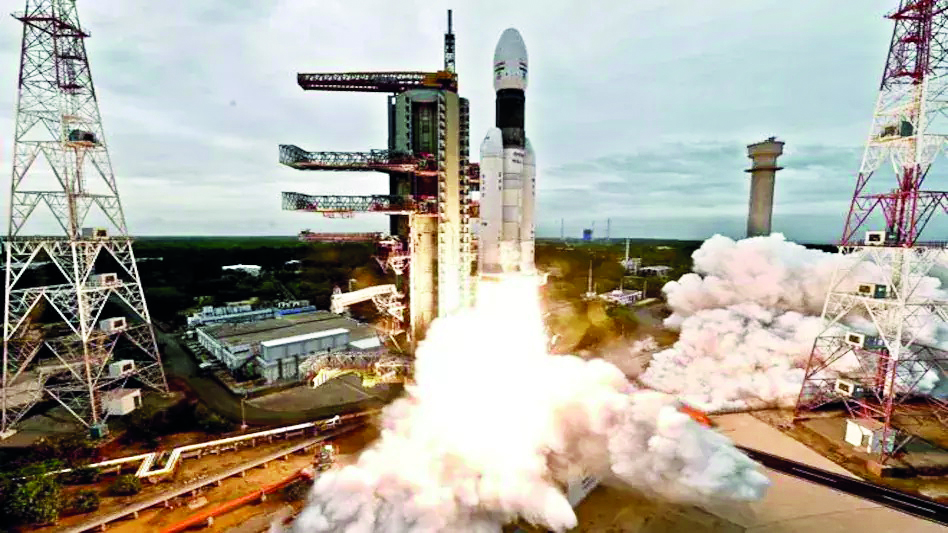


BENGALURU: The cryogenic upper stage of the LVM3 M4 launch vehicle, which successfully injected the Chandrayaan-3 spacecraft into the intended orbit on July 14 this year, made an uncontrolled re-entry into the Earth’s atmosphere, the ISRO said.
This rocket body was part of the LVM-3 M4 launch vehicle, it said.
It re-entered the Earth’s atmosphere around 14:42 IST on Wednesday. “The probable impact point was predicted over the North Pacific Ocean. The final ground track did not pass over India,” the Indian Space Research Organisation said in a statement.
The re-entry of the rocket body took place within 124 days of its launch. The post-mission orbital lifetime of the LVM3 M4 cryogenic upper stage is, thus, fully compliant with the “25-year rule” for low-Earth orbit objects as recommended by the Inter-Agency Space Debris Coordination Committee (IADC), ISRO said.
Post Chandrayaan-3 injection, the upper stage had also undergone “passivation” to remove all residual propellant and energy sources to minimise the risks of accidental explosions as per the space debris mitigation guidelines prescribed by the United Nations and IADC, it was stated.
“Passivation and post-mission disposal of this rocket body in adherence to the internationally accepted guidelines once again reaffirms India’s commitment to preserve the long-term sustainability of outer space activities,” the ISRO added.
The Indian Space Research Organisation (ISRO) had undertaken two previous missions to the moon, namely, the Chandrayaan I and the Chandrayaan II. Chandrayaan-1 was launched in 2008 and lasted till 2009 after communications to it were lost. The mission, among other things, tested a crash landing on the lunar surface. Chandrayaan-2, launched in 2019 attempted a soft landing on the moon but failed. The third mission, Chandrayaan-3 took into account the drawbacks and lessons learnt from the second mission and successfully achieved soft landing.
Many changes and improvements were made to the third lunar mission taking into account the lessons learnt from the failed soft landing mission of Chandrayaan-II. Major changes included strengthening the legs of the lander, enhancing fuel reserves and expanding the landing site. Previously, the Vikram lander of Chandrayaan-2 had lost control and communication during descent, which caused it to crash on the moon’s surface. Chandrayaan 3 focused on a failure-based design approach to foresee and prevent potential mishaps.



