Centre approves 11.56 km metro extension from Noida sector 142 to Botanical Garden
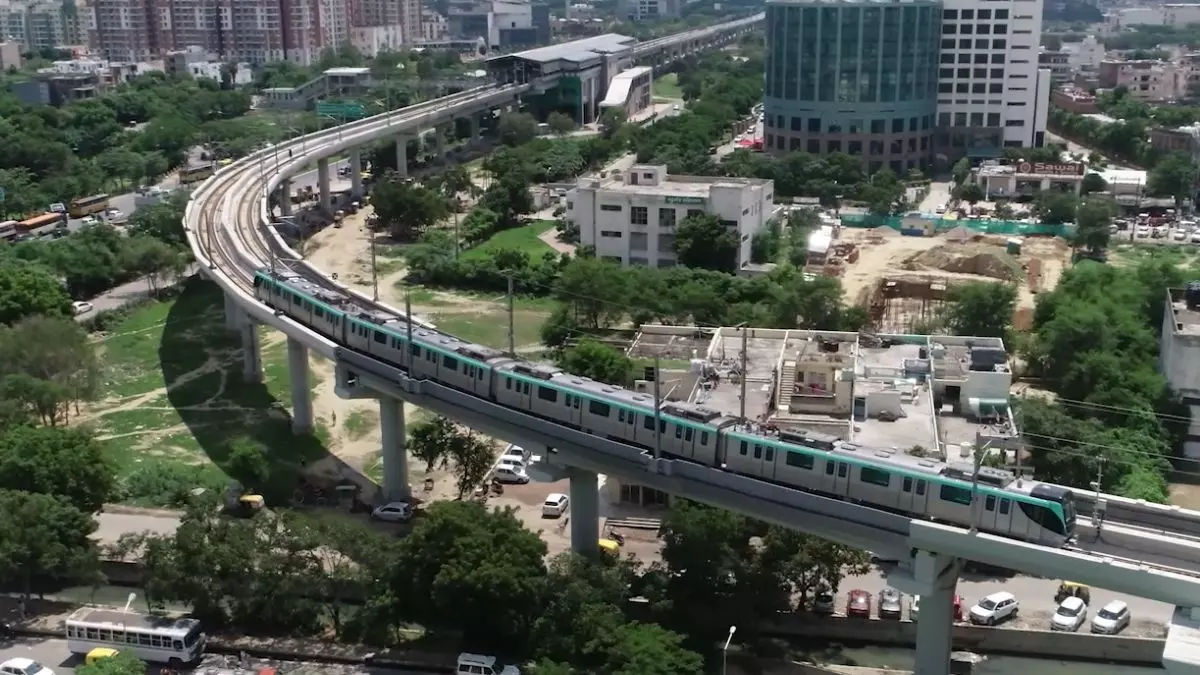


Lucknow: The Union Cabinet, chaired by Prime Minister Narendra Modi, has approved the 11.56 km long extension corridor of the Noida Metro Rail Project from Sector 142 to Botanical Garden. A total of eight stations will be built on this new elevated corridor. Once operational, the total length of the metro network in Noida and Greater Noida will increase to 61.62 km.
This corridor will also facilitate smoother travel between Noida and Greater Noida. The decision has been described as a major step toward strengthening public transport infrastructure in line with urbanization and industrial development in Uttar Pradesh.
In the Yogi Adityanath government’s urban development and investment promotion model, strong connectivity is considered a key pillar, and this project is seen as an extension of that strategy. The new corridor will run from Sector 142 in Noida to Botanical Garden, where interchange facilities with the Delhi Metro’s Blue Line and Magenta Line will be available. This will provide residents of Noida and Greater Noida with direct connectivity to Delhi and other major transit hubs. Access to the Delhi airport, major railway stations, and bus terminals will become easier.
The extension corridor will provide direct connectivity to several major commercial, industrial, and educational hubs in Noida. Advant Business Park in Sector 142, Skymark One Mall in Sector 98, Mall of Noida in Sector 93, Microsoft in Sector 145, TCS in Sector 157, Havells in Sector 126, Infosys and Adobe in Sector 132, Cognizant in Sector 135, and Oracle in Sector 127 are among the key beneficiaries.
The education and health sectors will also gain improved connectivity through this expansion. Amity University in Sector 125, Panchsheel Balak Inter College in Sector 91, Mahamaya Balika Inter College in Sector 44, and Max Super Speciality Hospital in Sector 128 will be better connected to the metro network. Access to major public spaces such as the Botanical Garden and Sector 93 Park will also improve.
This expansion is expected to reduce pressure on road traffic and significantly cut travel time. Officials stated that the metro will serve as an effective alternative to road transport, reducing traffic congestion, improving road safety, and saving fuel. From an environmental perspective, the project is also considered significant. With the expansion of the metro network, dependence on fossil fuel-based transport will decrease, leading to a reduction in carbon emissions.
*Quote*
“Better connectivity plays a crucial role in infrastructure development. As Noida and Greater Noida are emerging as hubs of diverse industrial activities, this new metro route will facilitate connectivity between Delhi and Noida and Greater Noida, promote new investments, and strengthen commercial activities around metro stations. The Yogi government aims to further strengthen Noida and Greater Noida’s position on the national and global investment map. This project is part of that broader vision, which is taking Uttar Pradesh forward toward modern, organized, and sustainable urban development.”
*Sharad Kohli*
*Economic Affairs Expert*