
Battling 'vote chori' allegations, EC held roll revision in 14 states, UTs; voters' list cleanup in remaining 22 states in 2026
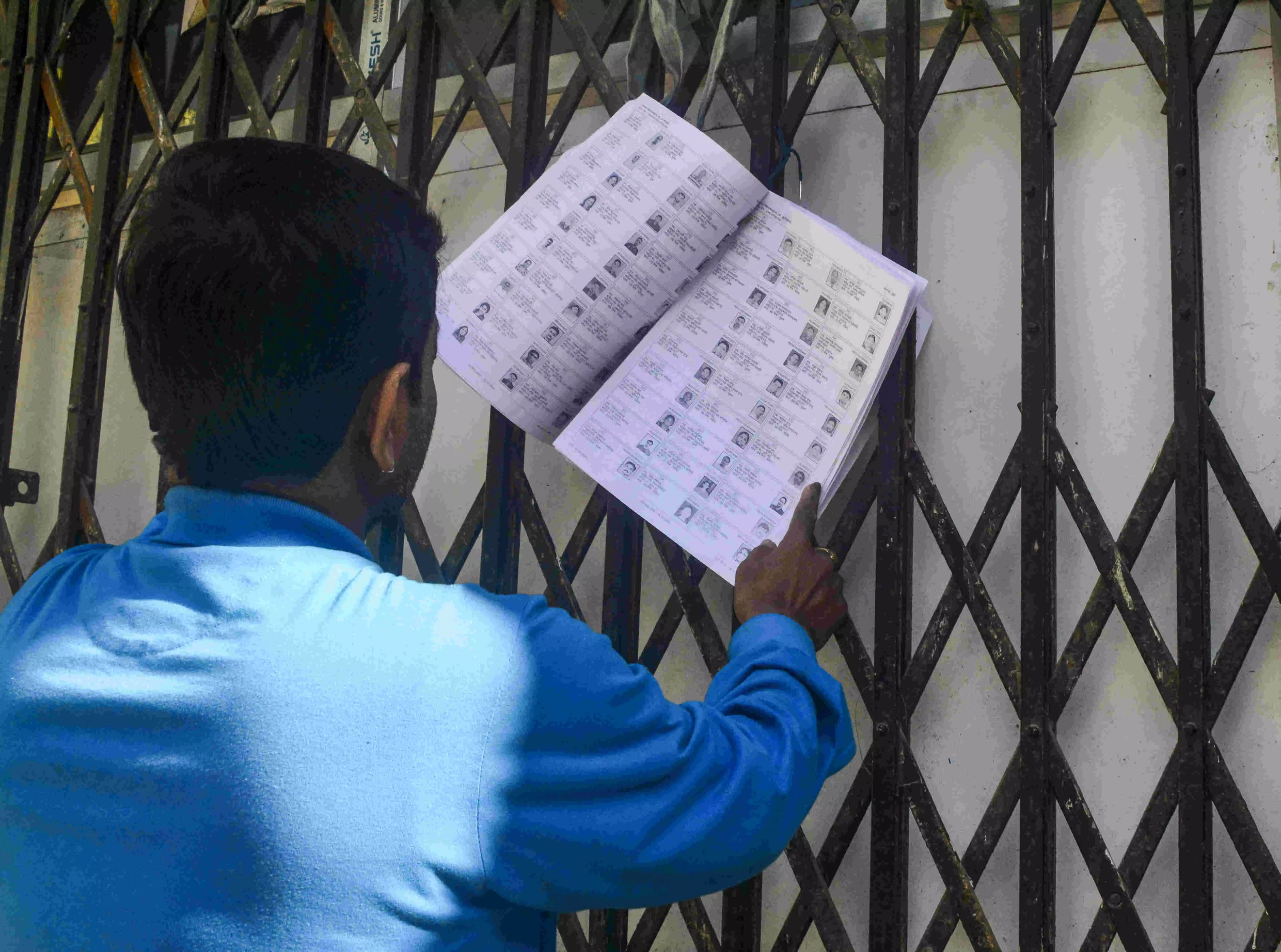


New Delhi: Battling "vote chori" allegations levelled by the opposition Congress, the Election Commission held special intensive revision of electoral rolls in 13 states and Union territories and a 'special revision' in Assam this year and is all set to hold a similar exercise in the remaining 22 states and Union territories in 2026. While the exercise, which kept the EC in news, was completed in Bihar, it is ongoing in Assam and other 12 states and Union territories with nearly 60 crore electors. The remaining 40 crore electors will be covered next year in phases, officials said. They noted that the exercise has so far been successful and would continue in remaining states and Union territories. With details shared by electors being digitised, EC officials said perhaps in the next years, the voters' list cleanup exercise will become more automised and backend driven.
During the year, besides SIR, the poll authority also conducted assembly elections in Bihar. This was perhaps for the first time in decades that the polls went off without any major election day violence. Also, no repoll was recommended for any polling station across the 243 assembly seats. Bihar became the first state where polling booth rationalisation was carried out, reducing the maximum number of voters per polling station from 1,500 to 1,200. This will reduce queues on voting day. The poll authority took a number of steps to ease polling experience. Now people can carry mobile phones till outside the polling station and deposit it at phone deposit boxes. So far, phones were not allowed in polling locations and there was no facility to deposit them. The year also saw a bitter spat between Congress leader Rahul Gandhi and Chief Election Commissioner Gyanesh Kumar over vote theft allegations. This was for the first time a CEC sought an apology from a senior political leader for making allegations which could not be proved. Several INDIA bloc leaders had claimed that the voters' list cleanup exercise will deprive crores of genuine, eligible voters of their right to cast ballot for want of documents. Many political parties had even approached the Supreme Court, demanding a ban on special intensive revision (SIR). The top court asked the EC to add Aadhaar as the 13th document to be accepted from electors seeking to add their name to the voters' list but refused to ban the exercise, saying it has powers to carry out SIR to clean up the electoral rolls.
As the final voters list of Bihar was published, the response of parties opposing SIR was muted. The Opposition's bid to link SIR with its vote theft claims seem to have failed to impress voters in the Bihar assembly elections. As the EC was preparing for SIR in Bihar, its officials had claimed that several nationals from Bangladesh, Nepal and Myanmar were found by its grassroots level functionaries. But eventually, the poll authority did not share any number or proof of such people who were not eligible to be on the voters' list. Opposition parties had dubbed the EC's claims as a ploy to carry out SIR to target electors not aligned to BJP and its allies. Drawing lessons from Bihar SIR, the EC tweaked rules for the 12 states and Union territories. Electors were asked to submit documents after handing over partially-filed enumeration forms provided the backroom personnel failed to map their names from the last SIR final electoral roll. Most states had the last SIR of the voter list between 2002 and 2004. Most have nearly completed the mapping of current electors with the voters according to the last SIR held in their respective states or Union territories. The primary aim of the SIR is to weed out foreign illegal migrants by checking their place of birth. The move assumes significance in the wake of a crackdown in various states on illegal migrants, including from Bangladesh and Myanmar. The Election Commission had earlier this month extended the timeline for SIR of electoral rolls in six states and Union territories following requests from the respective chief electoral officers. The EC issued the revised schedule for SIR in Tamil Nadu, Gujarat, Madhya Pradesh, Chhattisgarh, the Andaman and Nicobar Islands, and Uttar Pradesh. The enumeration period for these six states and Union territories was to end on December 11 and the draft electoral rolls were to be published on December 16. The enumeration period for Tamil Nadu and Gujarat has been extended till December 14 and the draft electoral rolls were published on December 19. For Madhya Pradesh, Chhattisgarh, the Andaman and Nicobar Islands, the enumeration period was extended till December 18 and the draft electoral rolls published on December 23.
The enumeration period for Uttar Pradesh has been extended till December 26 and the draft electoral rolls will be published on December 31. The enumeration period for Goa, Puducherry, Lakshadweep, Rajasthan and West Bengal will end on Thursday and the draft electoral rolls were published on December 16. The schedule for Kerala was revised earlier. The enumeration period for the state ended on December 18 and the draft electoral roll will be published on December 23. To ensure that no eligible elector is left behind, new electors are being encouraged to fill Form 6 and submit it to the block level officers (BLOs) or fill the form online using the ECINet app or website to get their names included in the final electoral rolls, which will be published in February next year.



