CEO speaks: Admissions 2026: Don’t Choose a Degree, Choose a Future


As 2026 unfolds, higher education finds itself at a quiet but unavoidable turning point. For generations, we told students that a good degree would open doors. That promise is no longer reliable. What now determines employability is not what a student knows on graduation day, but how fluently they can keep learning, adapting, and applying that knowledge over their professional lives. The World Economic Forum (WEF) has repeatedly pointed out that job roles are changing faster than educational cycles, with nearly a quarter of today’s roles expected to transform by the end of this decade. This explains why many high-performing graduates still struggle in their first jobs: they were prepared for exams, not for evolution.
In my view, graduates need to work towards building a set of five “power skills” to ensure they are employable after four years—and remain relevant for their entire careers. They are: i) AI and data fluency, ii) cybersecurity awareness, iii) portfolio of real work exposure, iv) industry alignment and v) analytical thinking, creativity and curiosity based in ethical judgement.
One of the most visible changes inside classrooms is the way artificial intelligence is reshaping every discipline. AI is becoming a basic academic language. Degrees that will age well are combining artificial intelligence and machine learning with applied data analytics, decision intelligence for business, and even prompt engineering, AI workflow automation, and agent-based systems. Universities that treat AI literacy the way they once treated computer labs risk graduating students who feel outdated on arrival.
Running parallel to this is the growing importance of cybersecurity, a domain that is still underestimated outside technical circles. As organisations increasingly adopt AI across operations, finance, healthcare, and governance, cyber risk becomes everyone’s problem. Graduates entering management, compliance, auditing, or policy roles are now expected to understand digital forensics, cloud security, governance frameworks, and privacy engineering. The skill gap here is rarely about hacking expertise and more about judgement—understanding threat models, responding to incidents, and designing systems that respect privacy by default.
We also need a rethink on how degrees themselves are structured. The four-year programme still matters, but it needs to be increasingly modular, designed to deliver employable value at every stage rather than only at the end. Universities are moving toward stackable pathways where students earn recognised credentials year by year, embed industry certifications into transcripts, and accumulate credit-bearing internships and live projects. Employers are no longer impressed by course completion alone; they want to see proof—portfolios, project outcomes, and demonstrated competence.
The climate transition and sustainability is also reshaping employability in ways that are often overlooked. Courses in renewable energy, smart grids, climate risk, ESG analytics, sustainable finance, and circular economy models are becoming relevant far beyond their original audiences. Even graduates in traditional roles are increasingly assessed on their ability to understand carbon accounting, lifecycle analysis, and sustainability reporting. Climate literacy is fast becoming a baseline expectation rather than a specialisation.
India’s renewed emphasis on building and manufacturing provides further options to explore. As the country invests in semiconductors, electronics, robotics, automation, and industrial systems, demand is rising for professionals who can design, test, and scale. Programmes in VLSI and semiconductor engineering, embedded systems, industrial AI, computer vision, quality engineering, and reliability systems emphasise labs, simulation, and product thinking over rote theory. Employability here comes from hands-on competence and a mindset geared toward real-world constraints.
Yet for all the attention on technology and industry alignment, the most enduring differentiators remain human. Analytical thinking, creativity, resilience, curiosity, ethical judgement, and leadership consistently rank among the most valuable capabilities. Universities that take this seriously are rethinking pedagogy itself—introducing credit-bearing communication and professional writing, debate and case-based learning, leadership labs, peer-assessed team projects, and reflective practices that build ethical reasoning. These are not “soft” additions; they are what make technical skills usable.
For students entering college in 2026 and hoping to be employable by 2030, the choices made at admission will matter more than ever. Programmes must be evaluated not only by reputation, but by how deeply they integrate AI and data skills into the core curriculum, whether they expose students to cybersecurity and sustainability thinking, and how seriously they embed internships, live projects, and industry certifications. Students who graduate with a visible portfolio of real work—projects, case studies, research, or startup experience—will stand apart. Waiting until the final year to “prepare for jobs” is foolhardy; employability now has to be built credibly and deliberately, year by year.
The promise universities must make to students and parents in 2026 is therefore very different from the one made a generation ago. It is not merely about placements or rankings, but about building a repeatable system of career and life readiness. Graduates who leave with AI and data fluency, cyber awareness, a visible portfolio of real work, strong industry alignment, and deeply rooted power skills are not just employable after four years—they remain relevant for their entire career. In a world that refuses to slow down, education must stop preparing students for a single job and start preparing them for continuous reinvention.
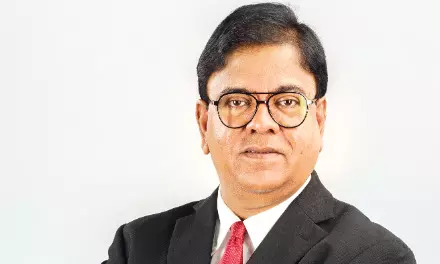
The author is the Vice-Chancellor of Sister Nivedita University and Group CEO, Techno India Group. A visionary leader, he is shaping future-ready institutions and inspiring students to lead with purpose