
CEO speaks: 2025: The Year Indian Education Crossed the Inflection Point


As we close 2025, let’s admit it. This year will be remembered as a defining turning point for Indian education and the job ecosystem. Degrees alone no longer prove capability. Skills do. In an age shaped by Artificial Intelligence (AI), what you know today can become outdated tomorrow. The demand for high-skill, adaptable professionals is only rising and education has finally begun responding to this reality.
Just as importantly, the long-discussed transformation of higher education has moved from intent to action. Clear policy direction, institutional courage and a sharp focus on employability have pushed the system out of inertia. Change is no longer theoretical. Here are five shifts from 2025 that clearly mark this transformation.
Higher education moved from control to trust
For decades, Indian universities struggled under layers of approvals and overlapping regulators. Innovation was slowed, sometimes completely blocked. In 2025, this began to change.
The Viksit Bharat Shiksha Adhikshan Bill signalled a move away from micromanagement towards principle-based governance. Instead of dictating processes, the focus shifted to outcomes.
With fewer bureaucratic hurdles, universities gained the freedom to design programmes aligned with global standards and industry needs. Accountability remained, but without suffocating control.
Employability became the real report card
One of the most visible shifts of 2025 was the move from syllabus-centric education to outcome-centric education. Employability was no longer treated as an afterthought.
Universities expanded industry-linked curricula, credit-based internships, apprenticeships, and integrated micro-credentials. Employers were clear about what they wanted: graduates who are job-ready and capable of continuous learning. Students, in turn, demanded clarity on career outcomes.
Success was no longer measured only by enrollment numbers or campus size. Placement quality, career mobility, and real-world readiness began to matter more. The message was simple and powerful. Education must lead to dignity of work and economic independence.
Internationalisation is real
Internationalisation had long been discussed, often limited to ceremonial MoUs. In 2025, it finally became practical. Indian institutions focused on joint programmes, dual degrees, credit transfers, faculty exchange, and collaborative research. The policy environment matured to support foreign universities operating in India and Indian institutions attracting international students.
This shift matters because internationalisation is not about sending students abroad. It is about bringing global quality, pedagogy, and exposure into Indian classrooms. Indian higher education has started becoming globally competitive while staying locally relevant.
Lifelong learning is the order of the day
2025 also ended the idea that education finishes at degrees. In the age of AI, lifelong learning is no longer optional. It is an absolute necessity. Machines can now write code, analyse data, design visuals, and create music. What they cannot do is think critically, empathise deeply, or act with ethical judgment. To remain relevant, humans must strengthen these uniquely human abilities. That requires constant learning and reinvention.
Micro-credentials, stackable courses, and flexible learning pathways gained mainstream acceptance. Universities began evolving from one-time degree providers into long-term learning partners. Education started aligning with real life, including career shifts, breaks, and reinvention.
Industry and academia on the same page
The lack of AI skills is leading to labour shortage and bridging the AI skills gap is impossible without strong industry-academia collaboration and 2025 showed real progress. Co-op education models expanded, allowing students to alternate between classrooms and workplaces. Industry participation in curriculum design, guest lectures, boot camps, and applied research increased.
When academia and industry work together, students graduate with both knowledge and experience. However, a larger responsibility remains. If leading AI players focus only on market dominance and closed research, society risks missing a chance to build future-ready human capital. Open collaboration benefits everyone. For students, this means clearer ways from education to employment. For institutions, it means greater autonomy with responsibility. For employers, it means access to talent that is capable, not just qualified.
As educators, policymakers, and citizens, our collective responsibility is to sustain this momentum so that education becomes not merely a system we inherit, but a future we consciously and carefully build.
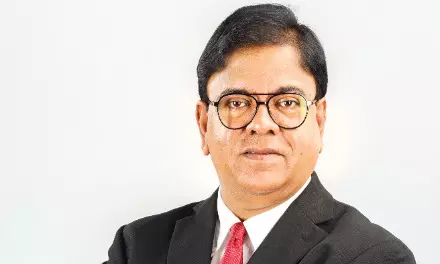
The author is the Vice-Chancellor of Sister Nivedita University and Group CEO, Techno India Group. A visionary leader, he is shaping future-ready institutions and inspiring students to lead with purpose



