Pushing moralistic boundaries on Pakistani TV
In this evolving landscape, three provocative dramas starring Pakistani television icon and ‘Hindi Medium’ actress Saba Qamar have not only sparked widespread debate but also made her the controversy queen
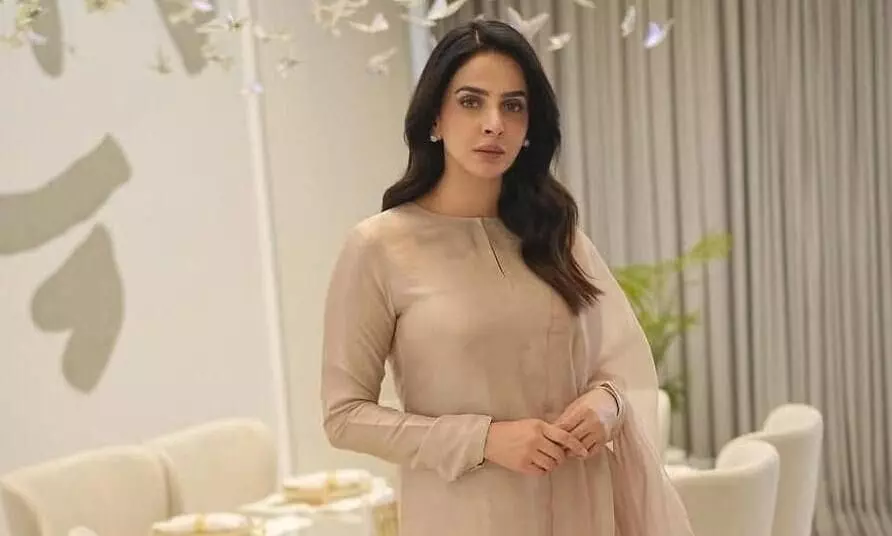


Pakistani TV dramas have long enjoyed popularity among Indian audiences, thanks to their layered storytelling, elegant Urdu dialogue and visually rich, culturally authentic settings. At their peak, these serials offered emotional depth and social realism that felt refreshingly different from India’s melodramatic, ‘saas-bahu’-dominated television culture. Over time, however, many Pakistani dramas began slipping into familiar clichés, echoing the same repetitive family feuds and moral sermonising seen on Indian TV. Amid this creative stagnation, a new wave of directors has attempted to reclaim bold, meaningful storytelling by pushing moral, social and aesthetic boundaries.
In this evolving landscape, three provocative dramas starring Pakistani television icon and ‘Hindi Medium’ actress Saba Qamar have not only sparked widespread debate but also made her the controversy queen. Her talent, boldness and refusal to conform have earned critical acclaim, but they have also ensured that debate and backlash remain constant companions in her journey.
The unease surrounding her work sharpened with ‘Case No. 9’, which addressed rape, consent and the culture of victim-shaming. By depicting how conservative society often prefers silence over justice, the series unsettled many viewers even as it was praised for its realism and restraint.
She followed this with ‘Pamaal’ (meaning trampled or ruined). The drama revolves around a young woman who marries into a household that appears respectable on the surface but is deeply toxic, controlling and emotionally violent underneath. While its theme was familiar, controversy erupted over a prolonged on-screen embrace that critics labelled ‘too physical’, revealing how even restrained depictions of intimacy can provoke moral backlash. Pakistani TV usually cuts away quickly from physical closeness, but this scene lingers, focusing on body language and silence. For many viewers, the length alone made it feel boundary-pushing.
The loudest outcry came with ‘Muamma’ (Puzzle), a dark psychological thriller centred on a landlady and her tenants. Although the show largely avoided explicit physical contact, it relied on suggestion, mood and visual intimacy. Saba’s wardrobe - sleeveless blouses, fitted silhouettes and occasional midriff exposure - sparked intense scrutiny on social media.
Adding fuel to the fire, images from a recent magazine photoshoot featuring Saba in a sleek, body-hugging metallic satin gown began circulating online simultaneously with the ‘Muamma’ controversy. While many lauded her for her confidence, elegance and fashion-forward approach, a vocal segment of male users on ‘X’ condemned the images.
For many critics, the concern extended beyond fashion to fears that Pakistani dramas are drifting toward Indian or Western aesthetics, blurring cultural boundaries long considered sacrosanct for family-oriented prime-time television.
The debate around Saba underscores a persistent double standard. Male actors rarely face moral judgment for appearance or screen presence, while female actors are expected to visually embody tradition and modesty. Pakistani dramas frequently depict abuse, injustice and exploitation with limited outrage, yet clothing choices by female leads often provoke louder backlash, suggesting morality is judged more through appearance than content.
Saba’s career today symbolises a broader transition within Pakistani media. As storytelling becomes bolder and more realistic, audiences are negotiating how much visual and thematic change they are willing to accept. Her roles, fashion and cross-border success - including ‘Hindi Medium’ - have made her a focal point for anxieties about culture, identity and modernisation.
Whether viewed as courageous or controversial, Saba has undeniably pushed conversations forward. The questions raised about morality, fashion and storytelling are not just about one actress; they reveal a society grappling with change. And in that mirror, Saba remains one of the most visible - and debated - faces of Pakistani television.