Movies Which Leave Questions Unanswered
Instead of giving us a ‘final verdict’, these movies leave a space for the audience to step in
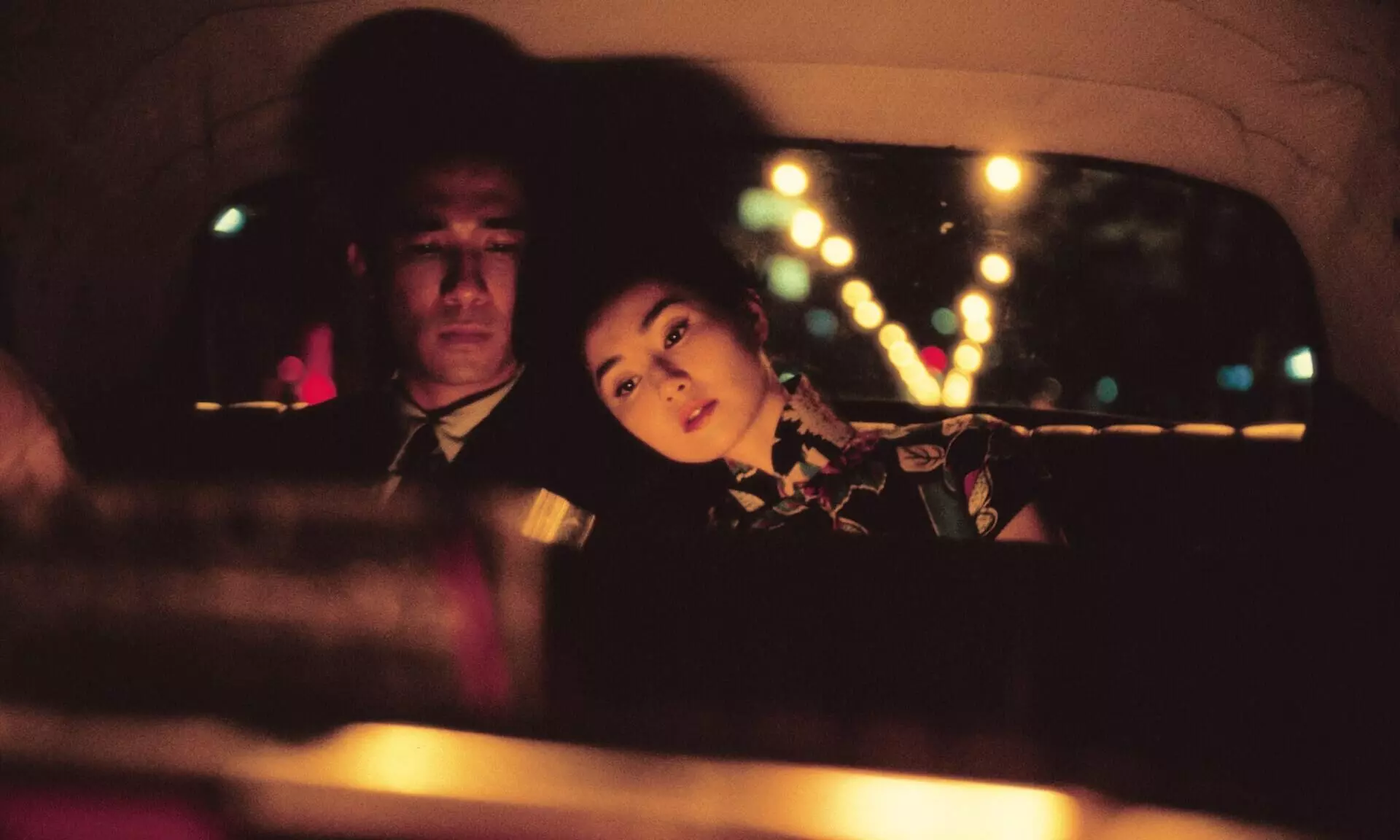
WongKar-wai's In The Mood For Love


Most movies follow a simple rule: they start with a problem and end with an answer. We expect the story to wrap up neatly so we can walk away feeling satisfied. But some of the greatest films ever made do the exact opposite. They deliberately leave the ending messy and the questions unanswered. Instead of giving us a ‘final verdict’, these movies leave a space for the audience to step in.
This style of filmmaking is more interested in how a story feels than how it ends. By holding back the truth, the director turns the viewer from a viewer into a partner. We are forced to think about the characters and wonder about their choices long after the movie is over. The power of these films isn’t in what they show us - it’s in what they hide. By refusing to give us a ‘happily ever after’ or a clear ‘yes or no’, filmmakers like Wong Kar-wai and Abbas Kiarostami create stories that stay alive in our minds forever.
Wong Kar-wai’s films are famously centred on themes of unrequited love, missed connections, yearning and melancholy. Whereas Abbas Kiarostami’s films frequently explore ambiguity, illusion and the complexity of human relationships, often raising more questions than providing definitive answers. At first glance, these cinematic worlds appear far apart - one steeped in saturated colours and hushed emotions, the other grounded in philosophical conversation and narrative uncertainty.
Yet Wong Kar-wai’s ‘In the Mood for Love’ and Abbas Kiarostami’s ‘Certified Copy’ ultimately reveal a shared understanding of love. Though they offer different definitions, both films suggest that love does not exist as certainty or fulfilment, but as something performed, negotiated and sustained through belief.
‘In the Mood for Love’ unfolds in the tight corridors and rented rooms of 1960s Hong Kong, where Mr Chow and Mrs Chan discover that their spouses are having an affair. Their response isn’t confrontation but quiet companionship. They rehearse how the affair might have begun, carefully role-playing conversations and gestures while insisting on a moral boundary: “We won’t be like them.” Wong builds an entire emotional universe out of what never quite happens. Love, in this world, is defined by restraint; its intensity grows precisely because it is denied.
Kiarostami’s ‘Certified Copy’ approaches intimacy from the opposite direction. Set in the sunlit openness of Tuscany (Italy), the film begins as a casual meeting between a British writer and a French antiques dealer, only to shift - without explanation - into what appears to be a long-standing marriage. The film refuses to clarify whether this relationship is invented, remembered or revealed. In doing so, Kiarostami suggests that love may not depend on origin or authenticity at all, but on repetition and mutual participation. If two people convincingly inhabit the roles of lovers, that performance may itself become real.
Abbas Kiarostami's film Certified Copy
This commitment to ambiguity wasn’t only a narrative choice but also a guiding principle behind the film’s creation. Kiarostami told Juliette Binoche, the leading star of the movie, that even he didn’t know whether the couple were married or not, because the entire structure of the film depends on uncertainty. The moment their relationship is clearly defined - whether they are married, pretending or remembering - the film loses its philosophical tension. Uncertainty here is not a puzzle to be solved, but the very space in which the film exists.
A similar philosophy shapes Wong Kar-wai’s approach. His decision to delete the love scenes between Mr Chow and Mrs Chan was intentional and central to the film’s meaning, not the result of censorship or incompletion. Wong is of the view that once their relationship becomes physical, the moral boundary that defines them disappears. Mr Chow and Mrs Chan see themselves as different from their unfaithful spouses and that distinction gives the story its emotional weight. By removing these scenes, Wong preserved the tension, dignity and restraint that made the film so powerful.
This is where Wong’s melancholy restraint and Kiarostami’s philosophical ambiguity meet. One defines love as something that gains meaning through what is withheld; the other defines it as something that gains meaning through enactment. Yet both arrive at the same emotional crossroads: love is sustained not by resolution, but by commitment - whether to silence or to performance. In both films, the characters actively choose how to love, even when that choice denies clarity or fulfilment.
Neither director gives the audience a clear romantic ending. ‘In the Mood for Love’ ends with love kept as a private memory, whispered into a wall and left behind, never to be lived out. ‘Certified Copy’ ends quietly, with the relationship hanging in uncertainty, depending on whether the characters choose to keep believing in it. In both films, love matters not because it is clear or resolved, but because it continues to exist despite doubt and silence.
Together, these films suggest that modern relationships are not built only on clear truths or certainty. Love can be unfinished, unspoken or even imagined - and still feel real and meaningful. Wong Kar-wai and Abbas Kiarostami, one Chinese and the other Iranian, working from different cultures, filmmaking styles and languages, arrive at the same idea: love lasts not because it is clearly defined or proven, but because people choose it, return to it again and again and continue to carry it with them over time.