Remembering Bela Tarr: The Power of Slowness in Age of Noise
The celebrated Hungarian director of ‘Satantango’ and ‘The Turin Horse’ passes away at 70
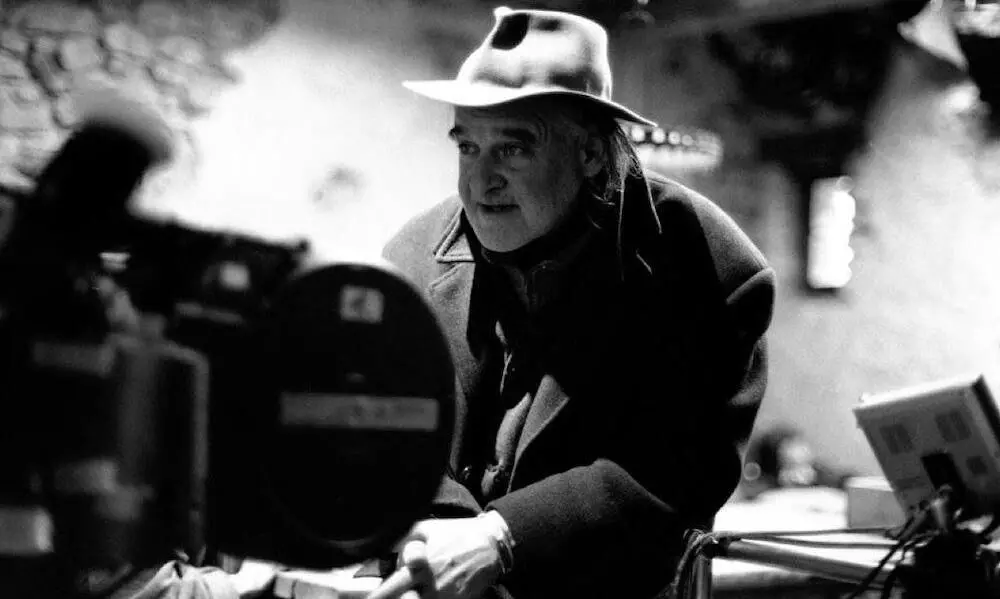


In the age of Artificial Intelligence (AI) and 30-second reels, many may find Bela Tarr to be a slow filmmaker. But slowness was intrinsic to his cinema. It was the very essence of his cinema. His long, languid pacing, stunning black-and-white visuals, meticulously choreographed shots and immersive ambient sound came together to create works that asked you to slow down and stay. On Tuesday, the legendary Hungarian filmmaker passed away at the age of 70 after battling a long illness.
Over a career spanning several decades, Tarr wrote and directed nine feature films, beginning with ‘Family Nest’ in 1979 and concluding with ‘The Turin Horse’ in 2011. In ‘The Turin Horse’, the austere filmmaker used mundanity and repetition in everyday life to explore profound philosophical themes of existence, suffering and the end of the world. The film won the Silver Bear Jury Grand Prize at the Berlin International Film Festival that year.
His 1994 film ‘Satantango’, which clocks 450 minutes, is an adaptation of a novel by Hungarian writer Laszlo Krasznahorkai, who won the Nobel Prize in Literature in 2025. The film is a textbook guide for works of the contemporary slow cinema movement. In fact, Tarr collaborated with Krasznahorkai often. Be it ‘Satantango’ or ‘Werckmeister Harmonies’, both adapted from Krasznahorkai’s novels, have travelled across film festivals and bagged awards.
His singular style left a lasting imprint on world cinema. Directors like Jim Jarmusch and Gus Van Sant have always praised Tarr’s vision. In India, Tarr left an indelible mark on filmmakers and cinephiles alike. National Award-winning Bengali filmmaker Atanu Ghosh shared a photograph of the iconic director from the International Film Festival of Kerala 2022. The ‘Mayurakshi’ director said cinema feels lonelier after Tarr’s passing. “He had the courage to pace cinema down until it breathed like life itself. In an age obsessed with speed, explanation and constant stimulation, he trusted time, silence and the weight of human presence. His long-unbroken shots are not stylistic tricks but acts of faith, inviting us to stay back, look and endure just as his characters do,” wrote Ghosh.
A devoted cinephile, Kunal Sen, son of legendary filmmaker Mrinal Sen, described Tarr as a ‘rare breed, especially in a world that demands faster-paced cinema’. He recalled how his father and Tarr had taken part in a joint project 35 years ago. “I don’t know if that collection is available anywhere for viewing. I watched it during the Chicago International Film Festival,” he wrote.
National Award-winning director Supriyo Sen also shared a photograph with the Hungarian maestro, recalling that both served as jurors in different sections at the Busan International Film Festival in 2012. “In the times we are living through, we will deeply miss his profound vision, not just as a filmmaker, but as a way of seeing the world,” he wrote.
Tarr was born on July 21, 1955, in the southeastern Hungarian university town of Pécs. His father designed theatre and film sets, while his mother worked at a local theatre. Tarr began making amateur films at the age of 16 while working various jobs, including at a shipyard and as a receptionist. Reflecting on his craft, Tarr once said, “If you are a real filmmaker, you have to have your own style, your own language.” Words that feel especially relevant today.