
I wanted to step out of my comfort zone with ‘Subedaar’: Suresh Triveni
After women-led films, the director experiments with an ageing action hero in the Anil Kapoor-starrer
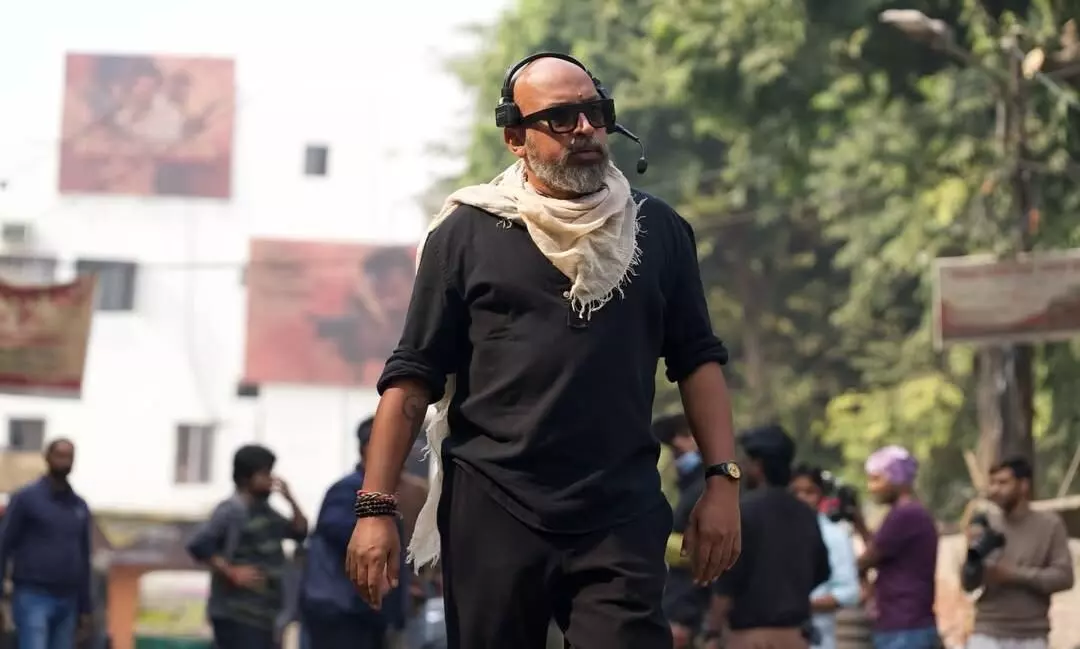


Director Suresh Triveni wanted to join the Indian Army but couldn’t clear the physical test. With ‘Subedaar’, he realised his dream, where a retired Army man (Anil Kapoor) uses his discipline and combat skills to save his family. But this Triveni is different from his last few works, notably his debut comedy film ‘Tumhari Sulu’ and the hard-hitting ‘Jalsa’. With his recent directorial outing ‘Subedaar’, he has shifted gears, from female-led stories to presenting an angry old man in the film. At present, Triveni is riding high on the success of ‘Subedaar’, which has now made its way to Japan, marking a significant moment as one of the rare Hindi films to create a cultural footprint in the region. Triveni’s next is ‘Maa Behen’, a dark comedy starring Madhuri Dixit.
‘Millennium Post’ chats with the director about violence in Bollywood and his collaborations with Vidya Balan. Excerpts:
This is certainly turning out to be your year. The year started with ‘Daldal’ (creator), then ‘Subedaar’ and next is ‘Maa Behen’. In your directorial works, be it ‘Tumhari Sulu’, ‘Jalsa’ or ‘Maa Behen’, women are at the forefront. But this time, you’ve gone with an angry old man.
(Laughs) No, it’s not like that. I am an avid film watcher. As a filmmaker, what happens is that you tend to get very comfortable and work within the same space. That’s where complacency creeps in. With ‘Subedaar’, I wanted to rekindle the kid inside me. I grew up in Ranchi and Durga Puja was a time when movies were screened every night in open grounds. Coming from a conservative South Indian family, I was only allowed to watch two films. ‘Subedaar’ is purely a tribute to the sights and sounds of the cinema I grew up with. I wanted to shift gears and see whether I could dabble in a wider-appeal format while retaining my sensibilities. I also wanted to tell the story of a man who is unable to acclimatise to civilian life after returning from the Army. I’ve long been interested in the everyday territorial conflicts people engage in, such as road rage and fights over parking spots. I wanted to address that too, along with fractured relationships (in this case, Anil Kapoor and Radhika Madan). With ‘Subedaar’, I am out of my comfort zone.
In ‘Subedaar’, you narrate the story of a retired Army man who relies on his discipline and combat skills to protect himself and his family. Do you have someone in the Indian Army in your family? Is there a personal connection?
Actually, my first dream was to join the forces. In fact, I cleared the National Defence Academy (NDA) entrance exam but couldn’t clear the physical test. I also failed Class 12 and that part is reflected in ‘Tumhari Sulu’. I have always found the Indian Army uniform fascinating, so maybe that aspect naturally found its way into the story.
Was Anil Kapoor always your first choice for ‘Subedaar’?
Producer Vikram Malhotra suggested his name. I wanted to make an action film with a non-conventional, older Bollywood actor. He suggested Anil sir and he agreed readily. Amitabh Bachchan and Anil Kapoor were my favourites while growing up. Munna from ‘Tezaab’ (1988) was playing in my head when he said yes and we tailor-made ‘Subedaar’ for him.
The film has an old-world mainstream Bollywood charm, an angry man fighting a corrupt system, with the audience rooting for him. Given its mainstream appeal, did you consider a theatrical release? Most of your works have gone direct-to-digital.
(Cuts in) I had only one goal. I wanted to make it cinematic. Though this trend started during COVID-19, I believe we are still in a phase where we are figuring out what works better: theatres or OTT. ‘Amazon Prime Video’ was on board from the beginning. Of course, as a filmmaker, I want a theatrical release, but it’s equally important to reach a wide audience. ‘Prime Video’ promoted ‘Subedaar’ like a big theatrical release. I wanted strong exposure and visibility. Sometimes, films get a release but not enough display. With ‘Subedaar’, I knew I was making the right choice.
It’s interesting how you’ve balanced veterans like Anil Kapoor, Saurabh Shukla and Nana Patekar with younger talent like Aditya Rawal. He really made us angry.
I’ve been lucky with the actors I’ve worked with. I look for solid performers. I don’t chase other factors. Aditya had already impressed me with ‘Faraaz’, ‘Bamfaad’ and ‘Daldal’. He’s a terrific actor. I wanted someone like Prince who would completely surrender to the role. He’s a gifted actor.
‘Subedaar’ has its share of violence. These days, Bollywood seems to rely heavily on gore and violence.
As filmmakers, we are part of society and we’re constantly reading about such things in the media. I wanted to explore what I wanted to say through violence. By the end of the film, ‘Subedaar’ seeks dignity. At the same time, I didn’t want my protagonist to be violent from the beginning. It’s only around the 40-minute mark that he raises his hand. I’m not denying that violence can be used for shock value and filmmakers often use it as a trope. However, my intent was to contrast an irresponsible man wielding a gun with a responsible man trying to restrain himself.
Women Power
Your next is ‘Maa Behen’ and the teaser looks fun. Was it easy to convince Madhuri Dixit?
When we narrated the film to her, she instantly agreed. It was the same with Triptii Dimri. I’ve been very lucky with the actors I’ve worked with. It was great to shoot both ‘Subedaar’ and ‘Maa Behen’ in the same year.
Your collaboration with Vidya Balan has given us gems like ‘Jalsa’ and ‘Tumhari Sulu’. Is anything coming up with her soon?
Vidya and I are constantly discussing possibilities. She spoils me with her discipline and passion. ‘Tumhari Sulu’ changed my life and then she trusted me again with ‘Jalsa’. We are exploring multiple ideas and I will definitely work with her again. At the same time, I don’t take that relationship for granted.



