Top court refuses to interfere with St Stephen’s interview process, asks HC to expedite process
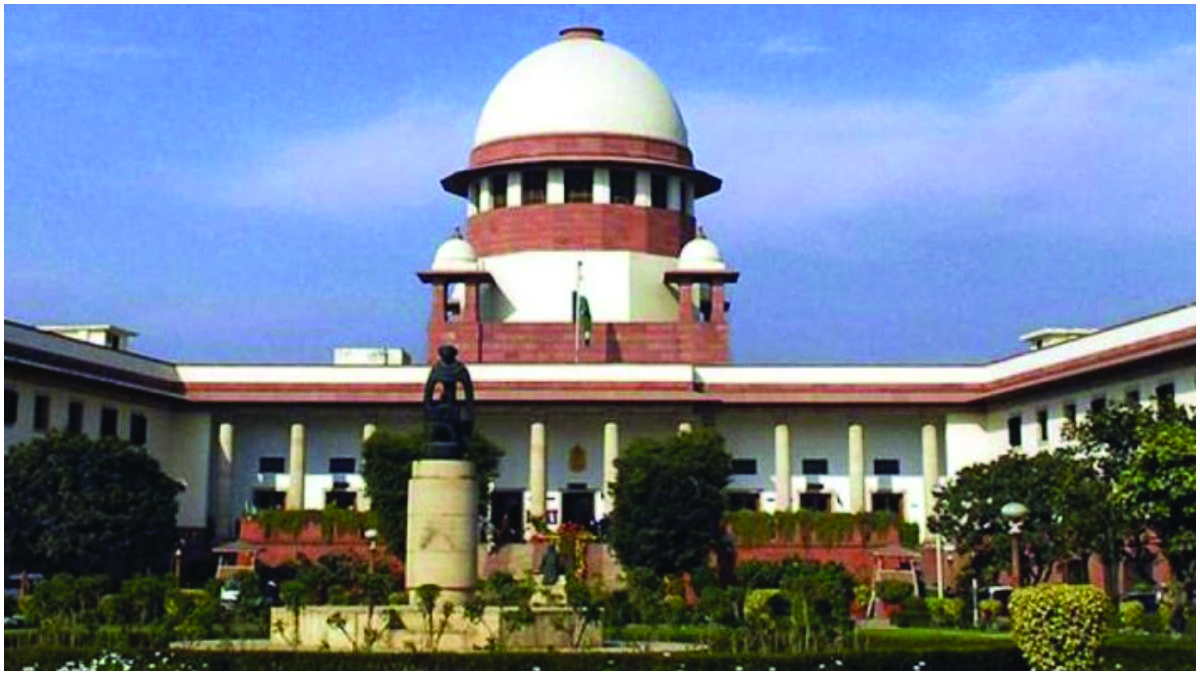


New Delhi: The Supreme Court on Monday refused to interfere with the Delhi High Court interim order allowing St Stephen’s College to conduct interviews for granting admission to students under the minority quota besides taking into consideration their common university entrance test (CUET) scores.
A bench of Justices A S Bopanna and P S Narasimha said any interference at this stage will create further confusion and uncertainty in the admission process.
“Taking note that the impugned order is an interim order passed by the high court in a pending writ petition, at this stage, we see no reason to interfere with the high court order,” the bench said.
The apex court also asked the high court to decide the matter expeditiously considering the need for certainty in the matter.
The top court was hearing a plea filed by Delhi University and University Grants Commission challenging the July 21 order of the high court.
Solicitor General Tushar Mehta, appearing for the varsity, sought a stay on the Delhi High Court order, contending that the selection process is still going on.
“This is a minority institution, therefore, 50 per cent of seats are filled by minority students. No difficulty with that. The question is how 50 per cent reserved seats are filled - first, strictly as per all-India merit list, i.e., CUET.
“Last year, they wanted to keep interviews for filling 50 per cent seats, DU directed them to fill 15 per cent out of this 50 per cent seats through interviews. Interviews are always a subjective thing. Because of the HC order, meritorious students are being left out,” he said.
Senior advocate A Mariarputham, appearing for St Stephen’s College, stated that there is an interim order, students have been selected and the classes have already commenced.
The bench said at this stage, it was not inclined to interfere with the interim order.
“At this stage, there will be more confusion for students,” the bench said. Mehta submitted in case the high court comes to a conclusion that the interim order was wrong and every admission ought to have been on the basis of the merit list, then what would happen to those meritorious students who were not selected because of this interview process.
The law officer claimed seats filled on the basis of interviews have virtually become ‘payment seats’. The bench said the high court passed the order on July 21 and admission process has already taken place.
“It may be really late now. There will be more uncertainty. Once matter is fully settled by high court, students will know what the situation is,” the
bench said.
On July 21, the high court had permitted the college to conduct interviews for granting admission to students under the minority quota besides taking into consideration their CUET scores.
It had also permitted the Jesus and Mary College to hold interviews for the seats reserved for minority category students.
The high court’s order came on the applications by the two minority colleges to stay a December 8, 2022 decision of the executive council of the Delhi University (DU) insisting on 100 per cent weightage for CUET 2023 score for admission against minority quota quota seats.
The court had in its order observed that in an earlier decision, it has already discussed the extent to which DU can regulate the admission of minority students and ruled that St Stephen’s has the right to conduct interviews with 15 per cent weightage for minority students but not for non-minority students.