
Heritage meets high-tech: CM launches underground cabling in Chandni Chowk
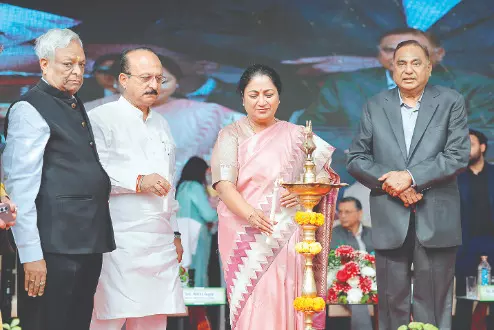


New Delhi: In a significant push to blend heritage conservation with modern infrastructure, Chief Minister Rekha Gupta on Thursday launched the underground cabling project in Chandni Chowk and laid the foundation for key power infrastructure projects aimed at strengthening the Capital’s electricity network.
Describing Chandni Chowk as more than a commercial hub, the Chief Minister said it is “not merely a market, but a symbol of India’s cultural heritage.” She noted that overhead wiring had long affected the area’s aesthetics and posed safety concerns. “Through this project, the area will become safer, more organised and aesthetically refined,” she said, calling it a landmark step towards heritage conservation and smart infrastructure development. The underground cabling project, undertaken jointly by the Delhi Government and BSES Yamuna Power Limited (BYPL), will remove dangling overhead wires across 28 historic streets and lanes. At an estimated cost of Rs 159.75 crore, nearly 52.5 kilometres of overhead lines will be laid underground. The project includes installation of 500 new feeder pillars, decorative street lighting poles and deployment of ‘digital twin’ technology for monitoring. Around 10,000 consumers are expected to benefit, with work being executed in phases during night hours to minimise disruption.
The Chief Minister also laid the foundation stone for a 66/11 kV GIS grid sub-station at Mandoli in North-East Delhi. Built at a cost of Rs 55.5 crore with a capacity of 63 MVA, the grid is expected to benefit nearly 1.5 lakh consumers, including key institutions such as Rajiv Gandhi Super Speciality Hospital and Mandoli Jail. The project aims to reduce voltage fluctuations and outages.
In addition, Gupta announced four Battery Energy Storage System (BESS) projects at Shivalik, Dwarka and Goyla Khurd, adding a combined capacity of 55.5 MW/111 MWh. The systems will help stabilise peak-hour demand and improve grid reliability for over 2.2 lakh consumers.
She said the initiatives represent “a significant step towards a clean, smart and sustainable energy ecosystem,” ensuring uninterrupted and future-ready power supply.
Energy Minister Ashish Sood said the programme reflects a transformative phase for Delhi’s power sector. “Delhi’s power sector will emerge as a national model,” he stated, highlighting that overhead wiring is being placed underground under a Rs.436 crore plan. He also noted that projects worth Rs 3,000 crore pending under Delhi Transco Limited have been approved and a
Rs 17,000 crore infrastructure roadmap prepared for the next three years.
According to Sood, these measures will strengthen Delhi’s grid to meet rising demand while supporting a cleaner and more resilient energy framework.



