
HC seeks govt and L-G’s response on minority schools’ challenge to fee law
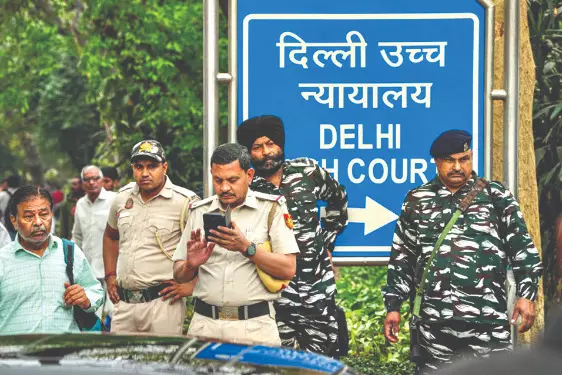


New Delhi: The Delhi High Court on Friday sought responses from the Delhi government and the Lieutenant Governor on a batch of petitions filed by minority-run schools challenging the constitutional validity of a recently enacted law that requires government approval for fee hikes in private schools.
A Division Bench comprising Chief Justice Devendra Kumar Upadhyaya and Justice Tejas Karia issued notice to the respondents and directed them to file a common counter affidavit within six weeks. The Court said the petitions would be taken up for further hearing in March 2026.
While passing interim directions, the Bench granted minority schools additional time to comply with procedural requirements under the new law.
Schools have now been allowed to constitute school-level committees for fee regulation by January 20, instead of the earlier deadline of January 10. The Court also extended the deadline for submitting proposed fee structures to these committees till February 5, as against the earlier date of January 25.
The petitions challenge the Delhi School Education (Transparency in Fixation and Regulation of Fees) Act, 2025, which introduces a three-tier mechanism for regulating fee increases in private schools. Under the Act, fee proposals must be examined by committees comprising representatives of parents, school management and the government before approval.
The minority schools have also questioned a notification issued by the Directorate of Education on December 24, 2025, which directed unaided private schools to form School Level Fee Regulation Committees. As per the notification, the committee includes a chairperson, the school principal, five parents, three teachers and one representative of the Directorate of Education.
During the hearing, counsel for the petitioning schools argued that the law violates Article 30 of the Constitution, which guarantees minorities the right to establish and administer educational institutions of their choice. He submitted that while the government may prevent profiteering, requiring prior approval for fee fixation amounts to unconstitutional interference.
Appearing for the government, Additional Solicitor General SV Raju defended the legislation, contending that Supreme Court rulings allow reasonable regulatory measures even in the case of minority institutions.



